
Fault correction
Current operation and alignment are restored before optional features are layered onto the entrance.
List entrances · rank outcomes · stage work
When a home has several doors or a managed route, upgrading one lock in isolation can leave keys and access harder to manage. Build an entrance portfolio, rank what matters at each threshold and plan compatible work in sensible stages.
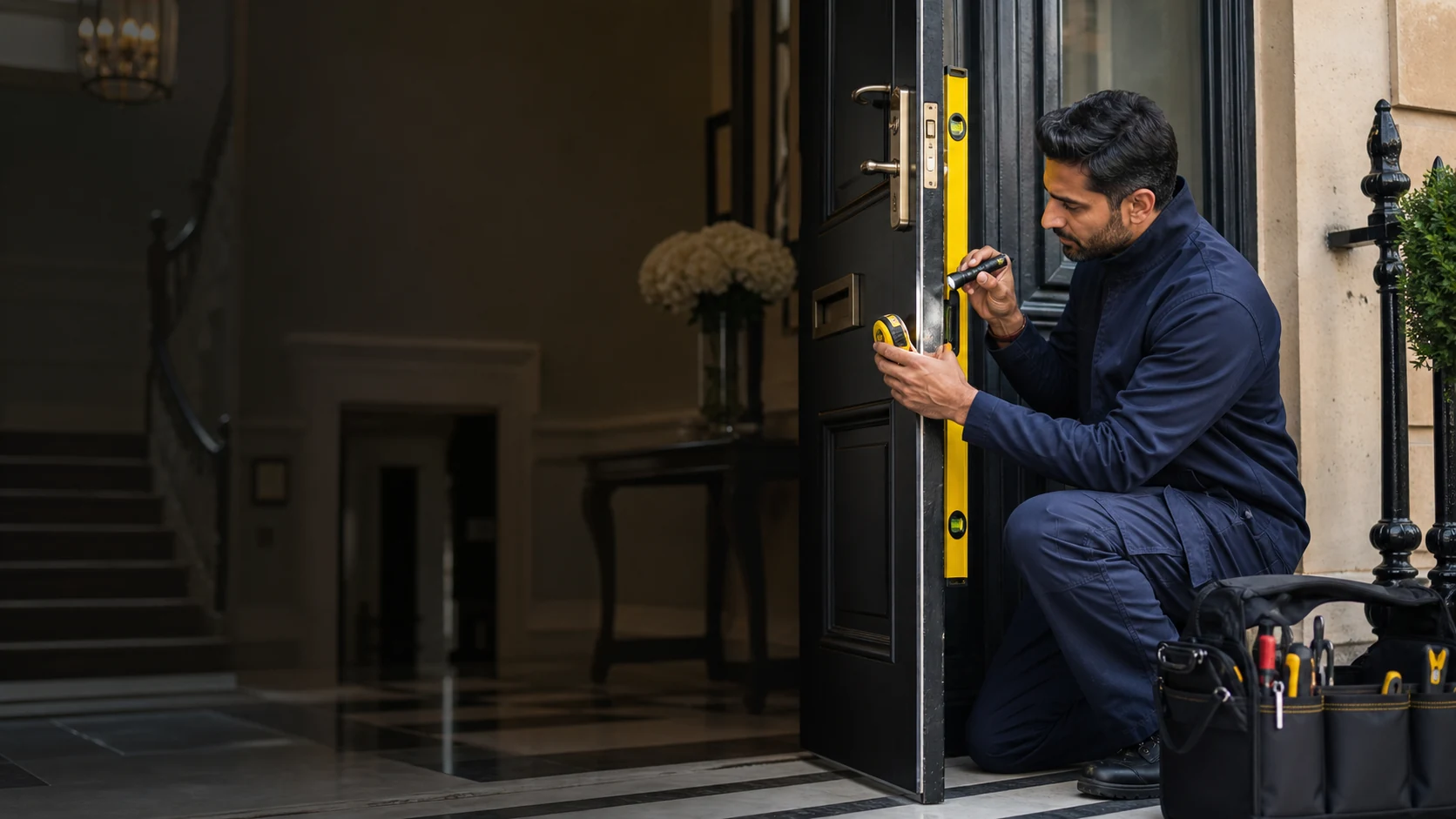
Entrance portfolio
Walk the lawful route without repeatedly operating a faulty door. List the street entrance, side passage, rear garden, patio, garage connection and any gate or common lobby that affects ordinary access. For each threshold, state who controls it, how it is normally opened and whether the problem is urgent, intermittent or part of a planned improvement.
A portfolio reveals duplicated and uncontrolled keys, rarely used doors whose locks have become stiff, and household routines that a single-door proposal might disrupt. It also prevents a common gate from being included in private work merely because it sits on the same journey. The objective is not to replace everything; it is to make deliberate choices across the real route.
| Record field | Example information to provide | Planning value |
|---|---|---|
| Stable entrance name | Main front, rear kitchen, side gate, garage link or apartment lobby | Keeps photographs, keys and proposals attached to the right door |
| Ownership | Household, landlord, freeholder, development or shared users | Identifies the person able to approve alteration |
| Normal use | Daily entry, garden access, deliveries, occasional exit or maintenance | Shows convenience and reliability needs |
| Current operation | Key, handle, latch, bolt, closer, gate and frame observations | Separates repair needs from planned upgrades |
| Key holders | Current legitimate recipients and uncertain outstanding copies | Supports a proportionate key-control decision |
| Desired stage | Assess now, repair first, upgrade later or refer to management | Creates an achievable sequence of work |
Prioritisation
An entrance that no longer secures is a different priority from a working door whose keys need reorganising. A frequently used rear door may deserve attention before a decorative side entrance. A managed gate may be important to the route but remain outside the homeowner’s instruction. Give each threshold one main reason for action and any secondary preference.
Useful outcomes include restoring dependable operation, changing control after keys are lost, making authorised daily use clearer, or replacing hardware that no longer suits the door. Avoid broad promises such as “make the whole house secure” without an agreed boundary. Windows, alarms, gates, door fabric and electronic systems may sit with different specialists.
Household changes should be included: children becoming key holders, a relative needing authorised access, staff keys to be returned, or a planned tenancy. Record roles rather than unnecessary personal data. The final key schedule can name recipients at handover.

Staging matrix
Planning several entrances does not mean completing them together. Inspection can show which door needs repair, which is ready for compatible hardware and which belongs to a manager or gate specialist. Give each stage a defined outcome and handover.
| Portfolio finding | First professional question | Possible stage |
|---|---|---|
| Door does not latch or lock reliably | Do hardware, alignment, leaf or frame cause the current behaviour? | Assessment and repair before planned improvement |
| All hardware works but keys are unaccounted for | Which entrances and legitimate users form the desired key-control boundary? | Measured cylinder or lock proposal |
| Existing lock is awkward for regular users | Which operation is difficult and what documented requirements apply? | Function-led option comparison |
| Old preparation limits replacement choices | Is surrounding material sound and what making good is needed? | Locksmith and joinery plan |
| Private door sits beyond a managed gate | Who arranges route access and who authorises each threshold? | Manager coordination plus separate private scope |
| Several household doors use unrelated keys | Which hardware can support the desired arrangement compatibly? | Staged key-plan improvement rather than an assumed universal key |
| Gate structure or powered operator is faulty | Is any authorised mechanical lock work separable? | Management referral to the appropriate gate provider |
Upgrade modules
Current operation and alignment are restored before optional features are layered onto the entrance.
Confirmed users, outstanding keys and door ownership define a proportionate change.
Measurements, preparation and required function support product selection.
Additional cutting, sound fixing material and finish work are approved explicitly.
Common gates, lobbies and credentials stay with the authorised development route.
Every completed door receives its own keys, tests, care record and remaining actions.
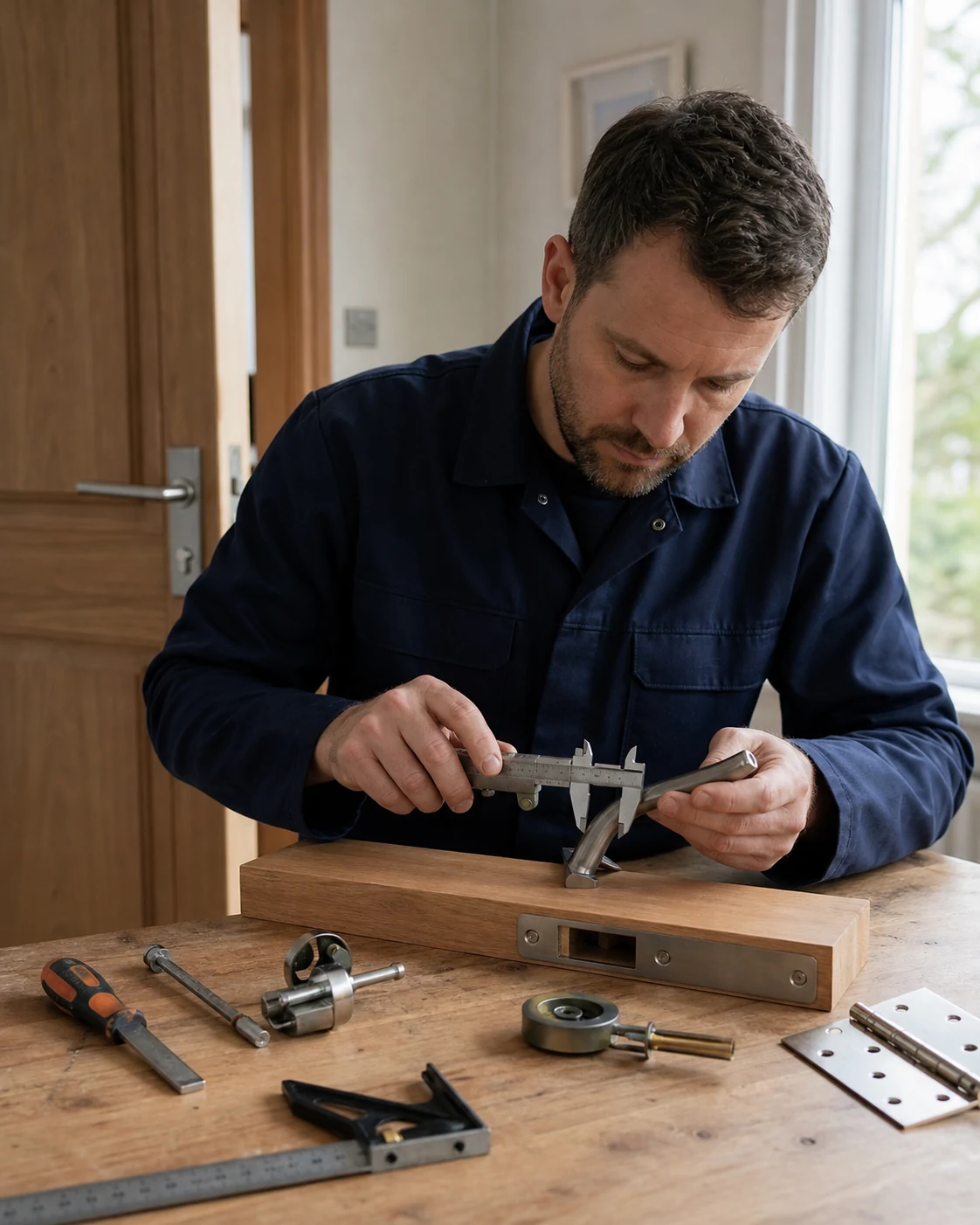
Wimbledon property context
Wimbledon enquiries can involve family houses, period homes, apartment developments and gated entrances. Those settings prompt useful questions, but they do not establish tenure, fitted hardware, door performance or any consent requirement at an individual property.
For a family house, include doors used by children, visiting relatives or authorised household support alongside the main entrance. For a period home, note existing cut-outs and repaired timber before asking for additional hardware. The owner should supply any actual planning, heritage, insurer or lease requirement.
In an apartment development, show the route through gate, lobby, lift or corridor to the private door. Management controls shared systems; the private customer controls only the work their agreement allows. A concierge may facilitate attendance without becoming the hardware decision-maker.
Gated access needs two records: the gate’s mechanical or powered behaviour, and the private entrance problem beyond it. A visit cannot assess the final door if the authorised route never becomes available.
| Setting | Add to the plan | Keep outside assumption |
|---|---|---|
| Family house | All exterior doors, regular users, spare key plan and internal exit | One door representing the whole household |
| Period home | Door audit, earlier preparation, finish expectation and actual permissions | Heritage status inferred from appearance |
| Apartment development | Registration, common route, private authority and management contact | Common credentials included in private work |
| Gated entrance | Gate owner, access method, mechanical state and powered response | Locksmith responsible for every gate function |
| Rear extension entrance | Door material, multipoint sequence, keys and frame contact | Mechanism fault chosen before inspection |
| Converted property | Common threshold, freeholder decision and each private flat scope | Shared and private upgrades combined informally |
Portfolio quotation
Cost depends on the number of entrances, access, inspection, labour, hardware, preparation and making good. Wimbledon alone does not establish a figure. A portfolio quote should show what is being completed now and what remains an option after inspection or another owner’s decision.
Every threshold has a stable name, owner and present state.
Faults, key control and planned improvements are ranked.
Hardware and preparation are checked at the actual entrances.
Immediate work, later work and referrals appear separately.
Recipients, spares, tests and unfinished stages close the record.
Ask how attendance, assessment, parts, extra keys, joinery and decoration are treated. A total price without named doors or defined outcomes is difficult to compare.
Wimbledon locksmith FAQ
No. Audit the full route, then prioritise current faults and key-control needs. Compatible later stages can remain visible without unnecessary replacement.
Possibly where compatible hardware and the intended control plan allow it. Each door still needs measurement and ownership confirmation.
Only when a defined outcome and supporting requirement justify the change. Age or appearance alone is not a complete reason.
The managing agent, freeholder or appointed development party normally controls shared gate work and credentials.
Consider present operation, household use, access alternatives and key control rather than assuming the street door is always first.
That depends on sound material, dimensions, existing preparation, desired function and any real permissions. Inspection is required.
List legitimate roles and the doors each role needs. Options can then be assessed without collecting unnecessary personal information.
The scope should show whether timber repair, redundant cut-outs and decoration are included or assigned to another trade.
Record the named door, work, keys, normal operating tests, limitations and the priority of any remaining entrance.
Nearby coverage
Choose a related service for the task and nearby pages for other entrance-planning contexts.
One home, a deliberate entrance portfolio
Send the door list, ownership, users, current operation and ranked outcomes for a measured staged proposal.
