
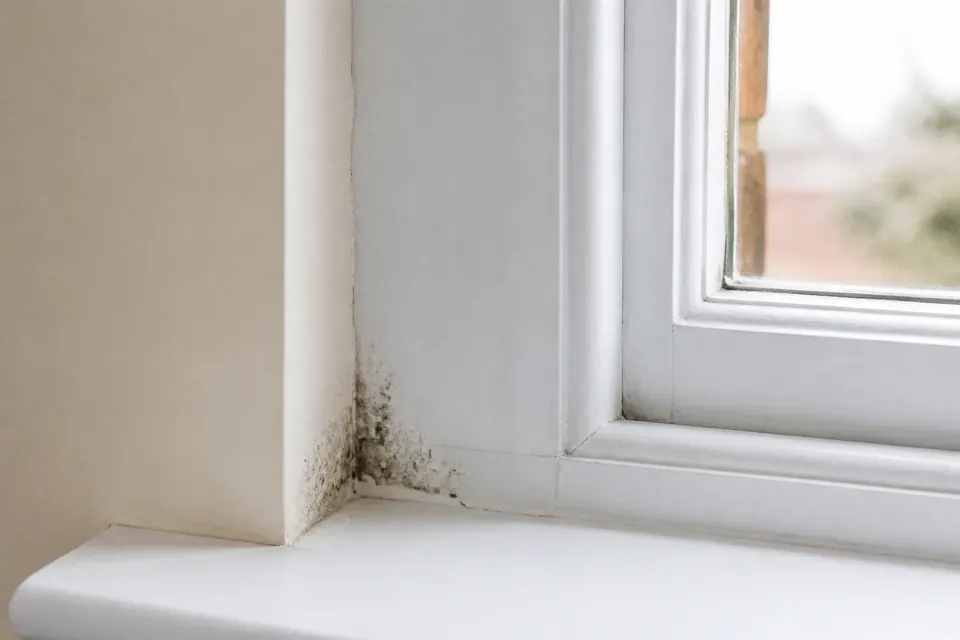
Around a window
Show the current clearance and any planned item near the opening. Do not assume a new gap resolves observed water or growth.
RAYNES PARK / BEFORE THE ROOM IS REARRANGED
Record the present wall before the layout changes around it.
If you are planning new furniture or rearranging a Raynes Park room, show the affected surface before the change. Describe the existing layout and proposed move separately. More clearance may alter access, but it does not establish that moisture or mould has been resolved. Ask what preparation is appropriate before moving items against or away from the wall.
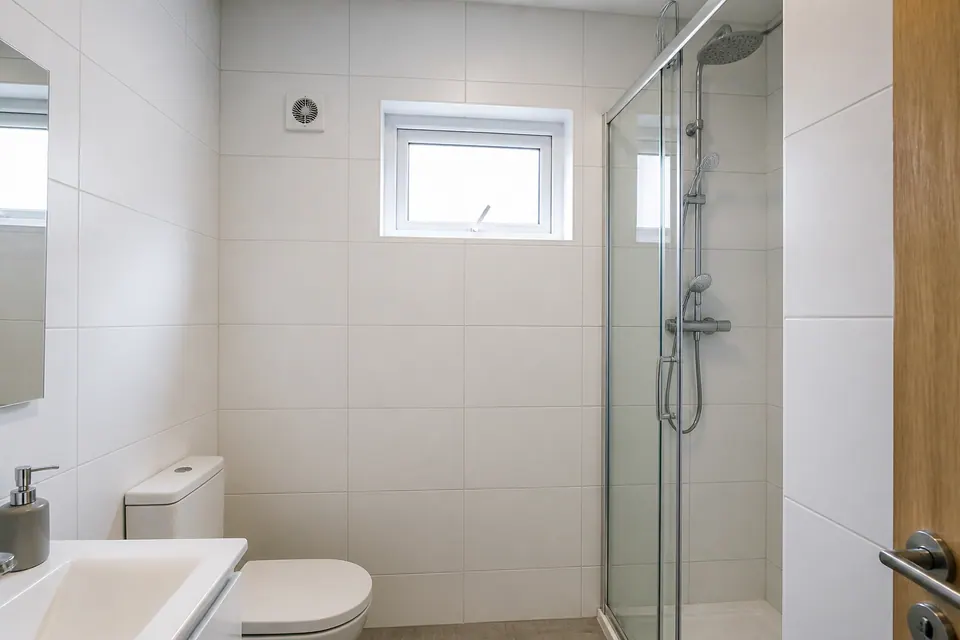
Existing position · planned move · surface condition
01 / LOCATE THE ISSUE
A layout plan should not replace the present condition of the affected material.
Show the current clearance and any planned item near the opening. Do not assume a new gap resolves observed water or growth.
If fittings or storage are changing, distinguish present wall evidence from areas that may become visible later.
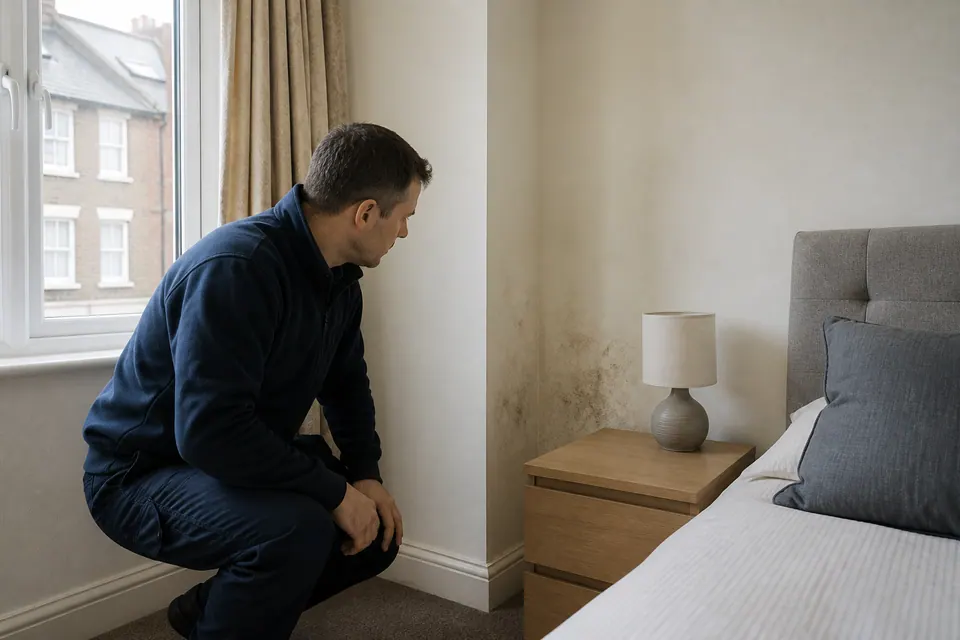
Explain the bed or wardrobe move and sleeping-space needs before agreeing preparation.
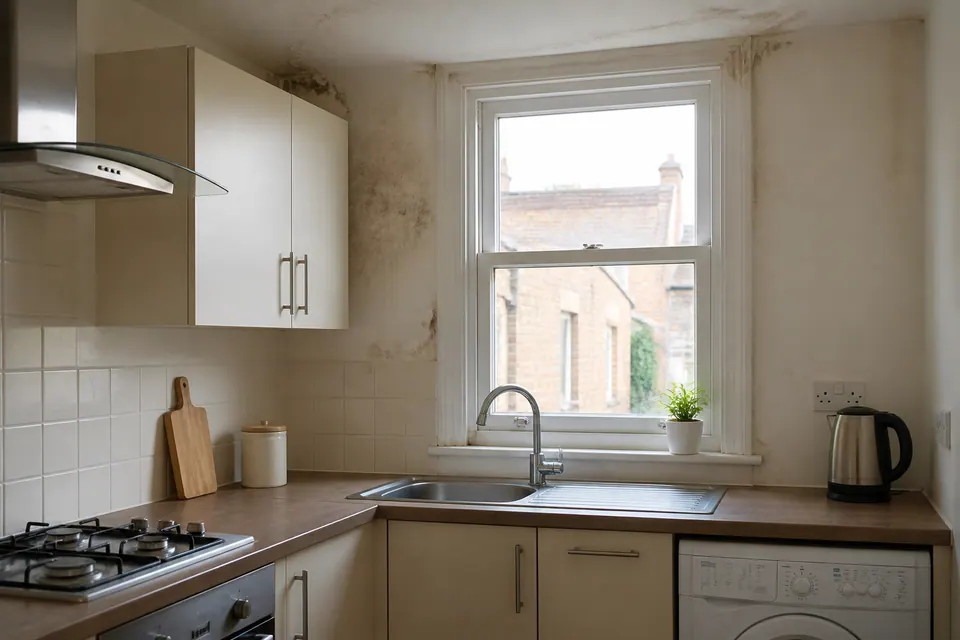
Fixed units require a different access discussion from loose furniture. Keep removal or fitting work separately agreed.
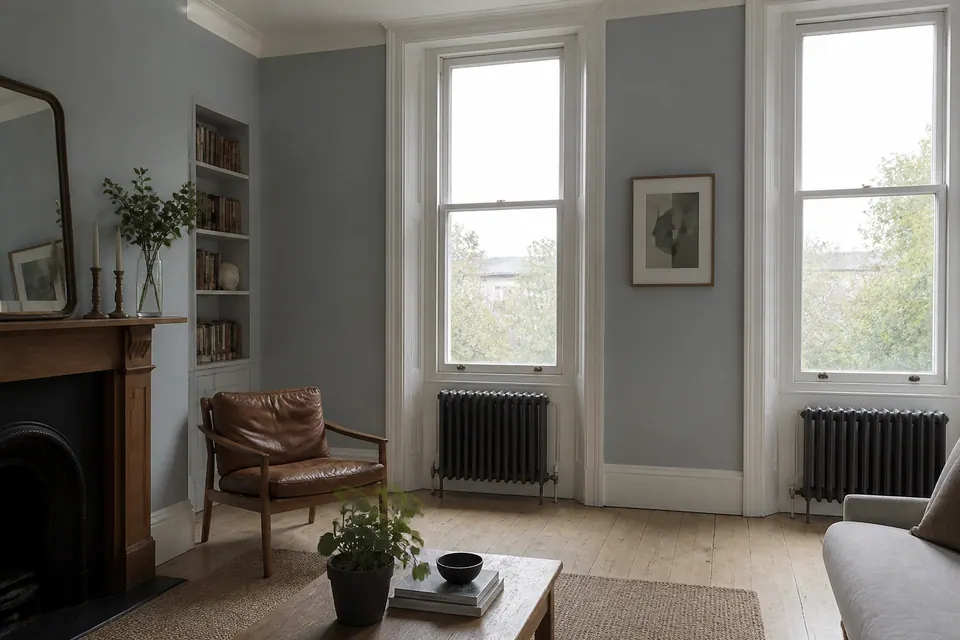
Locate the affected wall before the sofa or shelves move so later photographs refer to the same area.
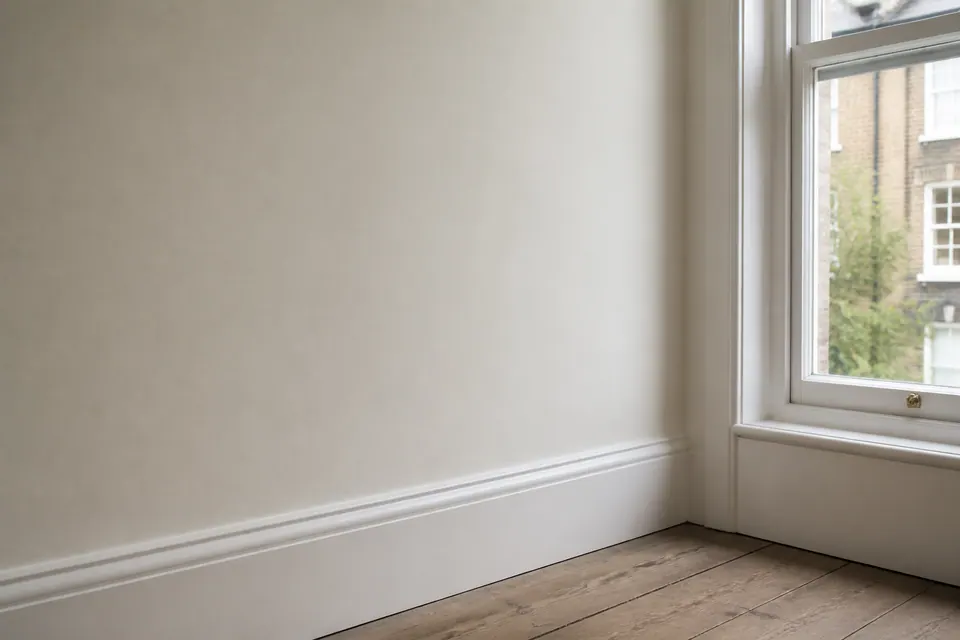
Show current paint or covering condition without stripping it as part of the planned room refresh.
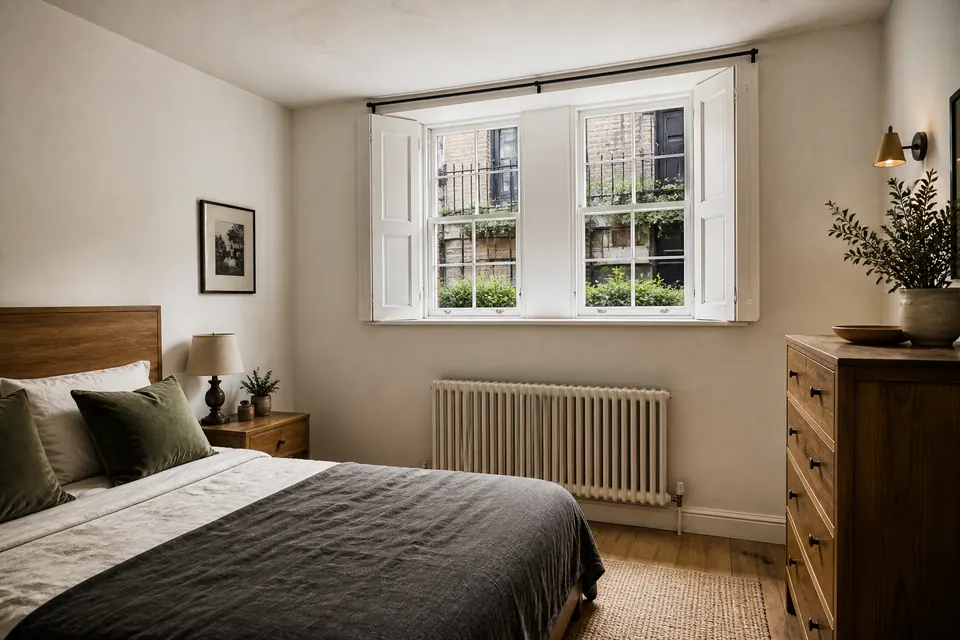
If a move later reveals more, record it as newly visible evidence rather than claiming it was previously assessed.
A different layout may improve reach, but it does not establish treatment suitability or a resolved moisture source.
Raynes Park / THE PROPERTY BRIEF
Once furniture changes, it can be harder to explain what was visible beforehand.
Take a room-context view from an accessible position and describe any wall portion currently hidden. State whether you plan to remove, replace or relocate the furniture, without doing so merely for a photograph. This allows the treatment enquiry to consider current evidence and practical preparation rather than relying on an assumed future clear wall.
03 / SEPARATE THE QUESTIONS
Keep the practical benefit of clearance separate from questions about growth, material and moisture.
| Change or observation | Useful meaning | Limit |
|---|---|---|
| Furniture moved away | More wall may become visible | Does not confirm the wall is suitable or dry |
| New item planned | A preparation and sequencing question | Does not replace assessment of existing marks |
| Patch revealed after moving | Newly available surface evidence | Does not establish when growth developed |
| Clearance increased | Potentially different practical access | Does not prove a moisture problem is solved |
Agree treatment and any remaining material or moisture decision before assuming the wall is ready for its next use.
Both belong in the enquiry, but they answer different questions.
| Point | Affected wall now | Planned room change |
|---|---|---|
| Evidence | Visible material and marks | What furniture is intended to move |
| Uncertainty | Hidden extent and unresolved source | Access not yet created |
| Limit | Appearance does not establish readiness | Clearance is not mould treatment |
| Agreement | Suitable surface work and guidance | Appropriate preparation and later arrangement |
04 / DIRECT ANSWERS
Show the current accessible view and ask about preparation before moving heavy or apparently affected items.
Do not assume that. Access can change without resolving moisture or the affected material.
Yes, but keep it separate from the access currently available.
Identify it as newly visible and ask whether assessment or the scope needs updating.
Discuss the surface and applicable instructions before treating the wall as ready for the new arrangement.
Only explicitly agreed work should be expected; treatment and decorative reinstatement are separate decisions.
Confirm practical arrangements and return guidance for the agreed treatment.
No. Describe any visible changes separately rather than inferring its condition from the nearby wall.
05 / QUOTATION, NOT GUESSWORK
Provide the present affected extent and material, with the proposed move as practical context. A future clear wall should not be treated as confirmed access until arrangements are agreed.
Review the mould-removal service details ↗| Present situation | How it is considered | Detail needed |
|---|---|---|
| Small suitable exposed patch | Photos may support a quotation | Current finish and reach |
| Multiple or returning marks | Assessment defines the work | Located evidence and earlier history |
| Damaged material or complex damp | Specialist quotation may be required | Unresolved condition and access limits |
Confirm the total and access assumptions. A planned rearrangement does not automatically add newly revealed material to an existing quote.
06 / A CONTROLLED APPROACH
Locate the exposed patch and note what remains hidden before changes are made.
Discuss the proposed move and handling needs before preparing the room.
Work to the confirmed scope, with any newly exposed area reviewed rather than automatically included.
Clarify applicable guidance and remaining material or moisture questions before the room is reset.
It explains what was known before the layout changed, without claiming a customer treatment result.
Retain current room views and the proposed move description.
Keep actual access and included surfaces clear.
Follow the relevant instructions and raise any unresolved wall condition.
Illustrations show planning stages, not verified customer before-and-after transformations.
07 / WHEN IT COMES BACK
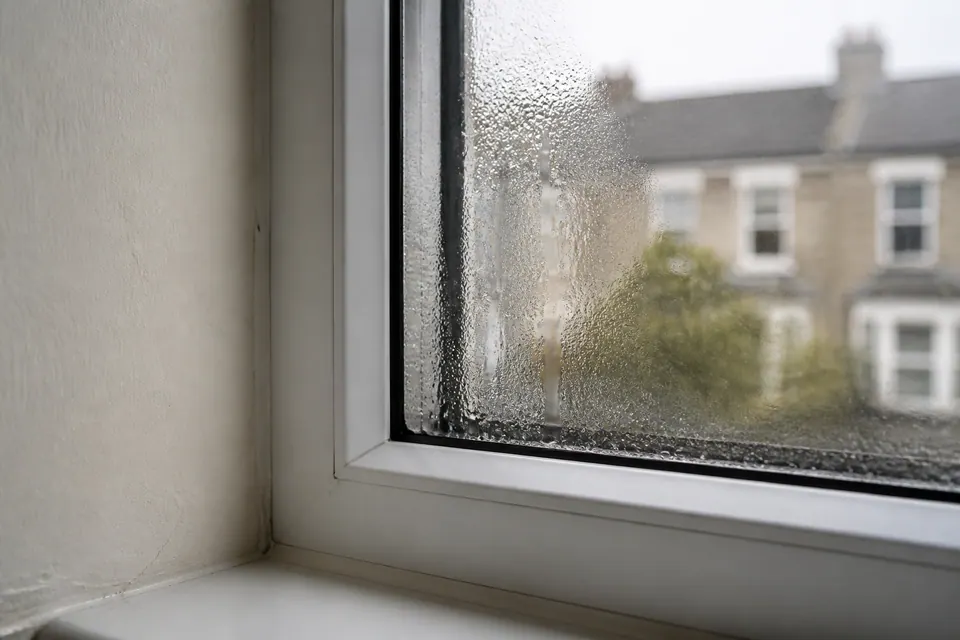
State whether they were previously hidden or whether an exposed treated area changed. The date of discovery is not necessarily the date the condition began.
Record the material and any observed water without assuming the new or old layout caused the issue. Further assessment may be needed where the condition remains unresolved.
The original and new arrangement help identify the same wall location and the limits of earlier visibility.
08 / ROOM-BY-ROOM CONTEXT
Keep proposed storage changes separate from the current wall, seal or grout condition.
Explain bed or wardrobe plans and practical sleeping arrangements before preparing the area.
Distinguish fixed-unit work from moving loose items and confirm any separate access scope.
Retain a view locating the patch before sofas or shelving are relocated.
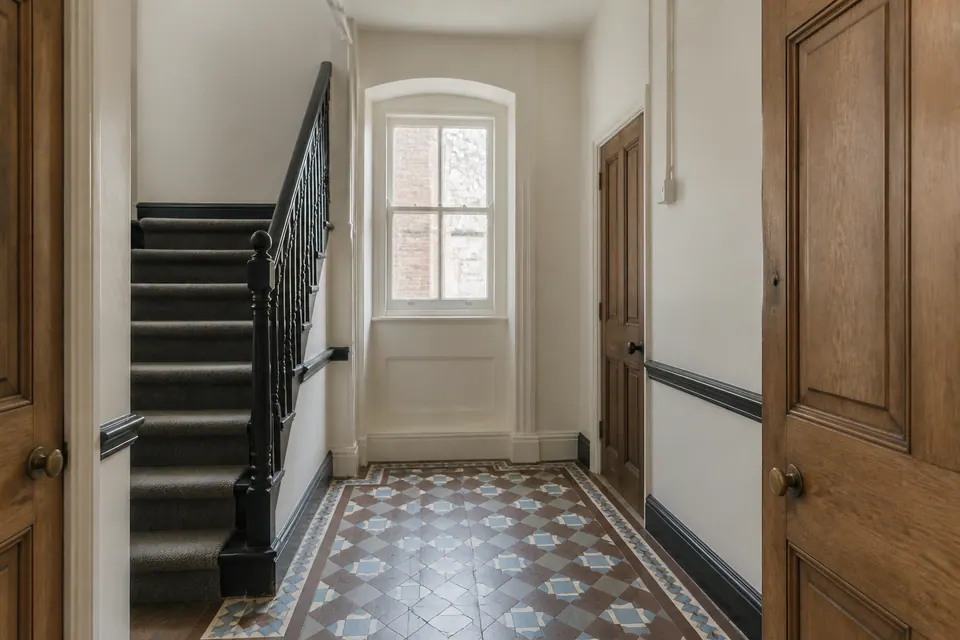
Ensure a planned furniture move does not obscure shared access arrangements needed for the visit.
Record the present material and known water history independently of furnishing plans.
Raynes Park / ACCESS & PEOPLE
Photographs should show what was visible and where the furniture stood.
Ask about handling and access rather than assuming the room must be emptied.
Clarify treatment instructions and any unresolved condition of the wall.
A proposed move is useful context, but the booking contact also needs the current room condition.
Keep furniture, treatment and any repair work distinguishable so one appointment is not assumed to cover all three.
Do not use a newly clear or newly decorated view as proof that the underlying question is settled.
Raynes Park / PLAN THE APPOINTMENT
Confirm availability for the Raynes Park postcode before scheduling treatment around a furnishing change.
Explain entry, current obstacles and proposed access changes that have not yet happened.
Load the area map.
Raynes Park / BEFORE BOOKING
The room can be planned without rushing the preparation.
A wider view locating the patch and present furniture, followed by a closer image only where accessible.
No. Clearance does not establish that the moisture or material condition has been resolved.
Ask for appropriate handling and preparation advice first.
Raise the timing during the enquiry and do not assume the affected wall is ready for the new arrangement.
Not automatically. Supply the new evidence and request review of the scope.
No. Explain that it was previously hidden and keep the timing uncertain where unknown.
Clarify the surface and moisture questions before treating decoration as the settled next step.
Follow the applicable instructions for the agreed work rather than a generic immediate-return assumption.
The original room view, current scope and a view locating the same wall after rearrangement.
RAYNES PARK / RECORD BEFORE REARRANGING
Send the postcode, accessible wall photographs and the proposed furnishing move. Discuss preparation before altering the evidence or access.
Room illustrations are not customer furnishing changes or verified treatment outcomes.
