
An exposed marked wall
Name its finish and visible extent. Do not extend it behind every stored item without evidence.
TOOTING / ENCLOSED STORAGE
What you can see and what you can smell are different observations.
For a Tooting cupboard or enclosed storage area, describe visible marks separately from a musty odour. Show the opening and accessible wall without emptying apparently affected contents unnecessarily. The enquiry should distinguish wall, joinery and belongings while leaving concealed conditions unconfirmed.
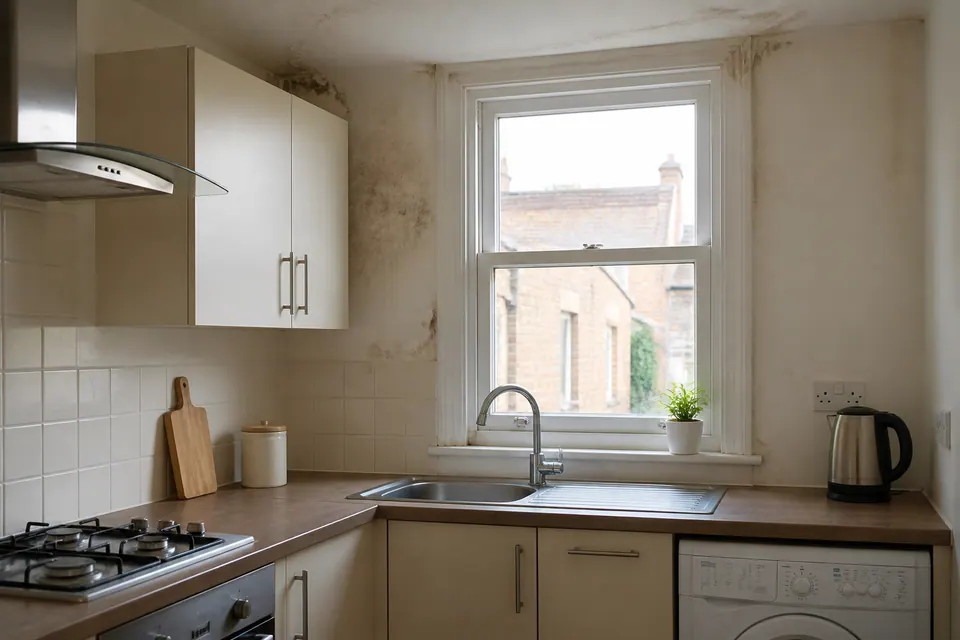
Opening · visible marks · concealed limits
Tooting / ACCESS & PEOPLE
Name its finish and visible extent. Do not extend it behind every stored item without evidence.
Describe when it is noticed and what is accessible. Avoid claiming a hidden source or extent.
Raise them separately and seek handling guidance before moving contents through the property.
Record visible condition and follow booking arrangements. Do not dismantle storage to establish the issue or repair responsibility.
Provide confirmed water and earlier-work records for the actual cupboard. A general clean may not describe its hidden condition.
Separate wall treatment, contents questions and any access or replacement work. Agree the boundaries before clearing the space.
02 / LOCATE THE ISSUE
Use the room setting to explain the cupboard, then distinguish the wall, fittings and contents. An enclosed smell should not be converted into a confirmed extent.
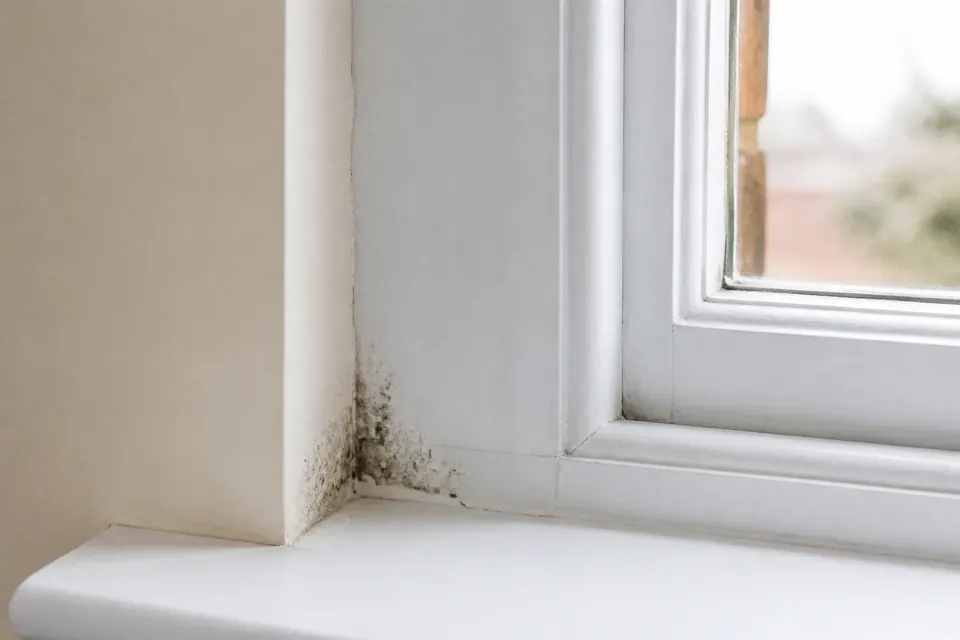
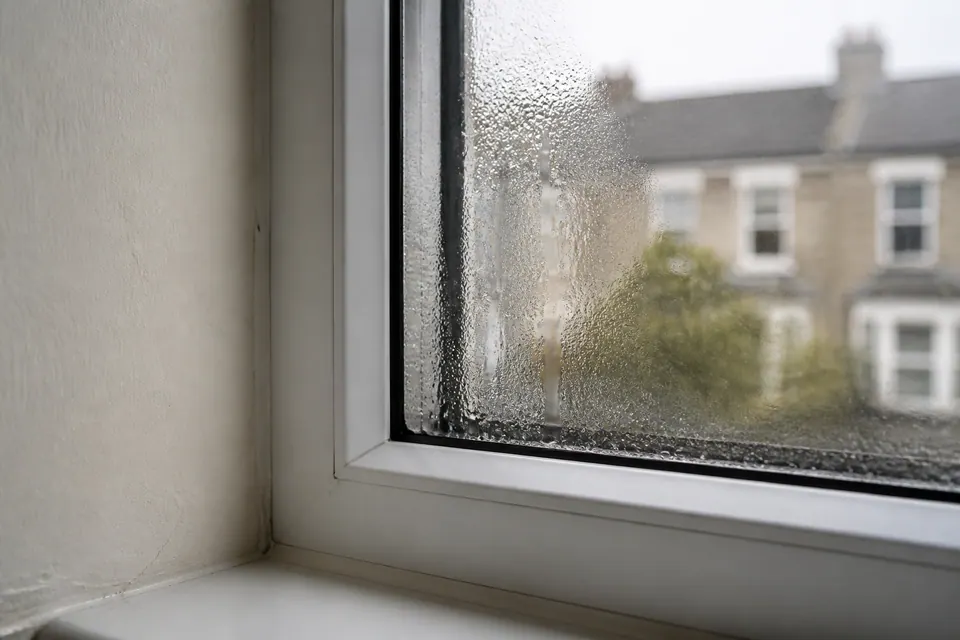
Show the accessible wall and opening relationship. Moisture at nearby glazing does not establish the condition behind stored items.
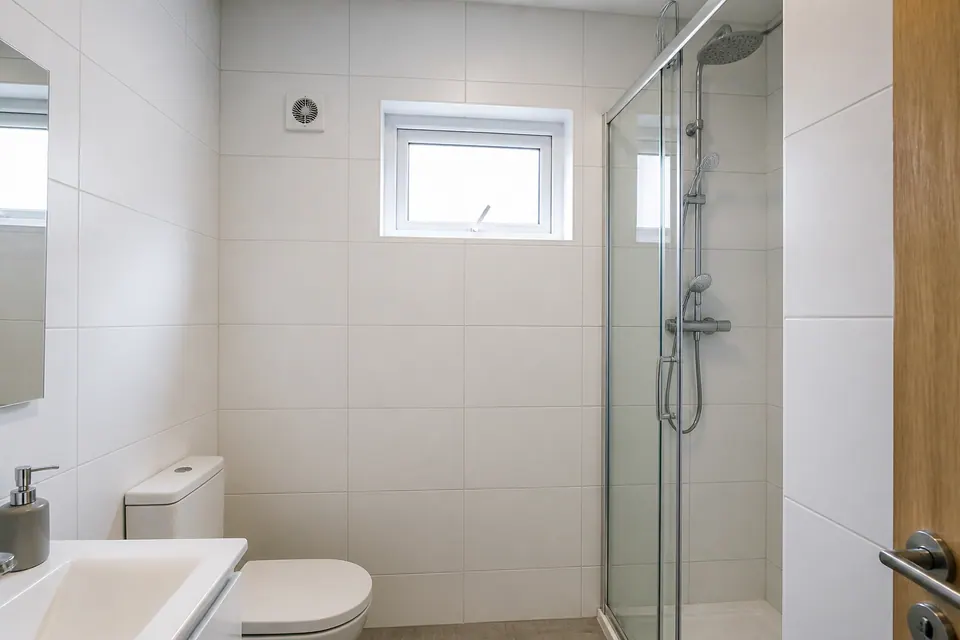
Identify the material carrying marks and any known wetting. Wall paint, cabinet backing and contents may require different decisions.
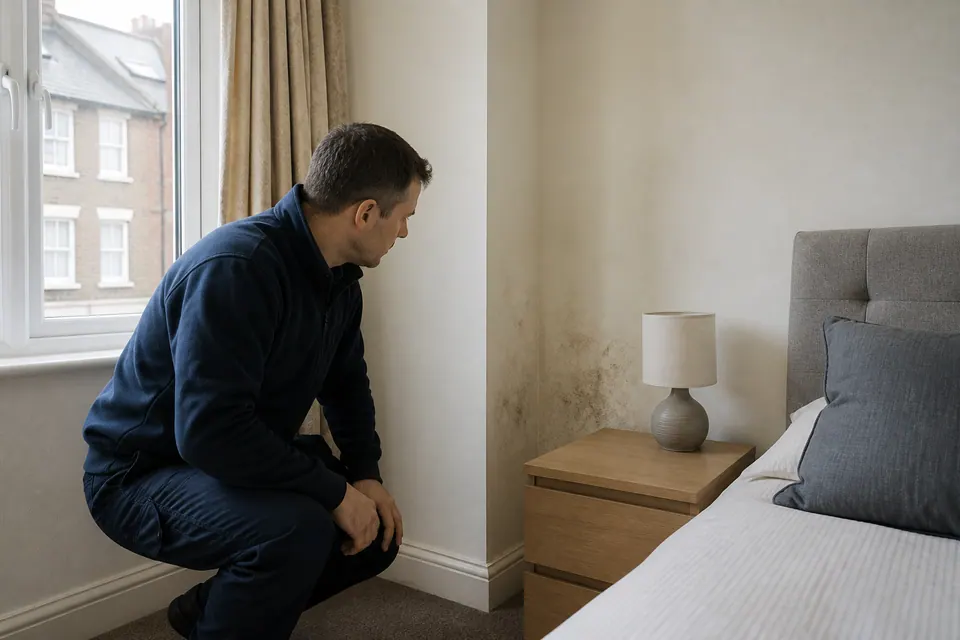
Describe visible surfaces and nearby textiles separately. Do not empty apparently affected belongings solely to expose the wall.
Keep a confirmed pipework event distinct from general odour or spotting. Fixed units and stored items should not be assumed part of one treatment method.
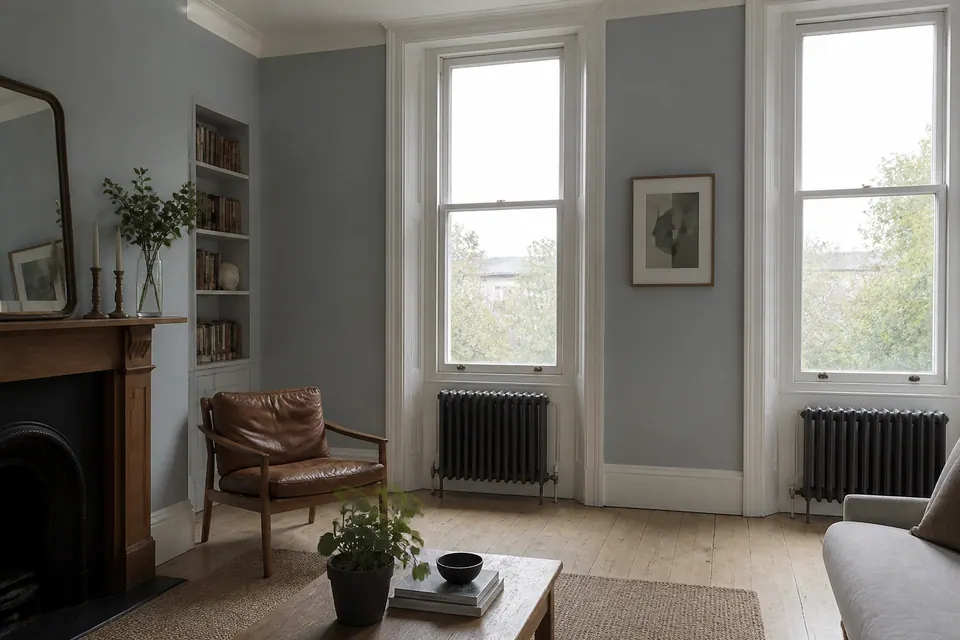
Show the cabinet opening and accessible wall. A clean-looking front does not confirm the hidden backing condition.
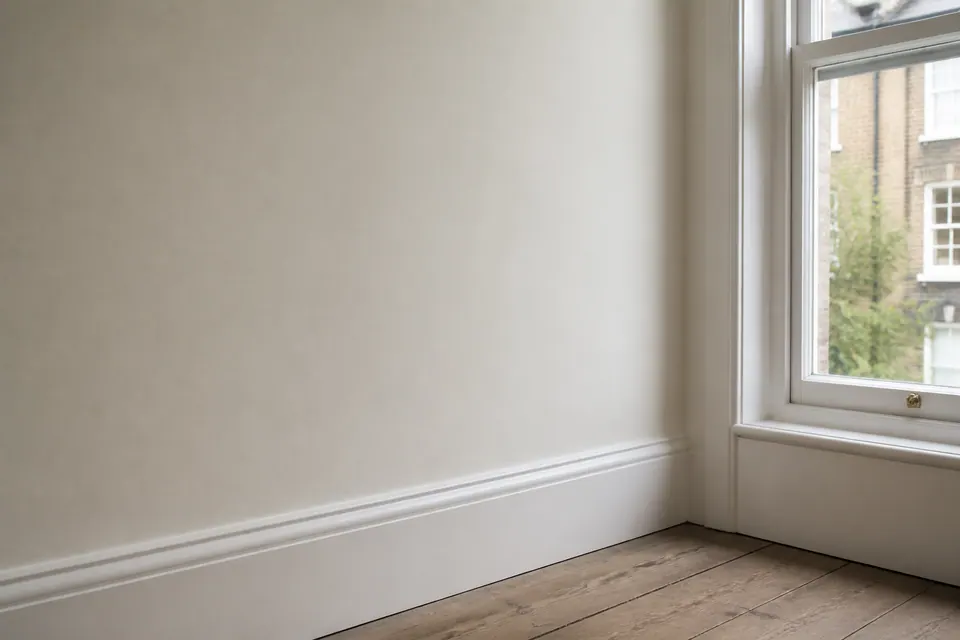
Describe exposed deterioration without scraping or probing. Concealed areas may require another assessment rather than assumed surface work.
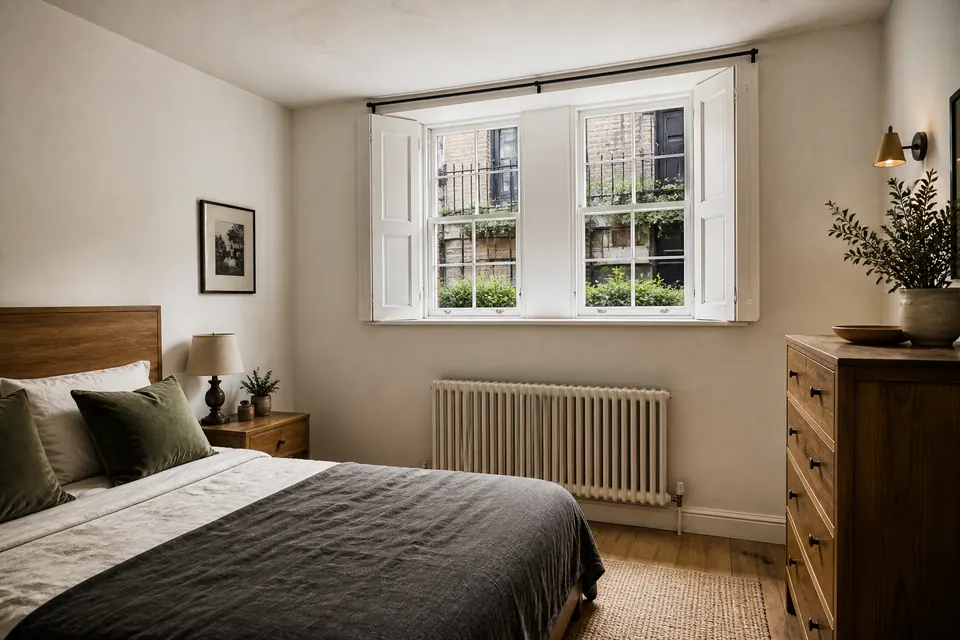
Identify what is seen, smelled and blocked from view. A smell is useful information but cannot confirm hidden mould or its source.
Report these observations accurately without using one as proof of the others.
03 / SEPARATE THE QUESTIONS
Assessment needs visible material and known history rather than an assumed diagnosis from odour alone.
| Observation | Possible context | What to clarify |
|---|---|---|
| Marks near a window-side cupboard | Moisture around the opening or wall | Actual visible finish and water observations |
| Spots inside bathroom storage | Repeated wetting or restricted drying | The affected material and accessible extent |
| Changed backing after a known leak | Water exposure or material deterioration | Confirmed repair status |
| Odour returning without a clear view | An unresolved condition needing assessment | What is visible and what remains concealed |
Investigation behind fittings, treatment of belongings and replacement of damaged joinery require their own agreement. A suitable accessible wall quotation should not silently include them.
An enclosed area can limit inspection without establishing the hidden condition.
| Assessment point | Mould | Damp / moisture |
|---|---|---|
| What is described? | Fungal growth on an observed affected material | Excess moisture relevant to the cupboard or backing |
| Useful evidence | Visible marks and the material carrying them | Known water events or observed wetness |
| Why distinguish them? | Odour does not establish the extent of growth | Moisture questions may require further investigation |
| Next decision | Suitable accessible treatment and contents boundaries | Separate access, investigation or repair |
Tooting / CUPBOARD ENQUIRIES
A smell alone does not establish what is behind the contents.
Show accessible marks and explain whether they sit on a wall, shelf or cabinet backing. State what cannot be seen and whether fixed fittings restrict access. Avoid moving apparently affected items through the home merely to improve the photograph. A suitable wall treatment and any decision about belongings or concealed material need separate consideration.
05 / QUOTATION, NOT GUESSWORK
For Tooting storage enquiries, provide opening views, visible material details and known water history. Small suitable accessible areas may use photo quotations; concealed uncertainty, recurrence or damage can require assessment or specialist quotation.
Read the main treatment scope ↗| Reported condition | Quotation route | Limit to identify |
|---|---|---|
| A suitable accessible marked surface | Photographs may support quotation | The actual visible extent |
| Recurring or partly concealed concern | Assessment before defining work | What is observed versus unconfirmed |
| Damage or complex moisture question | Specialist quotation where needed | Known repairs and concealed limits |
Confirm exclusions before clearing storage. Wall treatment does not automatically include contents care, dismantling or hidden investigation.
06 / DIRECT ANSWERS
Describe it, but do not present concealed growth as confirmed. Assessment may be needed to understand what work is appropriate.
Decoration is not a substitute for assessing the condition. Keep visible evidence and material limits clear.
No. Report the observation separately from visible growth and retain the previous scope for comparison.
Not automatically. Access work and reinstatement need explicit agreement.
Ask for handling and preparation guidance, particularly where belongings appear affected. Do not improvise relocation.
Identify the actual material. Joinery, backing and coatings may have different suitability or replacement needs.
Report both positions separately. Proximity does not establish a common source or hidden extent.
No contents scope should be assumed. Describe any separate condition and ask what assessment or handling is appropriate.
07 / A CONTROLLED APPROACH
Identify marks, materials and inspection limits. Keep odour observations distinct from confirmed growth.
Clarify contents preparation and any separate fitting work. Avoid unplanned emptying or dismantling.
Carry out the agreed accessible work. Newly exposed condition or belongings require a separate discussion.
Clarify what was addressed and any hidden, contents or repair question outside the scope.
A cupboard visit is not automatic treatment of every stored object or concealed face.
Record the visible material and inspection limit.
Treat suitable accessible surfaces explicitly named.
Keep belongings and concealed investigation distinct.
The stages are illustrative rather than customer evidence. Continuing moisture may permit further growth.
08 / ROOM-BY-ROOM CONTEXT
Identify visible material and ordinary wetting separately from odour.
Mention textiles and other belongings without assuming they share the wall method.
Report confirmed leaks separately from general smell or spotting. Fixed units may restrict access.
Show the opening and accessible backing rather than relying on the appearance of the front.
Clarify who can arrange access and handling before including the area.
State level and known water history without diagnosing concealed growth from location or smell.
09 / WHEN IT COMES BACK
Describe the odour separately from any visible change. Compare the current accessible surface with the earlier scope instead of assuming hidden mould recurrence.
Report known intervening water events or storage changes without assigning a cause from them alone. Further assessment may be needed if the condition remains unclear.
Retain a wider view and the named materials so later observations refer to the same accessible area.
Tooting / PLAN THE APPOINTMENT
Send the Tooting postcode, opening photographs and practical access limits. Confirm availability before booking.
Mention contents or separate fitting work as distinct questions rather than assuming they are included.
Load the area map.
Tooting / BEFORE BOOKING
The first enquiry can be useful without disturbing the contents.
No. Report the smell separately from visible marks and state what cannot be inspected.
Ask for guidance first, particularly where contents appear affected. Show the opening as it is.
Identify them separately. Their condition and suitability may differ.
Describe that limit and keep concealed extent unconfirmed until appropriately assessed.
Not automatically. Access and reinstatement require explicit agreement.
Seek preparation guidance and do not mix cleaning products or obscure the current condition.
Follow the applicable instructions for the agreed work and handling arrangement.
It does not by itself establish the material condition, source or suitable treatment scope.
Separate odour from visible changes and retain the earlier scope so the same accessible area can be compared.
DESCRIBE WHAT IS SEEN AND WHAT IS NOT
Send the postcode, opening view and separate notes about visible marks and odour. Ask about contents handling and the limits of the accessible scope.
The room illustrations are not records of customer contents treatment or concealed inspection.
