
Discovery
When the sign was first noticed.
PEST CONTROL / BALHAM
Comparing fresh and historic signs.
A new discovery can be an old mark.
Finding something today does not establish when it appeared. For a Balham enquiry, state the discovery date and when the position was last checked, if known. Keep any later direct sightings separately recorded so the assessment does not begin with an invented timeline.
03 / OBSERVATION CHECKLIST
A short chronology is more useful than a confident guess about freshness.
Do not handle suspect material to estimate its age.
When the sign was first noticed.
When that position was last reliably observed, if known.
When an animal or insect was actually seen.
What moved or uncovered the position.
A separate event rather than another look at the same trace.
The interval for which no reliable observation exists.
BALHAM / PROPERTY CONTEXT
A position may not have been visible for some time. That gap in observation should remain in the report rather than being filled with certainty.
The last reliable check, first discovery and any later direct event are different facts. Include only those you actually know.
If an item moved or a surface was uncovered, explain the change. The new visibility may account for the discovery without determining the mark’s age.
Ask how findings will be monitored or reviewed under the proposed programme. Do not try to age suspect material by handling it or disturbing the area.
04 / AT A GLANCE
08 / THE CONTROL PLAN
Uncertain age can remain uncertain while the concern is assessed.
Accessible findings and reliable dates can be considered without inventing a start time.
The method follows the established concern and household, with any review arrangements clarified.
Fresh observations should be added to the history rather than used to rewrite what was originally unknown.
10 / PROBLEM → TREATMENT → CONTROL
A review needs to distinguish repeated observation of one trace from fresh evidence. Keep the original discovery record available.
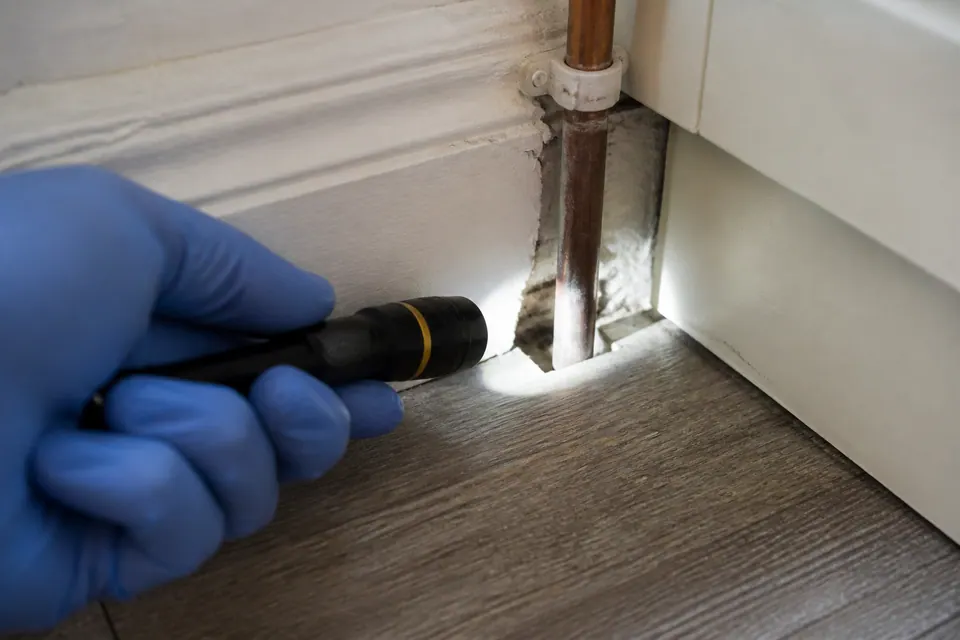

Generated scenes are not a Balham chronology assessment or proof of current activity.
07 / SCOPE BEFORE A QUOTE
An undated finding still needs a suitable scope. Confirm the programme and any review commitment without using assumed freshness to choose a fixed package.
from £120
See published service pricingfrom £150
See published service pricing| Service | Pricing basis | Price |
|---|---|---|
| Mice control | Mouse-related evidence | Assessed quotation |
| Rat control | Rat concern and agreed programme | Scope-based price |
| Proofing / repairs | Additional tasks or repairs | Separate agreement |
Guides checked on 27 August 2026 are starting amounts. Confirm Balham coverage and the proposed scope; the date of discovery does not itself establish current activity or price.
01 / START WITH THE EVIDENCE
Identification and timing both need a factual account.
Damage or marks with an uncertain or known discovery date.
Mice controlA direct larger-rodent sighting.
Rats controlPhysical signs around a resting position.
Bed bug treatmentRepeated insects observed at a fitting.
Cockroaches controlSay when they were noticed and whether the area was previously checked. Do not declare the marks fresh from appearance alone.
Give the actual event date and location separately from older traces.
Describe physical evidence and discovery. Skin irritation cannot establish species or date an infestation.
Use separate event dates. Repeated direct sightings provide different information from an undated mark.
05 / PROPERTY BRIEF
Explain when it was last entered or checked if known.
Mention what revealed the position.
Keep physical findings separate from symptom timing.
Record earlier and current positions where relevant.
Check suitability separately rather than assuming a business concern is covered.
Check the premises requirements06 / SIGNS → LOCATION → NEXT STEP
| Pest problem | Signs to describe | Areas to mention | Next step |
|---|---|---|---|
| Mice | Mouse-like damage | Discovery and last known check | Avoid declaring freshness without evidence. |
| Rats | Larger rodent sighting | Actual event date and position | Keep separate from old traces. |
| Bed bugs | Physical bedroom marks | Resting position and discovery | Seek identification without dating from symptoms. |
| Cockroaches | Recurring insects | Individual event dates | Explain prior products and changes in visibility. |
MAKE THE ENQUIRY SPECIFIC
Explain that no earlier reliable check is available.
Record the change in visibility without assigning a creation date.
Give it a separate event entry.
Do not automatically report it as another occurrence.
09 / FROM FIRST CONTACT
Expand the stages without attempting to age material yourself.

Give when the sign was first noticed.
Mention the last known check or changed visibility.
Record actual sightings independently.
Do not disturb material merely to determine freshness.
Distinguish new events from the original unchanged trace.
Ask how the programme uses further findings to decide next steps.
13 / CLEAR EXPECTATIONS
What was actually observed when.
What cannot be established from discovery alone.
What happened subsequently and separately.
ADDRESS AND AVAILABILITY
Provide the postcode with the room and discovery history.
Check availability without waiting to invent a complete timeline. The map is an area reference rather than a local Alesta office.
Open Balham in Google Maps ↗BALHAM / QUESTIONS
No. State discovery and leave age uncertain unless reliable information establishes it.
Say the position had not been checked recently rather than filling the gap with a guess.
Do not handle suspect material to date it. Provide visible observations and known history.
Keep that actual event separately dated from the trace.
Explain what changed and where the finding was revealed.
Not automatically. Distinguish another view of the same trace from a genuinely new finding.
Enquire with the facts available and discuss suitability and availability without inventing certainty.
No. Assessment and proposed scope determine which service is appropriate.
Ask what observations and follow-up are proposed for the particular concern.
Add the later position and date while preserving the original uncertain-age account.
15 / TAKE THE NEXT STEP
Call with discovery, reliable earlier checks and any direct events. Confirm assessment without needing to prove the age yourself.
