
Mice
Damage or marks within household storage.
Mice controlPEST CONTROL / GREENWICH
Rooms opening onto outside space.
The threshold is a reference point, not a proven route.
When a room opens onto a patio or courtyard, findings on either side can be easy to merge. For a Greenwich enquiry, specify what was actually inside the room and what was seen beyond the door. The assessment can then consider the connection without treating it as established entry.
01 / START WITH THE EVIDENCE
Identify the observation before connecting it to the door.
Damage or marks within household storage.
Mice controlA larger rodent sighting inside or outside.
Rats controlPhysical signs at sleeping furniture.
Bed bug treatmentRecurring insects at an indoor fitting.
Cockroaches controlName the cupboard or edge where the sign was found. An open patio door does not establish how it arrived.
State its actual position and direction if observed. Do not pursue the animal or assume it entered the home.
Describe physical bed evidence separately. A doorway or courtyard report does not identify bed bugs.
Record the fitting and previous products. Keep any exterior insect observation separate unless assessment establishes a connection.
GREENWICH / PROPERTY CONTEXT
A patio, balcony or courtyard may be private or shared; the specific arrangement matters. Describe it without assigning the pest concern to the outside space simply because it is nearby.
Inside beside the frame and outside beside the step are different locations. Retain that distinction even when observations occurred close together.
If an opening or door defect is visible, describe its condition separately from any claim that it is the route. Premature sealing is not a substitute for assessment.
Ask what authorised exterior access, if any, is part of the proposal. Work on common boundaries or another household’s space is not implied by a residential room booking.
03 / OBSERVATION CHECKLIST
Simple location language helps avoid an assumed entry story.
Do not disturb unknown animals, covers or suspect material to test a route.
Name the surface or fitting where the mark was found.
Keep the exterior observation in its own dated entry.
Describe what is visible without declaring it the source.
Record physical bed signs independently of the doorway concern.
Give the fitting and recurrence, with prior products.
Identify who observed the sign and who controls access.
04 / AT A GLANCE
05 / PROPERTY BRIEF
Explain the door and accessible area without assuming the whole exterior is included.
Identify the authority for access beyond the dwelling.
State the actual observation position and safe-access limits.
Provide known condition details, keeping repairs separate from the pest proposal.
Name the household rooms and occupants relevant to the selected method.
Discuss your homeCheck suitability explicitly if the connected space serves a business rather than the home.
Check the premises requirements06 / SIGNS → LOCATION → NEXT STEP
| Pest problem | Signs to describe | Areas to mention | Next step |
|---|---|---|---|
| Mice | Mouse-like damage | Inside household storage | Request assessment without assuming door entry. |
| Rats | Larger rodent seen | Exact inside or outside position | Describe the sighting separately from a route theory. |
| Bed bugs | Physical bed marks | Occupied sleeping area | Seek identification independent of exterior context. |
| Cockroaches | Recurring insects | Named indoor fitting | Provide event and product history. |
07 / SCOPE BEFORE A QUOTE
A connected outside space does not make it part of every treatment. Confirm the included areas and separate any repair or proofing proposal.
from £120
See published service pricingfrom £150
See published service pricing| Service | Pricing basis | Price |
|---|---|---|
| Mice control | Mouse findings within agreed rooms | Assessment-led quote |
| Rat control | Rat evidence and authorised areas | Programme quotation |
| Proofing / repairs | Door repairs or sealing | Separate agreed work |
Guides checked on 27 August 2026 provide starting prices. Confirm Greenwich availability, the full area list and any separate exterior or repair requirements.
08 / THE CONTROL PLAN
A doorway can guide the description while identification remains evidence-led.
Accessible findings can be considered with the door context, while an assumed route stays unconfirmed.
Treatment and any proofing recommendation should be coordinated rather than treating a visible gap as an instruction to seal immediately.
Later reports should identify the exact side and position so a new exterior event is not confused with an indoor recurrence.
09 / FROM FIRST CONTACT
Expand the stages before arranging sealing work.

Say which side of the door and which surface held the sign.
Explain private or shared control and practical access.
Ask whether any exterior assessment belongs in the proposed scope.
Do not alter the opening or disturb suspect material to test a theory.
Keep fresh indoor and outdoor events separate.
Clarify who authorises and performs any recommended door or boundary work.
10 / PROBLEM → TREATMENT → CONTROL
An alteration may address a recommended condition, but the assessment and subsequent evidence determine what it means for control.
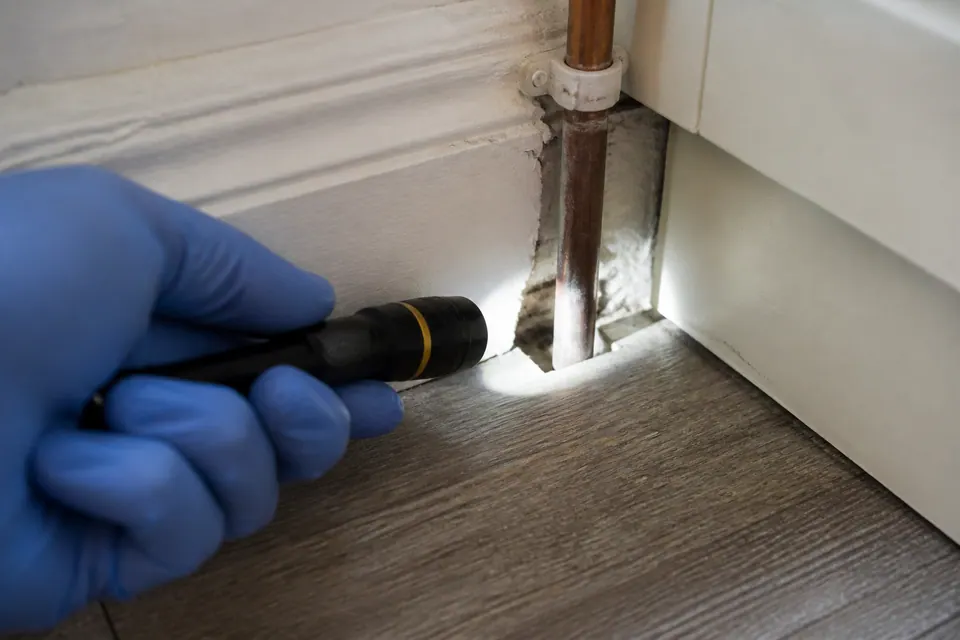
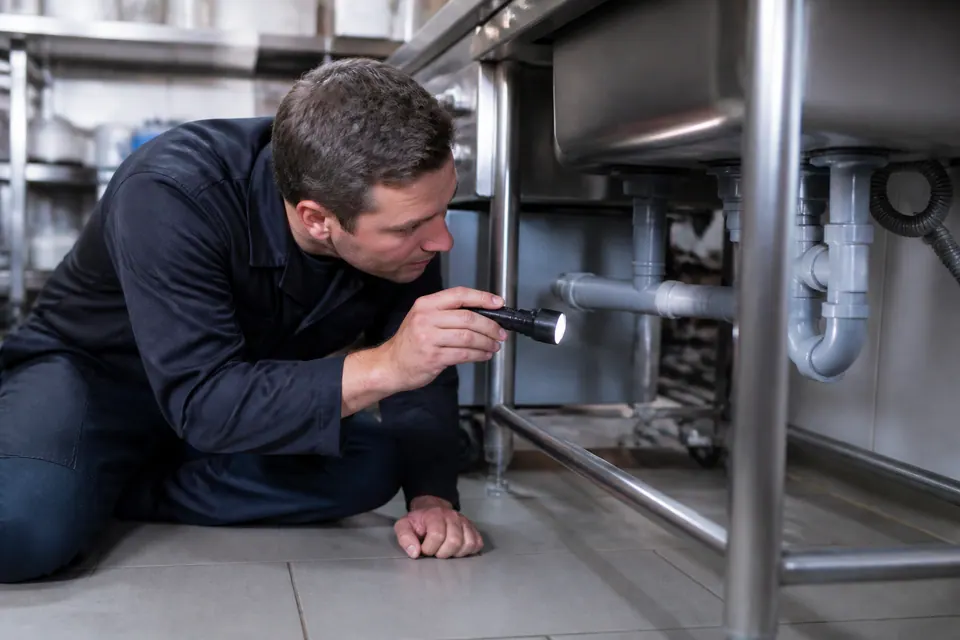
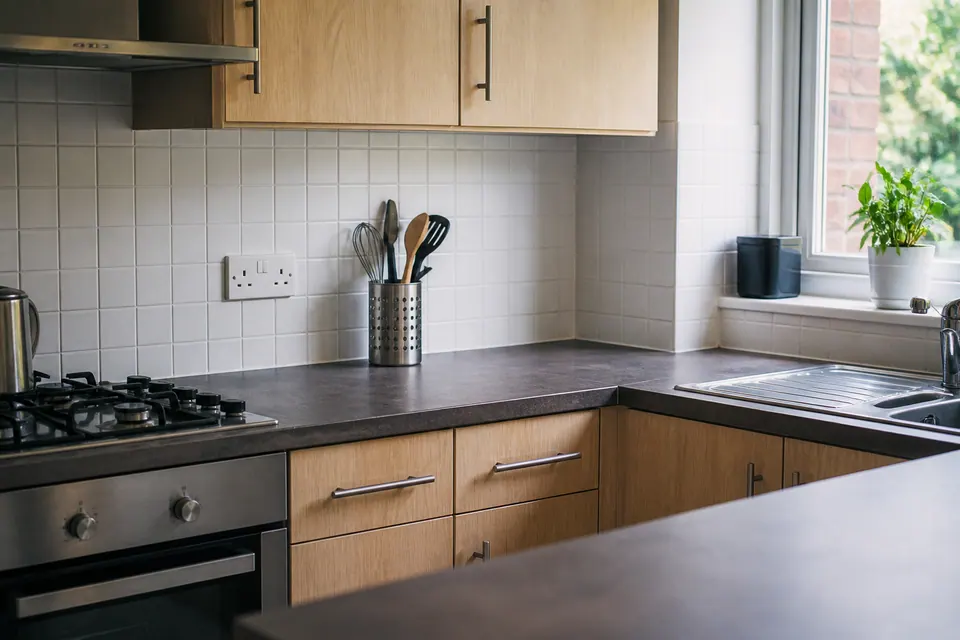
Generated scenes are not a Greenwich doorway investigation or proof of an entry route.
MAKE THE ENQUIRY SPECIFIC
Record it as exterior evidence rather than describing the room as infested.
Identify consent and access before adding it to the visit.
Report the condition, but leave the route unconfirmed until assessed.
Keep their separate position and date so review can consider the change accurately.
ADDRESS AND AVAILABILITY
Give the postcode and explain the relevant doorway and who controls exterior access.
Check availability and scope before coordinating shared-area permission. The area view is not an Alesta office or evidence of a confirmed route.
Open Greenwich in Google Maps ↗13 / CLEAR EXPECTATIONS
Inside and outside findings should retain their locations.
A visible defect is not automatically the proven entry point.
An adjoining space is not included without appropriate agreement.
GREENWICH / QUESTIONS
Record the exact position outside the frame. It does not automatically establish activity within the room.
No. Describe the condition separately from the pest evidence and let assessment consider it.
Explain who controls the space and confirm permission before including it.
Do not make sealing the assumed first action. Ask how any proofing should fit assessment and control.
Keep each finding’s position and date separate, even if they were noticed together.
Describe the actual evidence and safe access without implying the whole building exterior is included.
Report it independently with its kitchen position and history. Proximity in time does not establish a shared cause.
Not automatically. Repairs and alterations need their own identified scope and approval.
Obtain instructions for the method and areas involved, including household and animal arrangements.
State the new side and exact position. That is more useful than a general statement that activity returned at the door.
15 / TAKE THE NEXT STEP
Call with precise positions, exterior access details and known maintenance. Confirm assessment before assuming a route or commissioning sealing.
