
Mice
Newly observed damage or marks with a dated position.
Mice controlPEST CONTROL / HACKNEY
Changes since earlier treatment.
The earlier visit is history, not today’s diagnosis.
A fresh sighting after previous work needs to be compared with what was actually assessed and treated. For a Hackney enquiry, provide the earlier scope where available, then describe the new finding and any changes to the home. Do not assume an old mark is new activity or a new concern has the same cause.
01 / START WITH THE EVIDENCE
Keep the earlier pest identification distinct from the present findings.
Newly observed damage or marks with a dated position.
Mice controlA current direct sighting or relevant new evidence.
Rats controlPhysical findings at an identified resting area.
Bed bug treatmentRecurring insects with their own event history.
Cockroaches controlProvide what was included before and where the current mark sits. A stain or sign never removed should not automatically be reported as fresh.
Explain new observations and known access or maintenance changes. Do not assume every later event has the original route.
Describe the physical evidence and any furniture or sleeping-arrangement changes. Irritation alone does not establish a recurrence.
State the current fitting and product history, including any additional household intervention since the visit.
09 / FROM FIRST CONTACT
Open the stages before repeating earlier treatment or preparation.

Provide dates and included areas where documented.
Explain its position and whether it is distinct from an old trace.
Mention furniture, occupants, repairs and further products.
Ask whether earlier preparation still applies to the proposed response.
Do not merge every later report into a general claim of continued activity.
Agree whether the next step is monitoring, reassessment, intervention or separate maintenance.
08 / THE CONTROL PLAN
The relevant question is what the current findings support.
Earlier records and current observations can be considered together while old marks, new events and unknown history remain distinct.
The proposed method and areas should follow the present concern, with preparation and cost arrangements confirmed rather than inherited by assumption.
Record future events against the same room history, including any agreed maintenance or occupancy changes.
05 / PROPERTY BRIEF
State what moved and where the current finding is relative to the original position.
Disclose household changes relevant to the proposed method and access.
Explain that it was not examined earlier rather than treating its condition as a change since treatment.
Provide known repair details without assuming they prove a route has been eliminated.
Keep the current room evidence central even where earlier treatment records are available.
Discuss your homeIf the home now includes a separate business request, check suitability and scope afresh.
Check the premises requirementsHACKNEY / PROPERTY CONTEXT
One describes the earlier programme; the other records what has been found since. Keeping them separate makes it easier to see what is known and what has changed.
If a record exists, provide the areas, date and instructions. A general recollection that the house was treated does not establish whether every room was included.
Explain changes such as furniture movement, new occupants, repairs or spaces becoming accessible. Such changes are relevant context without proving the cause of a new sign.
Ask how the current assessment relates to any earlier review arrangement. Do not infer that another visit, a different pest or additional rooms are included without confirmation.
07 / SCOPE BEFORE A QUOTE
A previous invoice is useful history but does not automatically cover another pest, new rooms or every later attendance. Ask what the current proposal includes.
from £120
See published service pricingfrom £150
See published service pricing| Service | Pricing basis | Price |
|---|---|---|
| Mice control | Current mouse evidence and earlier scope | Assessment-led cost confirmation |
| Rat control | Current rat concern and programme | Scope-specific quotation |
| Proofing / repairs | New repairs or additional tasks | Separate agreement |
Starting guides were checked on 27 August 2026. Confirm Hackney availability and any relationship to earlier arrangements before assuming the new work is included or separately charged.
06 / SIGNS → LOCATION → NEXT STEP
| Pest problem | Signs to describe | Areas to mention | Next step |
|---|---|---|---|
| Mice | A dated mouse-like finding | Original or newly reported room | Explain whether the mark is actually new. |
| Rats | A larger rodent sighting | Current observation position | Provide relevant changes without assuming the same route. |
| Bed bugs | Physical bedroom signs | Resting position and furniture history | Seek assessment of current evidence. |
| Cockroaches | Recurring kitchen insects | Fitting and intervening product use | Compare with the earlier scope accurately. |
04 / AT A GLANCE
03 / OBSERVATION CHECKLIST
Use the current discovery date and explain what was previously known.
Avoid disturbing suspect material merely to prove it is fresh.
Say it has remained in place rather than presenting it as a repeat event.
Name the room and whether it was part of the earlier scope.
Record when and where it happened separately from old marks.
Mention the change date where known without claiming it caused the finding.
Disclose products or alterations made after the visit.
State what cannot be verified rather than reconstructing a definite treatment record.
10 / PROBLEM → TREATMENT → CONTROL
A review should not treat both as the same event. Keep the earlier record so current observations can be assessed in context.
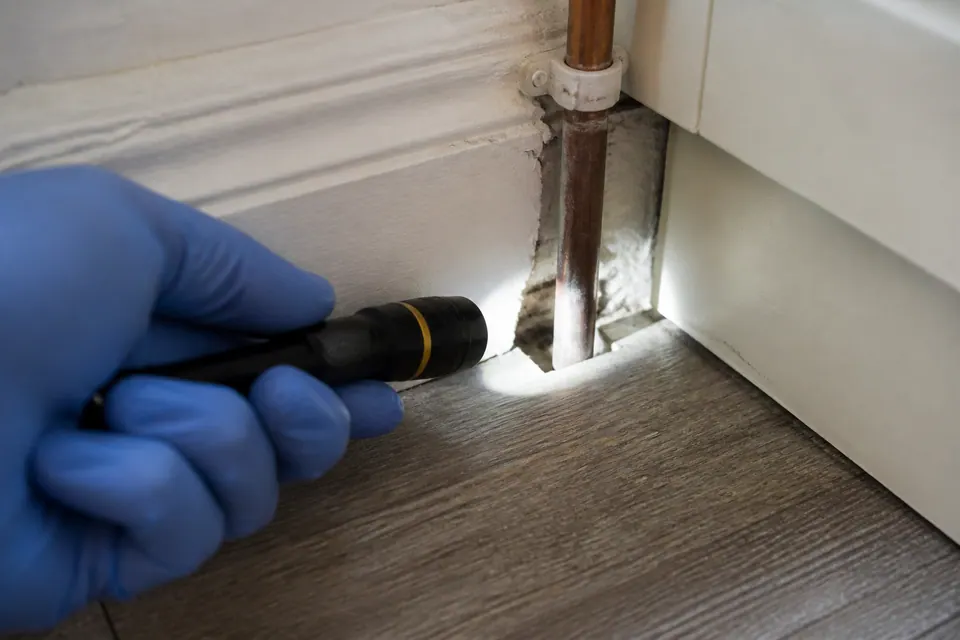

Generated scenes are not records of a Hackney treatment, repeat visit or claimed outcome.
MAKE THE ENQUIRY SPECIFIC
Explain that it was not removed; persistence of the mark alone does not date new activity.
Identify it as previously unexamined rather than assuming the earlier programme covered it.
Disclose the intervening action before discussing the next method.
Mention current occupants and room use so old instructions are not assumed to fit automatically.
ADDRESS AND AVAILABILITY
Give the postcode and any access arrangements that differ from the earlier visit.
Check availability and scope before expecting a repeat attendance. The map is a location reference, not confirmation of a review booking.
Open Hackney in Google Maps ↗13 / CLEAR EXPECTATIONS
What was actually included, rather than merely remembered as whole-home treatment?
What has been newly observed and what remains unchanged?
What is now proposed, including instructions and any further attendance?
HACKNEY / QUESTIONS
Describe whether it is the original trace still in place or a genuinely new event. Keep the discovery date with that distinction.
Provide the earlier included areas if known. An unexamined room should not automatically be treated as previously covered.
Say that the exact details are unavailable. Share reliable dates or communications without inventing a method.
Not necessarily. The current finding needs assessment rather than identification from the earlier programme.
Include what moved and when as context, without assuming the change caused the sign.
Disclose the product and position where known so the next advice can account for intervening action.
Confirm the current method, areas and household requirements. Earlier advice should not be transferred automatically.
Ask how the new report relates to the agreed programme. Do not assume inclusion or exclusion without confirmation.
Describe the known repair and date, keeping it separate from any claim that a route was definitively resolved.
Keep the record and follow the review guidance. A quiet interval is useful information but not a universal guarantee.
15 / TAKE THE NEXT STEP
Call with the original scope if available, current evidence and intervening changes. Confirm the next assessment without assuming a repeat method or automatic coverage.
