
A shared flat
Make clear which resident uses each affected room; permission to enter one bedroom does not cover every bedroom.
PEST CONTROL / HOUNSLOW
Fit the appointment around
the people who live here.
A sleeping night-shift worker, a pet kept indoors or a room needed throughout the day can affect the practical arrangements. Tell us about those constraints when reporting the pest signs; the method and any restrictions still need assessment.
05 / PROPERTY BRIEF
Make clear which resident uses each affected room; permission to enter one bedroom does not cover every bedroom.
List the floors needed for assessment so a person resting elsewhere is not unexpectedly disturbed.
The agent may approve expenditure while the tenant handles preparation. Both need the agreed scope.
Book access through the proper building contact when a locked entrance could interrupt the visit.
The useful brief combines pest evidence with occupants, animals and essential room use.
Discuss your homeA home appointment does not establish suitability for an office, shop or food business. Confirm those requirements independently.
Check the premises requirements01 / START WITH THE EVIDENCE
These four services have different assessment needs. A convenient appointment time cannot replace identification.
Packets damaged while the kitchen was unused.
Mice controlUnexplained movement reported near an outside wall.
Rats controlPhysical traces discovered around a sleeping place.
Bed bug treatmentAn insect repeatedly seen beside an appliance.
Cockroaches controlFor suspected mice, describe cupboards people open frequently so the inspection plan accounts for everyday use.
If rats are suspected, explain whether children or animals use the adjoining outside area. Do not investigate concealed spaces yourself.
Bed-related evidence and room occupancy belong in the same brief. A bite report alone is not enough to choose treatment.
A kitchen that must remain in use needs specific preparation advice. Ask what the selected cockroach programme requires.
07 / SCOPE BEFORE A QUOTE
A starting guide does not buy unrestricted access to every room or guarantee a particular appointment. Request the total for the identified problem and workable scope.
from £120
See published service pricingfrom £150
See published service pricing| Service | Pricing basis | Price |
|---|---|---|
| Mice control | Activity, access and programme | Quote after assessment |
| Rat control | Internal / external routes and visits | Quote after assessment |
| Proofing / repairs | Surveyed openings and separate work | Quoted separately |
Prices shown were checked on 27 August 2026. Ask what is included, whether another visit is anticipated and whether your postcode is covered.
HOUNSLOW / PROPERTY CONTEXT
Coverage and available appointments must be checked for your postcode. Then explain any household timing constraints rather than selecting a slot that only works for the booking contact.
A resident who works overnight may be asleep during ordinary daytime access. Flag this early, including any bedroom that cannot be entered without prior arrangement.
If different adults share care duties, identify who will receive preparation instructions and who will meet the technician. They may not be the same person.
Keep a simple list of non-negotiable room-use requirements. The team can then say which arrangements need changing before the proposed work can proceed.
08 / THE CONTROL PLAN
Plan the work with the residents who must follow it.
Inspection brings the report and accessible findings together, including any room that could not be examined.
Before intervention, establish the preparation, occupied-area restrictions and instructions that everyone needs to understand.
Afterwards, use the review advice to report further signs while keeping any devices or treated locations as instructed.
09 / FROM FIRST CONTACT
Open the stages to see where timing and responsibilities should be settled.

Start with the postcode and evidence, then give the team a realistic household availability window.
Identify any inaccessible occupied room so the assessment does not silently assume it was checked.
Read the proposed scope alongside the preparation requirements before accepting the appointment.
Make sure the named contact is present or reachable and can pass on agreed access information.
Tell the team about new activity using dates and locations, rather than interpreting it an automatic treatment failure.
Assign any separate maintenance recommendation to the person who can authorise it.
06 / SIGNS → LOCATION → NEXT STEP
| Pest problem | Signs to describe | Areas to mention | Next step |
|---|---|---|---|
| Mice | Damaged packet noticed before breakfast | Frequently opened food cupboard | Describe the finding and daily access needs |
| Rats | Movement heard beside an exterior wall | Garden or side access used by the household | Explain who uses that area |
| Bed bugs | Marks noticed when changing bedding | Occupied bedroom and nearby furniture | Ask for preparation specific to the suspected pest |
| Cockroaches | Insect seen around a working appliance | Kitchen needed for daily meals | Discuss the evidence before planning room closure |
03 / OBSERVATION CHECKLIST
A short, dated account is more useful than watching every room all night.
Leave suspect material undisturbed; a photograph is useful only when it can be taken safely.
For droppings or tracks, specify whether they were noticed before or after a cupboard was last used.
Record when scratching was noticed, not when you assume the animal arrived; sound alone does not name a species.
For gnawed packets or material damage, state which stored item changed and whether the shelf was accessible.
Separate a person’s symptoms from spotting or shed material beside the bed. Skin irritation alone cannot confirm bed bugs.
Include whether the appliance was operating when a recurring insect appeared.
Describe nesting material or animal activity from a safe position and check suitability if the species is unknown.
04 / AT A GLANCE
10 / PROBLEM → TREATMENT → CONTROL
Returning to a familiar routine and establishing that activity has changed are different questions. Follow both the occupancy advice and the monitoring plan.
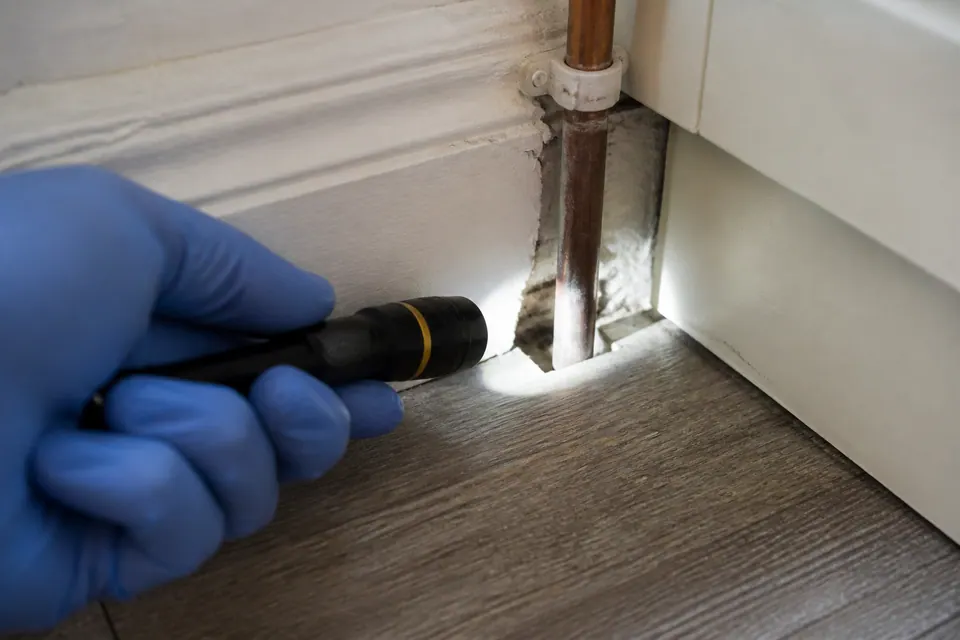

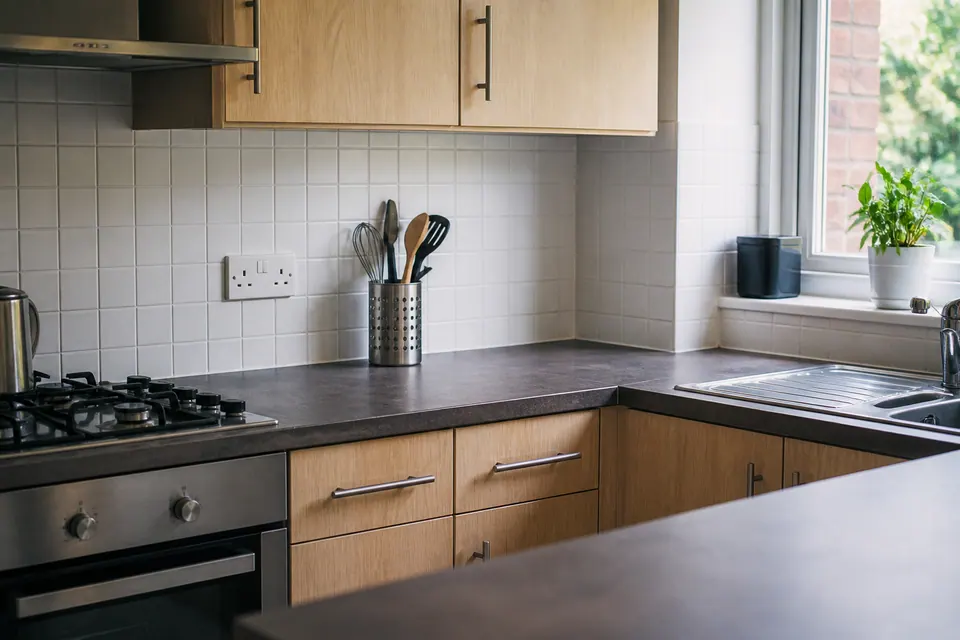
These staged illustrations explain the service; they are not records of a Hounslow customer’s treatment.
MAKE THE ENQUIRY SPECIFIC
Discuss the bedroom and access window in advance. Do not arrange an inspection on the assumption that a sleeping resident can always be moved.
Arrange a reachable decision-maker and make sure the person admitting the technician has the preparation guidance.
Explain the animal’s usual location and any relocation difficulty before the method is agreed.
Ask what the proposed kitchen work requires and plan accordingly; convenience does not override method-specific instructions.
ADDRESS AND AVAILABILITY
Send the full postcode with any entrance instructions needed to reach the home.
Confirm coverage and a workable slot first. A location on the map is not confirmation that an appointment has been accepted.
Open Hounslow in Google Maps ↗13 / CLEAR EXPECTATIONS
Ask the quote to name the relevant rooms rather than referring vaguely to the whole home.
Use the guidance issued for the chosen method, not recollections from another property’s treatment.
Keep the handover information available to the person who will report any later signs.
HOUNSLOW / QUESTIONS
Tell the team beforehand and identify the room. Access and occupancy requirements need agreement, not an assumption that quiet work is possible.
Yes. Explain any period when an affected room cannot be accessed; the booking may need a different arrangement.
Only arrange this with appropriate permission and a reliable way of passing on the guidance. The household still needs to understand it.
Arrange a suitable adult contact. Explain access arrangements during booking rather than leaving responsibility unclear.
Do not assume so. Disclose the animals in the home and obtain guidance for the selected method.
Ask for the booking-specific instructions. Neither a lack of smell nor the end of the visit establishes that unrestricted use is appropriate.
Contact the team before attendance. It is better to clarify a limitation than conceal it and expect the planned work to proceed unchanged.
No. Identification, findings and review determine the programme; an enquiry cannot establish a guaranteed clearance deadline.
Give the latest information to the team. One quiet day does not settle whether a previously recurring problem requires assessment.
Choose someone who can supply dates, rooms and observations accurately and has access to the original handover advice.
15 / TAKE THE NEXT STEP
Have the signs and household constraints ready. We can then discuss coverage, the appropriate assessment and what everyone needs to know before work is agreed.
