
A privately rented flat
The tenant may describe the problem while the landlord approves the cost. Both need a clear record of the agreed areas.
PEST CONTROL / HENDON
The resident knows the history.
The agent may hold the permission.
A useful booking brings those two accounts together. Keep the occupant’s observations intact, identify who can approve the proposed work and make sure preparation advice reaches the person actually living with the problem.
04 / AT A GLANCE
05 / PROPERTY BRIEF
The tenant may describe the problem while the landlord approves the cost. Both need a clear record of the agreed areas.
An owner absent during attendance should still arrange a suitable access contact and a way to resolve scope questions.
Permission from the dwelling’s occupant is not necessarily permission to enter a locked communal facility.
Reports should be separated by unit instead of being merged into one anonymous building complaint.
The appointment should identify observer, access contact and authoriser where these are different people.
Discuss your homeCommercial premises and associated documentation require a suitability check; a residential instruction does not settle those requirements.
Check the premises requirements01 / START WITH THE EVIDENCE
These service links help an agent route the enquiry while retaining what the resident actually reported.
The resident describes small droppings near stored food.
Mice controlMovement or larger signs are reported near a building edge.
Rats controlPhysical marks are reported around sleeping furniture.
Bed bug treatmentA recurring insect is seen beside kitchen equipment.
Cockroaches controlFor suspected mice, retain the original cupboard location and date instead of shortening the report to “rodents throughout”.
A rat concern involving shared surroundings may need another authoriser. Keep external observations distinct from indoor findings.
A bed bug enquiry should include physical evidence where available; relayed reports of bites alone cannot confirm the pest.
For possible cockroaches, the observer’s appliance reference and any earlier products used matter to assessment.
HENDON / PROPERTY CONTEXT
Confirm the postcode is covered before arranging attendance. Then connect the resident who can describe the signs with the person authorised to make decisions.
An agent’s summary can omit useful detail unintentionally. Preserve dates, affected rooms and whether the account is first-hand.
Restricted service cupboards or communal entrances may have a separate keyholder. Their involvement needs arranging rather than assuming a tenant can grant access.
After the visit, recommendations should reach whoever can act on them. The resident still needs the preparation and aftercare relevant to daily occupancy.
07 / SCOPE BEFORE A QUOTE
An approval limit is not a substitute for defining the job. The decision-maker should see the included areas, proposed work and any separate items before authorising attendance.
from £120
See published service pricingfrom £150
See published service pricing| Service | Pricing basis | Price |
|---|---|---|
| Mice control | Activity, access and programme | Quote after assessment |
| Rat control | Internal / external routes and visits | Quote after assessment |
| Proofing / repairs | Surveyed openings and separate work | Quoted separately |
Starting guides verified 27 August 2026. Confirm postcode coverage, the full quotation and how additional work would be approved.
03 / OBSERVATION CHECKLIST
Use the observer’s account and identify anything that remains uncertain.
Nobody should disturb suspected contamination just to supply an agent with photographs.
Droppings or tracks should retain their exact room reference when a report is forwarded.
A ceiling scratching report is an observation, not proof of the species named in a maintenance ticket.
Damage to packets or materials needs the object and location, not simply “pest damage”.
Spotting or shed material around a bed is different from a resident reporting skin irritation.
Repeated insects near an appliance should include when the occupant saw them.
Nesting material or exterior movement should be attributed to whoever observed it, without disturbing the location.
06 / SIGNS → LOCATION → NEXT STEP
| Pest problem | Signs to describe | Areas to mention | Next step |
|---|---|---|---|
| Mice | Resident reports cupboard droppings | Named kitchen storage | Forward the location and date unchanged |
| Rats | External signs reported by caretaker | Specific shared or outside area | Identify who can authorise examination |
| Bed bugs | Physical traces noted beside a bed | Named sleeping room | Include the occupant’s direct account |
| Cockroaches | Recurring insect report near equipment | Appliance and room named by observer | Disclose earlier sprays or treatment |
MAKE THE ENQUIRY SPECIFIC
Attribute the account to the occupant rather than presenting a second-hand summary as a direct inspection.
Arrange an appropriate way to supply relevant images and retain their dates and room references.
Confirm access with that responsible contact before including the cupboard in the expected examination.
Provide a reachable authoriser for scope questions; the person opening the door may have no authority to approve extra work.
08 / THE CONTROL PLAN
The handover between contacts should not lose the reason for the proposed work.
Accessible findings are assessed against the resident’s account, with access limitations recorded for the authoriser.
The agreed method and scope need approval, while the occupant receives the practical instructions for that method.
Fresh observations inform review; separate building recommendations go to the person able to arrange them.
09 / FROM FIRST CONTACT
Follow the responsibilities through the visit rather than forwarding one incomplete email.

Collect the observer’s dates, room references and photographs taken safely.
Confirm who controls entry to the relevant private and shared spaces.
Make the scope and exclusions available to the person who can authorise them.
Ensure the resident has received the preparation and knows the expected access arrangement.
Distribute the appropriate handover information so later signs can be reported accurately.
Allocate maintenance recommendations without treating them as already completed by pest control.
10 / PROBLEM → TREATMENT → CONTROL
An administrative status and the findings are different things. Review subsequent activity using the agreed guidance before treating a forwarded completion message as proof.
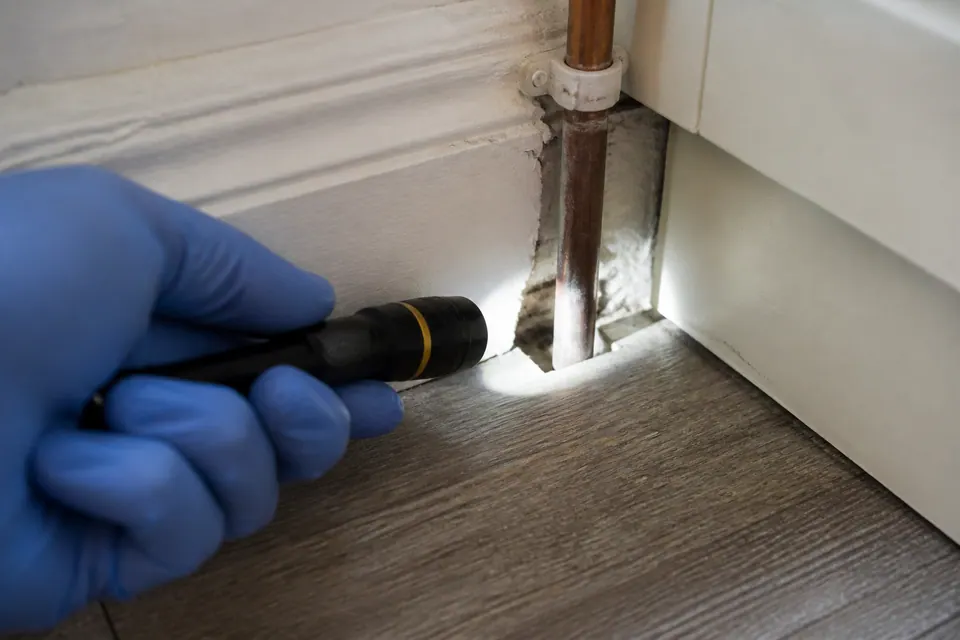

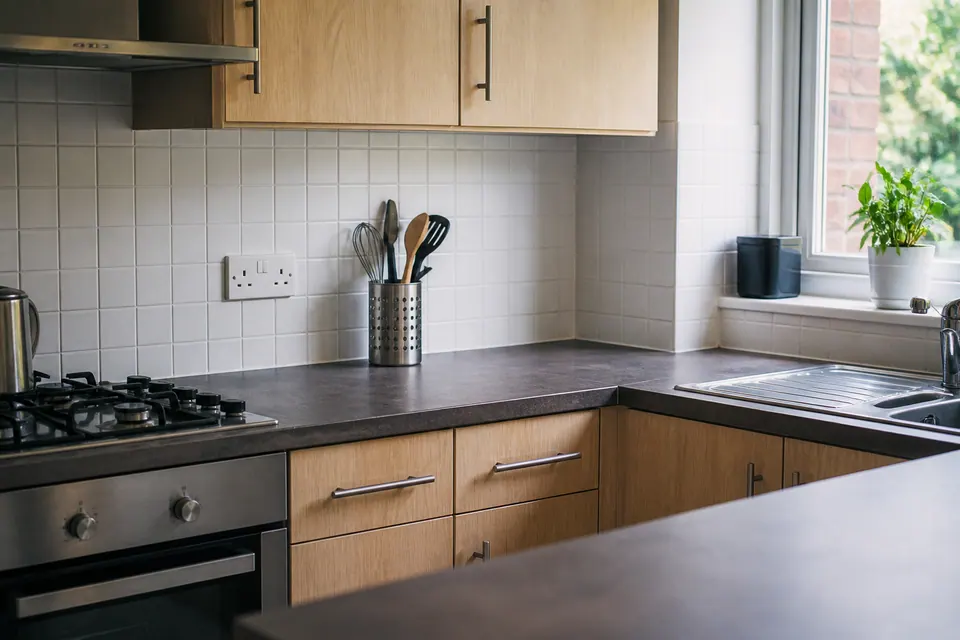
The images illustrate service stages, not a managed Hendon case or a verified outcome.
13 / CLEAR EXPECTATIONS
First-hand and relayed information should not be confused.
An agreed scope is clearer than an open-ended instruction to “sort it”.
The resident needs the guidance even when another party pays.
ADDRESS AND AVAILABILITY
Supply the full property address rather than only the managing agent’s office address.
Confirm service coverage and identify who will admit the technician. The map locates the area, not an Alesta office or an accepted appointment.
Open Hendon in Google Maps ↗HENDON / QUESTIONS
An initial discussion can establish the issue and requirements. Clarify approval and access before work is agreed.
Preserve the important observation details and state their source. Avoid changing uncertainty into a definite species claim.
Check with the person responsible for that facility. Do not assume a private tenant can grant permission.
No. The access arrangement and included areas must also be agreed.
That may be arranged where appropriate, but responsibilities and access permissions should be explicit.
Yes, the people expected to prepare the home need the booking-specific guidance, even if an agent coordinates payment.
Resolve that limitation before attendance where possible so scope decisions do not depend on an unreachable person.
Repairs are separate unless specifically included. A recommendation does not mean the maintenance has been booked or completed.
Keep each flat’s observations and permissions distinct. A building-level programme cannot be inferred from one private appointment.
The direct observer is often best placed to give details; keep the relevant managing contact informed as agreed.
15 / TAKE THE NEXT STEP
Check availability with the property postcode, then supply the first-hand report and the contacts needed to agree access and work.
