
The entrance edge
State whether the sign was at the doorway or farther inside where visibility is limited.
PEST CONTROL / FOREST HILL
Storage below stairs and floor edges.
Start with a clear account.
Restricted storage can conceal the position of a finding. Describe where evidence sits relative to the floor and adjoining rooms, without pulling out suspect material or opening concealed spaces yourself.
03 / OBSERVATION CHECKLIST
Use details visible from safe access rather than entering or dismantling a concealed area.
Do not pull apart suspected nesting material or open the building fabric to improve the report.
State whether the sign was at the doorway or farther inside where visibility is limited.
A simple position helps distinguish different findings without requiring measurement or handling.
Describe the material and discovery date, keeping its earlier age uncertain if unknown.
Explain that it has not been seen rather than presenting it as inspected or confirmed affected.
Identify it as layout context unless independent evidence was actually observed there.
Mention storage rearrangement that exposed or concealed the position between observations.
FOREST HILL / PROPERTY CONTEXT
Under-stair storage can have a narrowing shape and contents that limit the view. Explain the actual finding and where visibility stops.
Check the Forest Hill postcode and requested service directly before arranging attendance. A proposal should reflect safe access rather than assumed empty space.
Name adjoining rooms for orientation without declaring a connected pest route. Findings elsewhere deserve their own positions and dates.
Describe items that restrict access without moving suspect material as preparation. Clearing or opening concealed space should follow appropriate guidance, not guesswork.
04 / AT A GLANCE
08 / THE CONTROL PLAN
A useful enquiry does not require the household to force access to every part of storage.
The actual item or surface anchors the report to a place that can be understood.
Access restrictions should remain in the proposal rather than being treated as confirmed hidden activity.
The selected service determines appropriate actions; repairs or structural opening need separate agreement.
10 / PROBLEM → TREATMENT → CONTROL
Review should reflect what was actually accessible and observed, not a general conclusion about concealed space.
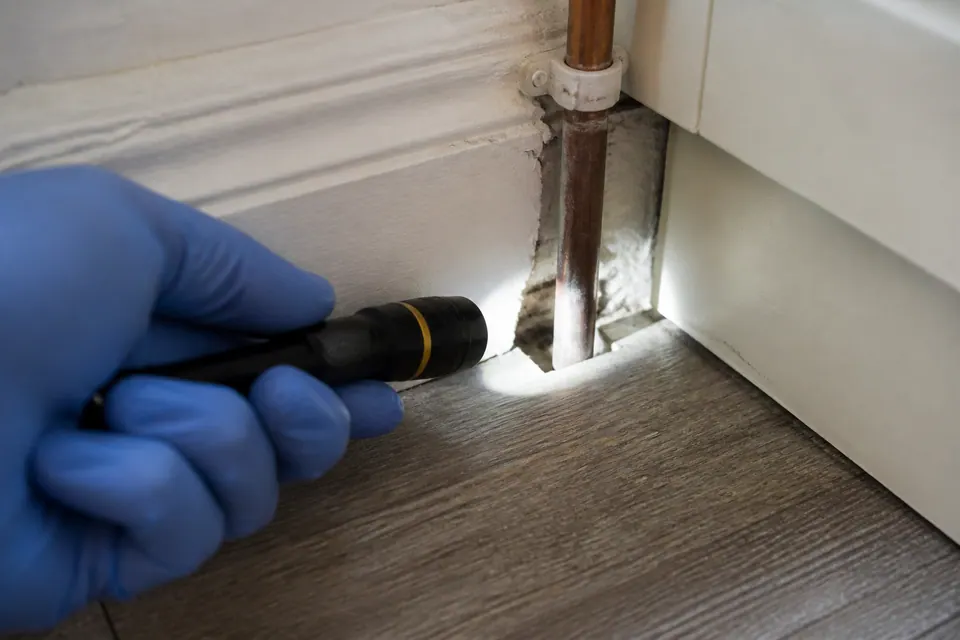
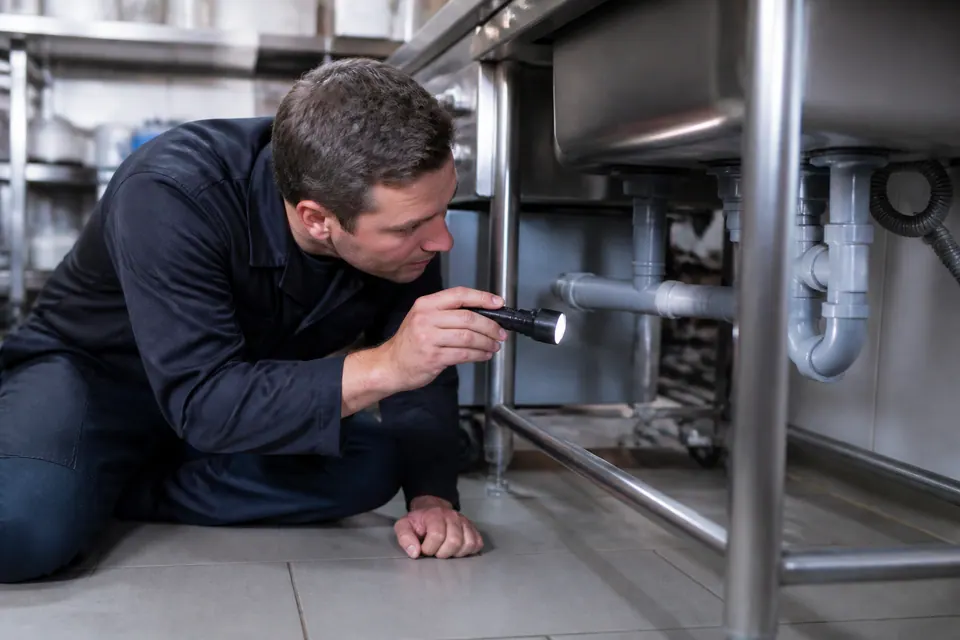
Illustrations are not Forest Hill storage records or evidence of customer outcomes.
07 / SCOPE BEFORE A QUOTE
A Forest Hill quotation should account for the visible evidence and limits, not assume the under-stair space can be fully opened.
from £120
See published service pricingfrom £150
See published service pricing| Service | Pricing basis | Price |
|---|---|---|
| Mice control | Activity, access and programme | Quote after assessment |
| Rat control | Internal / external routes and visits | Quote after assessment |
| Proofing / repairs | Surveyed openings and separate work | Quoted separately |
Confirm scope and inclusions directly. Guides checked 27 August 2026; structural work, repairs and general clearance are not automatic pest-treatment tasks.
01 / START WITH THE EVIDENCE
A restricted storage space needs a precise observation, not a claim about everything concealed behind it.
Damaged material noticed at the cupboard’s visible edge.
Mice controlMovement perceived beyond the accessible part of storage.
Rats controlPhysical marks on stored household bedding.
Bed bug treatmentAn insect seen beside the entrance or adjoining floor.
Cockroaches controlName the item and its position without pulling out suspect material to trace a route.
Describe where you were listening and when. Hidden sound does not identify the animal or exact position.
Explain the storage history and relevant transfers; skin irritation alone does not establish bed bugs.
Record the sighting and any recurrence without assuming the whole void is affected.
05 / PROPERTY BRIEF
Name the actual finding position even where access appears straightforward.
State what cannot be seen rather than promising full access.
Keep adjoining-room evidence independent from the cupboard account.
Do not assume structural opening belongs to a pest visit.
Explain items and occupants relevant to preparation without transferring contents unnecessarily.
Discuss your homeCheck suitability separately rather than applying residential provision to another use.
Check the premises requirements06 / SIGNS → LOCATION → NEXT STEP
| Pest problem | Signs to describe | Areas to mention | Next step |
|---|---|---|---|
| Mice | Damage on a stored item | The accessible cupboard edge | Ask what preparation is appropriate before clearing |
| Rats | Noise beyond the visible contents | Listening position and time | Discuss limits without entering concealed space |
| Bed bugs | Marks on stored bedding | Storage position and relevant room history | Seek guidance before moving items elsewhere |
| Cockroaches | An insect at the cupboard opening | Actual visible floor or edge | Record recurrence separately from an assumed hidden infestation |
MAKE THE ENQUIRY SPECIFIC
State that the rear has not been examined instead of inventing its condition.
Give that room its own evidence rather than treating adjacency as proof.
Obtain preparation appropriate to the proposal rather than disturbing material unnecessarily.
Keep timing and listening position factual; an unseen sound is not identification.
09 / FROM FIRST CONTACT
These are information steps, not a promise of structural inspection or one-visit control.

Use the room, cupboard entrance and visible edge as references.
Identify relevant obstacles without disturbing suspect material.
Provide orientation while keeping independent room evidence separate.
Ask what the proposed service can examine and what remains unavailable.
Do not substitute extensive clearing or dismantling for the supplied preparation.
Retain location and date, including any changes in storage that affect visibility.
13 / CLEAR EXPECTATIONS
The account does not replace a specific finding with an unsupported statement about the entire void.
A blocked part of storage should not be described as inspected.
Household actions should follow the agreed approach rather than a generic instruction to empty everything.
ADDRESS AND AVAILABILITY
Check the postcode and service, then explain the accessible under-stair finding.
The map provides area context, not confirmation of hidden routes or appointment availability.
Open Forest Hill in Google Maps ↗FOREST HILL / QUESTIONS
Do not disturb suspected material to improve the enquiry. Explain the access limit instead.
Use the cupboard entrance and a simple floor or shelf reference.
No. State what remains unseen rather than turning it into a confirmed source.
They can provide layout context, with any actual findings kept independently located.
No. Opening the building fabric requires separate consideration and agreement.
Describe its location and history before moving it around the home.
Keep the age uncertain unless you have evidence; discovery and formation dates can differ.
Not by itself. Give the listening position and timing without a certain species label.
Do not assume it; preparation and any separate clearance need clarification.
Add dates and positions plus any storage change affecting what is visible.
15 / TAKE THE NEXT STEP
Describe the visible finding and the access limit, then ask what preparation belongs to the appropriate assessment.
