
A damaged packet
Describe the visible damage and what the packet contained. Do not decide the species from the hole alone.
PEST CONTROL / PALMERS GREEN
Pantry findings and surrounding rooms.
Look beyond the damaged packet.
A pantry report is more useful when it distinguishes food damage, marks and actual sightings. Explain the storage layout and neighbouring rooms without handling suspected contamination to investigate further.
PALMERS GREEN / PROPERTY CONTEXT
A food-storage concern needs more detail than the number of rooms in the home. Identify the cupboard and the particular shelf where the finding appeared.
If several people use the pantry, find out whether someone moved the packet before you saw it. Its current position may not be where the damage first occurred.
A built-in pantry and a freestanding cabinet have different accessible edges. Explain fixed fittings without removing panels or dragging a heavy unit away from the wall.
Keep the enquiry focused on observed household evidence. Confirm postcode coverage, then discuss which kitchen and adjoining areas an assessment could include.
03 / OBSERVATION CHECKLIST
One observation may raise a question; several independent observations can make the account more informative.
Do not handle suspect waste or open contaminated packaging to obtain a better description.
Describe the visible damage and what the packet contained. Do not decide the species from the hole alone.
State where marks or suspected droppings were found relative to the food. Their appearance should be assessed, not tested by touch.
Record the time and position of the sound. A cupboard can transmit noise from a concealed space without revealing its origin.
Note whether each sighting was in the same recess or on another shelf. Explain any nearby appliance or known moisture issue.
Bedroom spotting or an outside animal sighting belongs in a separate entry. Do not turn different concerns into one assumed infestation.
Report cleaning, products or storage changes made after the finding. They may affect what remains visible at inspection.
06 / SIGNS → LOCATION → NEXT STEP
| Pest problem | Signs to describe | Areas to mention | Next step |
|---|---|---|---|
| Mice | Chewing with other possible traces | The original food shelf, if known | Describe the evidence without opening suspect material |
| Rats | Direct sighting or larger external traces | Outside position and separate household findings | Do not infer an indoor route from proximity |
| Bed bugs | Spotting or shed material around a bed | Sleeping furniture, recorded separately from the pantry | Request identification before moving bedding |
| Cockroaches | Recurring insects beside kitchen fittings | Named cupboard, appliance edge or sink unit | Give dates and details of earlier products |
08 / THE CONTROL PLAN
The aim is to understand activity, not merely to replace damaged packaging.
The report and accessible surroundings help establish what is supported. A damaged object by itself cannot specify a treatment.
The proposal should explain the relevant areas, preparation and limitations. Ask how the household should use the kitchen around the chosen method.
Later observations should be compared with the starting account. Advice on storage or building openings may accompany control without becoming an automatic repair contract.
09 / FROM FIRST CONTACT
The programme follows the findings rather than a standard number of cupboards.

Name the shelf and object. Explain if someone moved it before the report was made.
Mention accessible pipe openings, fixed panels and appliances without dismantling them.
Confirm which storage areas and visits are covered by the proposed figure.
Use the service-specific preparation instructions; do not add a household spray without telling the team.
Keep new marks or sightings distinct from the original damage, following the monitoring advice supplied.
Clarify whether any recommended cleaning, disposal or building work needs another arrangement.
01 / START WITH THE EVIDENCE
Similar-looking concerns can require different investigations. Match the description to what you actually found, without handling suspect material.
Chewing noticed on stored food packaging.
Mice controlAn animal sighting that needs a separate description.
Rats controlSpotting around a bed rather than pantry contents.
Bed bug treatmentInsects returning to the same kitchen recess.
Cockroaches controlTell the assessor which packet and shelf were involved, together with any separate sightings or marks. Packaging damage alone does not establish mice.
A larger animal seen outside should not be inferred from a damaged packet inside. Keep the two observations distinct until there is evidence linking them.
A pantry report does not diagnose a bedroom problem. Describe any physical signs around sleeping furniture separately; skin irritation is not a reliable identification.
Explain whether insects appeared inside a cupboard or beside adjacent equipment. Include any spray already applied and when the area was last rearranged.
07 / SCOPE BEFORE A QUOTE
The starting guides below refer to targeted pest treatments, not a guarantee that every food-storage concern has the same diagnosis or price.
from £120
See published service pricingfrom £150
See published service pricing| Service | Pricing basis | Price |
|---|---|---|
| Mice control | Activity, access and programme | Quote after assessment |
| Rat control | Internal / external routes and visits | Quote after assessment |
| Proofing / repairs | Surveyed openings and separate work | Quoted separately |
Guides checked 27 August 2026. Confirm current amounts, address coverage and inclusions. Food disposal, cleaning, joinery and other remedial work are not silently included.
05 / PROPERTY BRIEF
Explain how the pantry connects to the kitchen and whether other cupboards have independent findings.
Record who noticed each sign and whether several people have used products or moved the contents.
Mention fixed backs and plinths that limit inspection. Dismantling joinery is not automatically part of a pest appointment.
List a separate store or utility cupboard individually rather than assuming all storage has the same condition.
Disclose everyone using the kitchen, including animals, so practical preparation can be discussed.
Discuss your homeBusiness food-handling needs are not implied by residential treatment. Check service suitability and any required documentation directly with Alesta.
Check the premises requirements04 / AT A GLANCE
MAKE THE ENQUIRY SPECIFIC
Keep its earlier position in the report. Otherwise an inspection could be directed at the place it was moved to rather than where it was stored.
Ask that person for their description, including uncertainty. Do not turn a brief second-hand account into a confirmed identification.
Give the product details and date if known. Further use should not be assumed compatible with a proposed professional method.
Explain the obstruction in advance. Access limitations are not evidence that the hidden area is either affected or clear.
10 / PROBLEM → TREATMENT → CONTROL
A cupboard may look normal after contents are rearranged. The evidence of continuing or reduced activity must be considered separately.
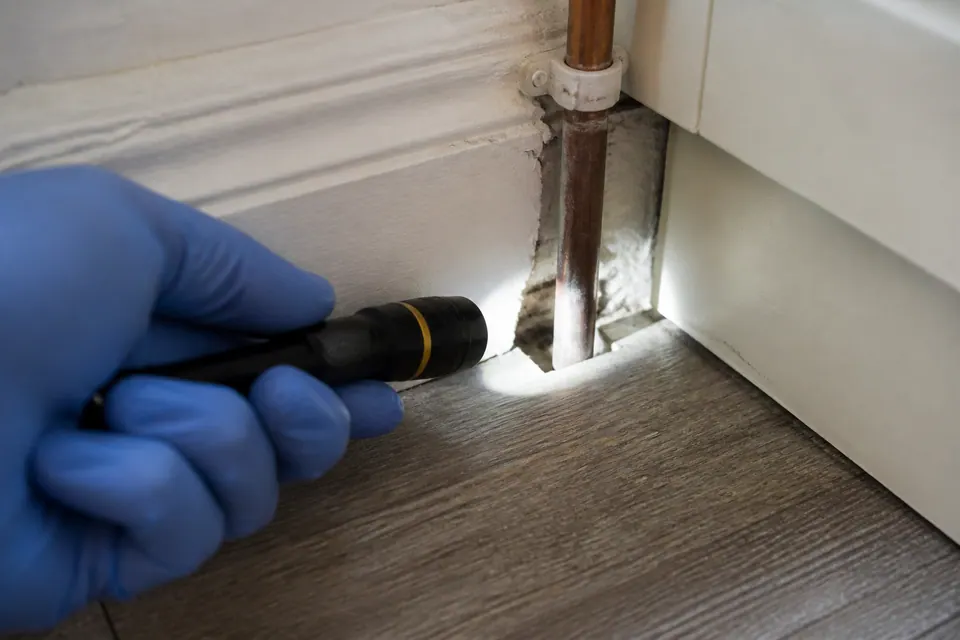
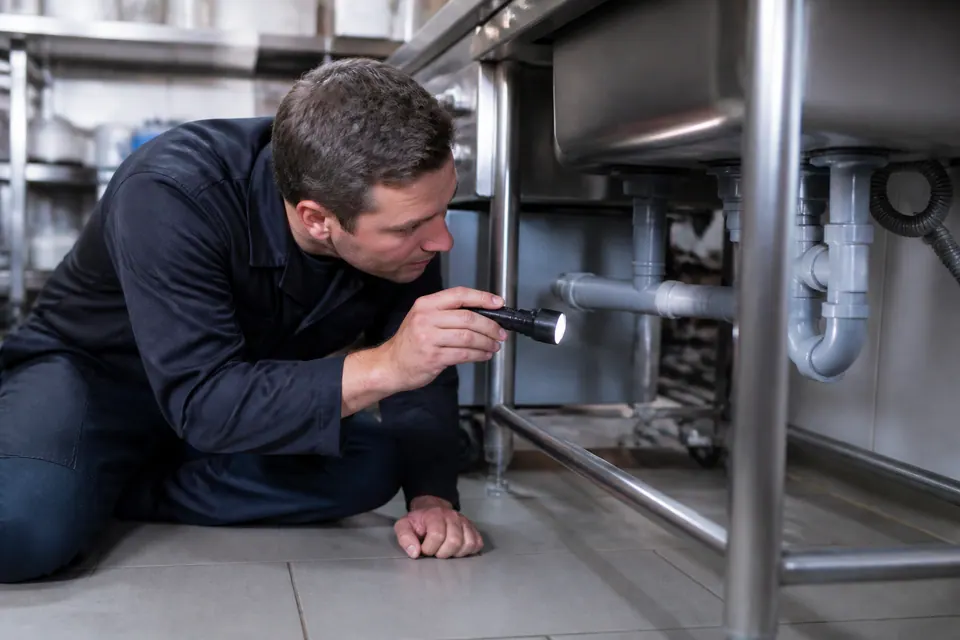
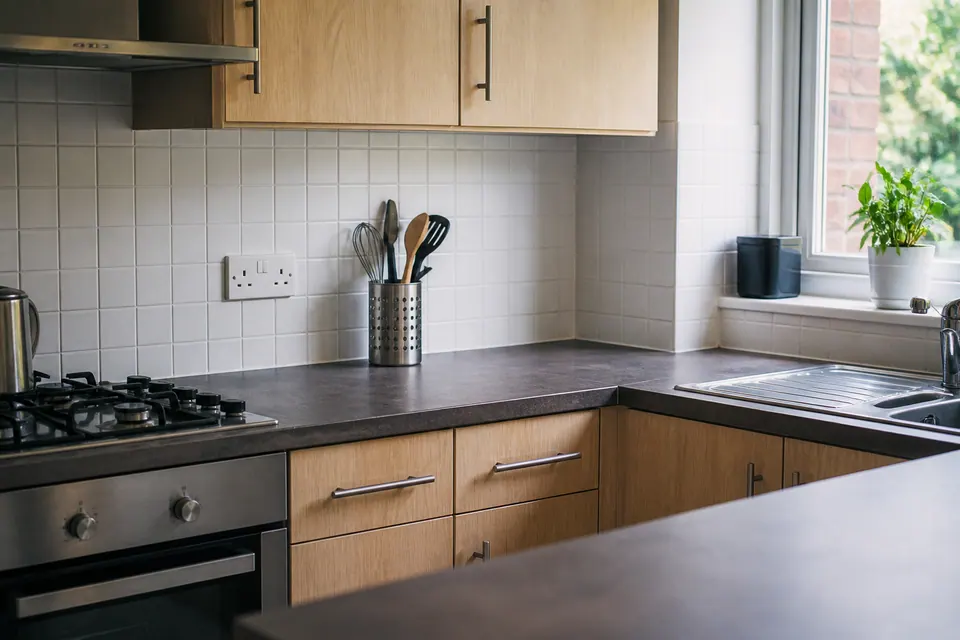
These illustrations are not photographs of a Palmers Green treatment or evidence that a pantry has been cleared of pests.
ADDRESS AND AVAILABILITY
Give the postcode and the actual kitchen location within the dwelling when discussing availability.
Mention separate entrances or shared accommodation where relevant. The area map is geographical context, not a marker for an Alesta office.
Open Palmers Green in Google Maps ↗13 / CLEAR EXPECTATIONS
An assessment should distinguish a suspected cause from the observations that support it.
A named set of areas is clearer than assuming every food cupboard is part of the same work.
Ask how subsequent findings should be reported and which recommendations fall outside the pest service.
PALMERS GREEN / QUESTIONS
No. Describe the damage and any accompanying evidence so the likely cause can be assessed. Do not handle suspected contamination to test the idea.
Wait for instructions appropriate to the enquiry. Clearing every shelf may move items unnecessarily and make their original positions harder to explain.
Mention that fact. A previously opened packet and a newly damaged sealed item are different observations.
No. Describe the insect and check whether the appropriate service is available rather than selecting cockroach treatment from location alone.
Yes. Give a factual description and the position. A photograph is helpful only if it can be obtained without unsafe handling or disturbance.
Keep a common record but retain separate dates and witnesses. Several people can describe the same incident without it being repeated activity.
No replacement work should be assumed. Pest control and joinery need distinct scopes and authorisation.
Explain the obstruction before attendance. Do not disconnect or move fixed equipment merely to provide evidence.
Identify the store and ask explicitly. A second storage space is not automatically included in a quote for the kitchen.
State when each item was last checked and when the finding was noticed. If its age is uncertain, record that uncertainty rather than supplying a guessed date.
15 / TAKE THE NEXT STEP
Call with the cupboard location and what was observed. Check coverage, then agree what information is needed before a treatment proposal can be made.
