
Can a window reveal be quoted from photos?
A small suitable exposed area may be considered from clear pictures, but the finish and access still need confirmation.
BALHAM / THE WINDOW-SIDE BEDROOM
A close-up shows the mark. The room layout explains the practical work.
If marks appear beside a bedroom window in Balham, show where the bed sits as well as the affected finish. A frame, painted reveal, wallpaper and nearby furnishings are not interchangeable surfaces. Discuss their condition and access before deciding which part is suitable for mould treatment.
Reveal · wall covering · furniture clearance
Balham / WINDOW-SIDE BEDROOMS
The distance between a bed and a marked wall is useful context, not a diagnosis.
Start with photographs taken from an accessible position. Explain whether the mark is on the reveal, surrounding wall or a furnishing, and whether the window opens normally. If furniture is heavy or appears affected, ask about preparation before shifting it. The proposed work should identify the surface that can be reached and how the bedroom will be used around the appointment.
02 / DIRECT ANSWERS
A small suitable exposed area may be considered from clear pictures, but the finish and access still need confirmation.
No. Describe furnishings separately; a wall quotation does not establish how belongings should be handled.
Explain its size and position first. Ask what clearance is required before moving heavy or affected items.
Its condition and suitability need separate consideration. Do not assume the same method or outcome.
Obtain the instructions for the agreed work and arrange room use accordingly; immediate return is not promised.
Identify its material and visible condition separately from the surrounding reveal.
Decoration is a separate finish decision, not a replacement for assessing growth and moisture.
It provides useful history without proving that the repair succeeded or failed.
Balham / ACCESS & PEOPLE
Can explain when the area is accessible and what alternative arrangements are practical.
Can share previous window or moisture work without presenting an unverified conclusion.
Should confirm which surfaces are authorised and whether other work is being arranged separately.
Raise sleeping-space needs before accepting an appointment. Do not wait until arrival to mention that furniture cannot be moved.
Provide dated reports and the exact room location, avoiding assumptions about responsibility based only on photographs.
Agree whether any covering or paint work is needed after the surface condition and moisture question have been considered.
04 / A CONTROLLED APPROACH
Review the exposed finish and furniture position together, noting where visibility ends.
Agree preparation, protection and room-use arrangements before changing the occupied bedroom.
Carry out the agreed mould-removal work within the confirmed accessible area; belongings are not silently added.
Clarify return instructions and any outstanding material, moisture or repair question.
Comparable views support a later discussion without promising a permanent visual result.
Retain a wider photograph identifying the window and the original finish.
Keep the treatment boundary clear when several materials meet at the reveal.
Follow the applicable guidance and report new observations with the original location identifiable.
The illustrations explain stages; they are not customer before-and-after evidence.
05 / QUOTATION, NOT GUESSWORK
The quote needs more than the room name. Show the window-side material, approximate visible extent and furniture clearance, then agree the actual work before booking.
Read the mould-removal service details ↗| Situation | Quotation route | Helpful detail |
|---|---|---|
| Small exposed suitable patch | Photographs may support a quotation | Finish and clearance around the opening |
| Several or returning patches | Assessment before a settled scope | Separate locations and earlier changes |
| Damaged covering or complicated damp | Specialist quotation may be required | Known repairs and material limitations |
Confirm the total, exclusions and preparation instructions; no bedroom-wide allowance should be inferred from a single patch.
06 / ROOM-BY-ROOM CONTEXT
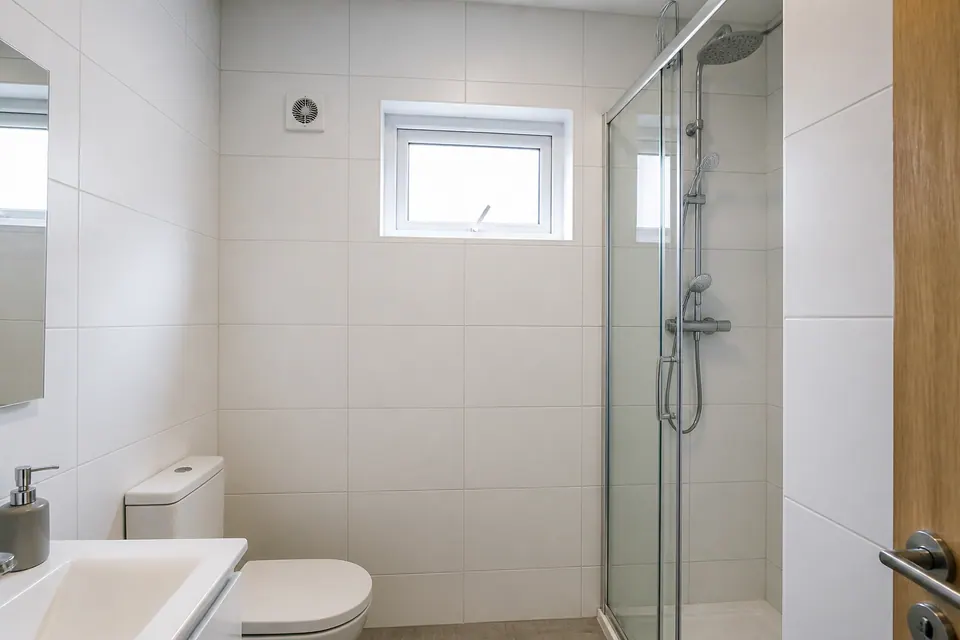
Report its own surface and wetting pattern rather than attributing the bedroom mark to it without assessment.
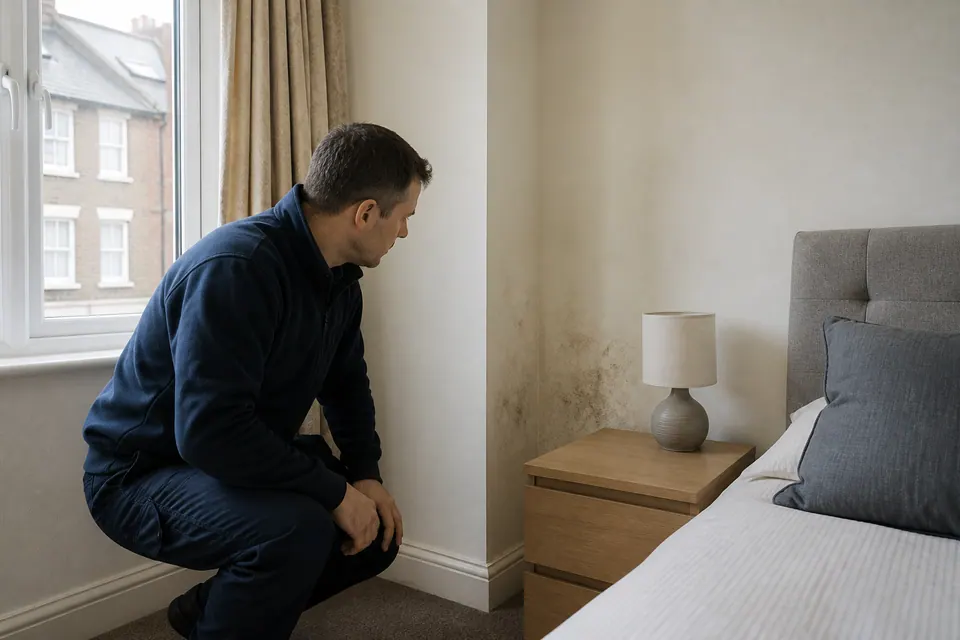
Explain the bed position, exposed finish and practical constraints on using the room during the work.
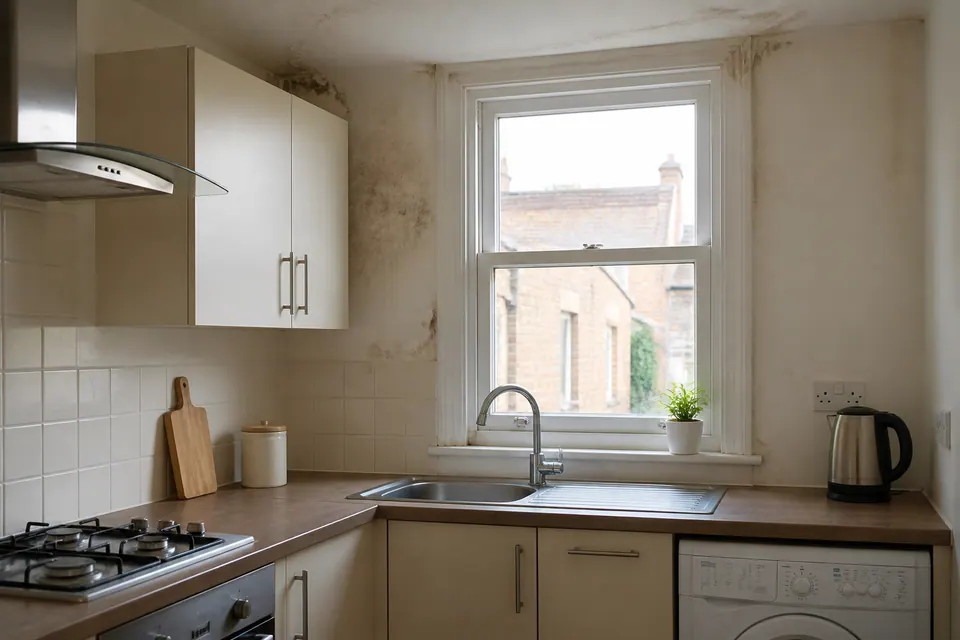
A similar-looking mark may sit on a different finish. Supply its location and condition separately.
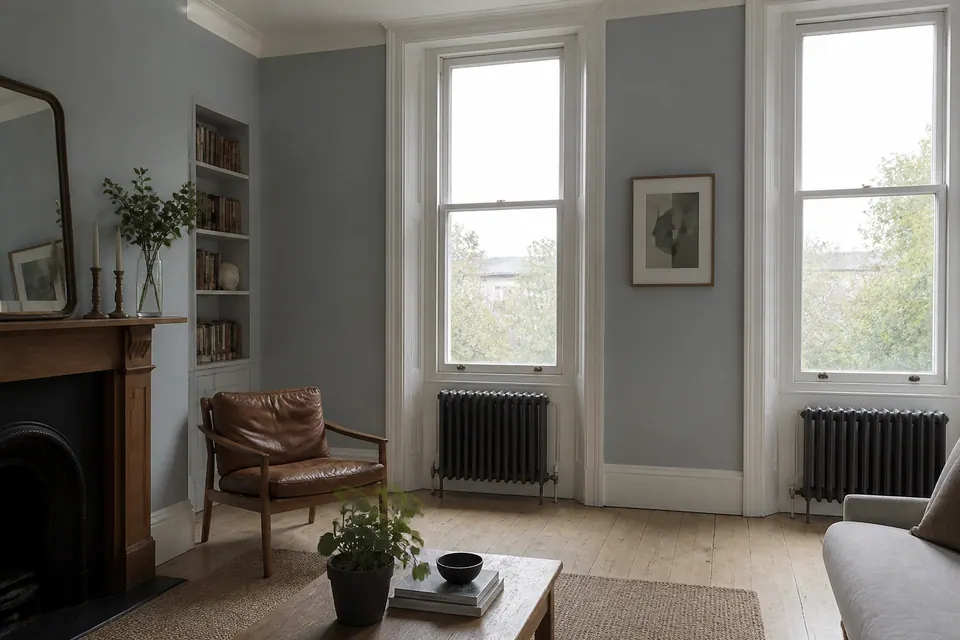
Curtains and sofas can affect the approach. Mention them without assuming they are affected.
Clarify whether the marked part is shared and who can authorise access to it.
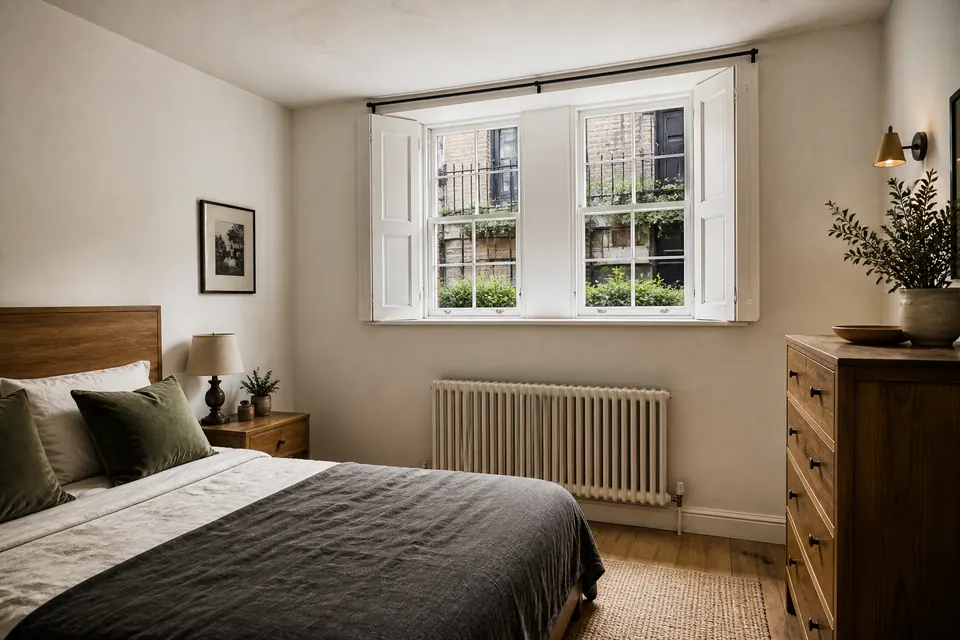
Include its level and known water history; the window position alone does not explain the condition.
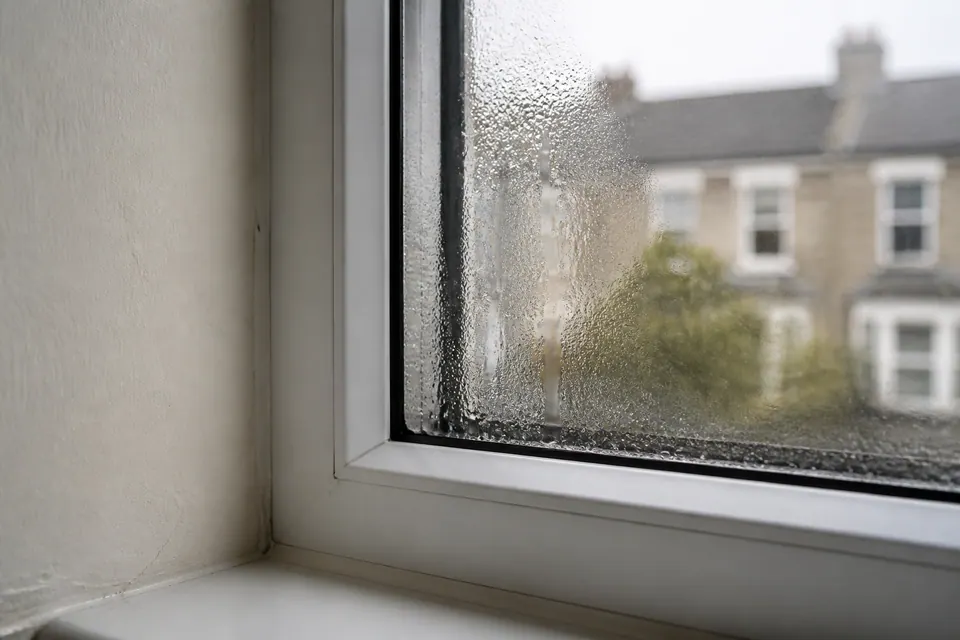
07 / WHEN IT COMES BACK
Record whether the same edge changed or a different surface became affected. Note any water actually observed and changes in the room arrangement, without deciding the cause from timing alone.
Previous treatment does not resolve every source of moisture. A returning patch may require reassessment of the finish and surrounding conditions rather than simply repeating a cosmetic step.
A close-up without context can make two different locations look like one recurring patch.
08 / SEPARATE THE QUESTIONS
Describe what happens at the opening and what is known about the room. Assessment may need more than a photograph of the darkest patch.
| Detail | What it establishes | What remains open |
|---|---|---|
| Droplets observed | Water was visible at that time | Why it collected and whether other moisture is present |
| Marks behind a headboard | A location needing an access plan | The condition of concealed wall and furniture |
| Lifting wall covering | The finish may limit straightforward treatment | What lies beneath and whether reinstatement is required |
| A repeated winter patch | A timing pattern worth recording | The source and suitable longer-term response |
Window defects, moisture investigation and replacement finishes need their own agreed scope.
One describes the proposed treatment target; the other may require a separate investigation.
| Question | Mould-removal work | Moisture or repair work |
|---|---|---|
| What is assessed? | The affected accessible material and suitability | The reason a wall or opening remains wet |
| What helps? | Clear views of the finish and reachable extent | Water observations and previous repair information |
| What is not assumed? | That every nearby belonging can receive the same work | That proximity to a window proves a window fault |
| What is agreed? | Named surfaces, preparation and return guidance | Any further investigation or repair separately |
09 / LOCATE THE ISSUE
Give each visible location its own description; similar colour does not establish the same material or cause.
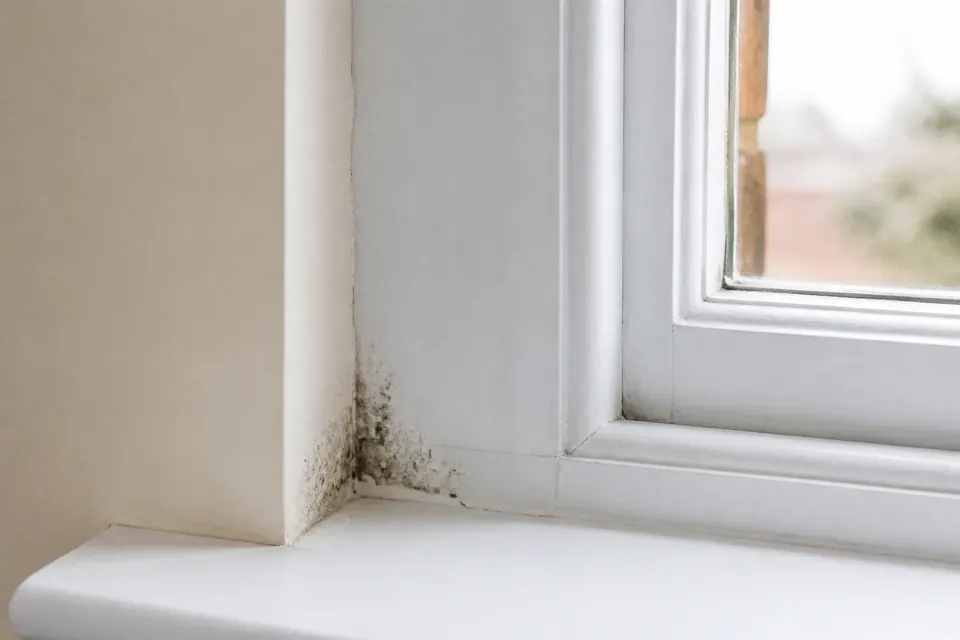
Show the frame, reveal and adjoining wall in context. Note observed droplets or staining as separate details, and avoid inferring a failed window from a nearby mark.
If there is another patch, identify whether it is on paint, grout or a seal. Its treatment scope is not automatically part of the bedroom quotation.
Explain whether marks are beside the headboard or further along the wall. Mention affected-looking furnishings separately and seek handling advice.
Record any kitchen marks independently. A window-side bedroom enquiry should not turn into a whole-property diagnosis based on a second photograph.
A sofa may limit access differently from a bed. State what remains concealed and which exposed part can be photographed without disturbance.
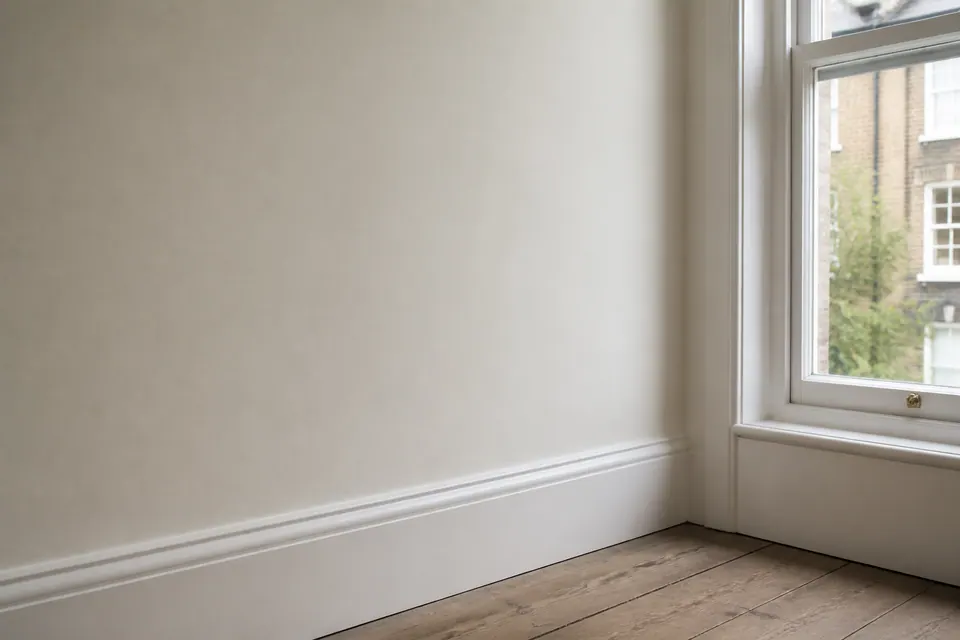
Report intact, peeling or stained finishes as observed. Do not strip paper or scrape a coating simply to reveal more for the enquiry.
Open storage only as normally accessible. Fixed joinery and belongings can alter the reachable area, so include them in the preparation discussion.
Keep a room view and a closer image together. Neither a smell nor a stain alone confirms the extent of mould.
Balham / PLAN THE APPOINTMENT
Provide the Balham postcode and confirm appointment availability before planning around a date.
Include building entry, floor level and any limits on reaching the bedroom with equipment.
Load the area map.
Balham / BEFORE BOOKING
These details help turn a window photograph into a workable appointment.
Use a wider image showing the opening and bed position, followed by the affected finish at closer range.
No. Report observed water and timing; location alone does not identify the moisture source.
Describe the access limit and ask for preparation advice before moving heavy or apparently affected furnishings.
Mention it separately. Do not assume the wall treatment includes the fabric or determines its handling.
Yes. The material and its condition may require a different decision from treating a sound exposed surface.
Raise that constraint during the enquiry so the practical arrangements can be discussed before booking.
Only if separately and explicitly agreed; mould-removal work does not automatically include window repair.
No preparation should obscure the existing condition without advice. Painting is not a substitute for assessment.
Identify the same opening and surface, with dates and any observed water, rather than sending an unlocated close-up.
BALHAM / A CLEARER BEDROOM BRIEF
Send the postcode and room photographs, and explain what can be reached without moving the bed. Discuss the surface and sleeping arrangements before confirming the work.
Bedroom illustrations provide context, not photographs of completed customer treatments.
