
Flats & apartments
Show access around the damaged item in a flat.
HIGHGATE · CAREFUL MINOR REPAIRS
Small timber details worth assessing.
A loose timber fitting may be adjustable, while a split component could need replacement. Show the damage clearly before making a repair plan around the assumption that everything can be reused.
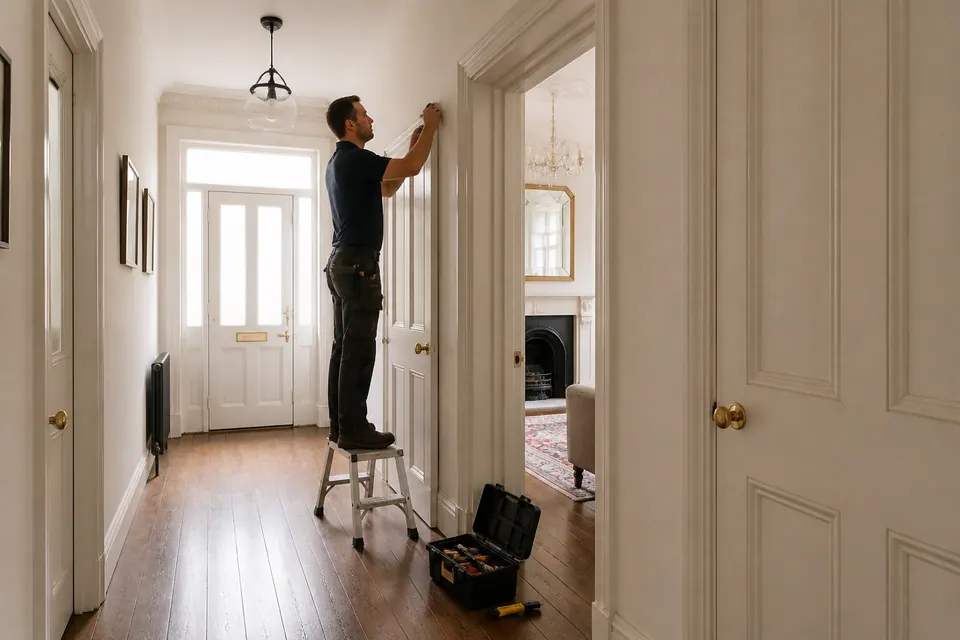
DIFFERENT ROOMS, DIFFERENT BRIEFS
Show access around the damaged item in a flat.
Identify original timber details worth preserving.
Confirm the owner accepts any proposed replacement.
Label similar-looking fittings by room.
Keep equipment away from unstable furniture.
Name the person authorised to decide on wider work.
Homeowner? Prioritise everyday faults.
Landlord or manager? Authorise the repair scope.
Tenant? Obtain permission for alterations.
BUILD A REALISTIC LIST
Select the defects requiring assessment rather than a predetermined repair method. The planning tool does not establish whether damaged timber can safely be reused.
| Situation | A practical next step |
|---|---|
| Familiar task | Do not repeatedly tighten screws into a visibly split edge. |
| Multiple or awkward jobs | Identify which pieces are loose and which are broken before ordering parts. |
| Uncertain mounting | An uncertain fixing base should be inspected before loading it again. |
| Regulated or specialist work | Structural timber or a specialist door system needs a separate assessment. |
HIGHGATE IN PRACTICE

Small timber details worth assessing.
In a Highgate period interior, distinguish a surface mark from movement in the actual joint. Include the reverse or underside where accessible, without dismantling something heavy or unstable just to take a photograph.
Movement at a timber joint can accompany a crack in the material itself. A photograph of the screw head alone will not show whether the fixing has sound support.
Keep heavy or unstable components supported and avoid forcing a joint together for a better image. The useful brief records its current condition and whether repair or replacement is acceptable.
Show where the timber has split · Describe whether the joint moves · Keep heavy items supported safely · Distinguish repair from full replacement
CLEAR BEFORE YOU BOOK
Show both the loose fitting and any split material around it.
New small furniture assembly is separate from repairing an existing timber component.
Screen mounting must be assessed independently of nearby timber trim.
| Task | Pricing basis | Guide |
|---|---|---|
| Repair or fitting | Soundness of the supporting timber | Quotation |
| Small furniture assembly | Supplied small-product construction | From £30 |
| Several small jobs | Separate adjustments and replacement components | Combined scope quotation |
| Complex mounting | Mounting surface beyond decorative trim | Assessment quotation |
Small-item assembly source: Alesta’s furniture assembly page . Other work: individually quoted.
A minor hardware adjustment and replacement of split timber should not share an assumed price. Specify the appearance to preserve and ask what making good falls within the proposed scope.
START WITH THE TASK
Identify assembly separately from repairing damaged furniture.
02 ↗Describe the condition of existing timber shelf supports.
03 ↗Show hinge timber as well as the door hardware.
04 ↗Keep TV mounting outside an assumed timber repair.
05 ↗Photograph accessory fixings with surrounding material visible.
06 ↗Distinguish surface scratches from movement through a joint.
QUICK JOB FINDER
Identify assembly separately from repairing damaged furniture.
Explore this service ↗WALK THROUGH THE PROPERTY
ROOM NOTES
Living-room TV mounts require their own suitable wall assessment, separate from nearby timber repairs.
Service details ↗| Job type | Example | Property area | Service |
|---|---|---|---|
| Assembly | Assemble a supplied side unit | Room with cleared work space | Furniture assembly |
| Mounting | Fit an agreed accessory | Reviewed wall position | Fittings |
| Adjustment | Check an internal door edge | Opening with damaged trim | Door repair |
| Timber work | Assess split fitted timber | Existing storage framework | Carpentry |
FROM SMALL FIX TO FINISHED JOB
Photograph the visible split without stressing it.
Describe movement and acceptable replacement options.
Keep unstable items out of normal use.
Agree any wider carpentry before proceeding.
Review repaired hardware and outstanding material damage.
A JOB, MADE VISIBLE
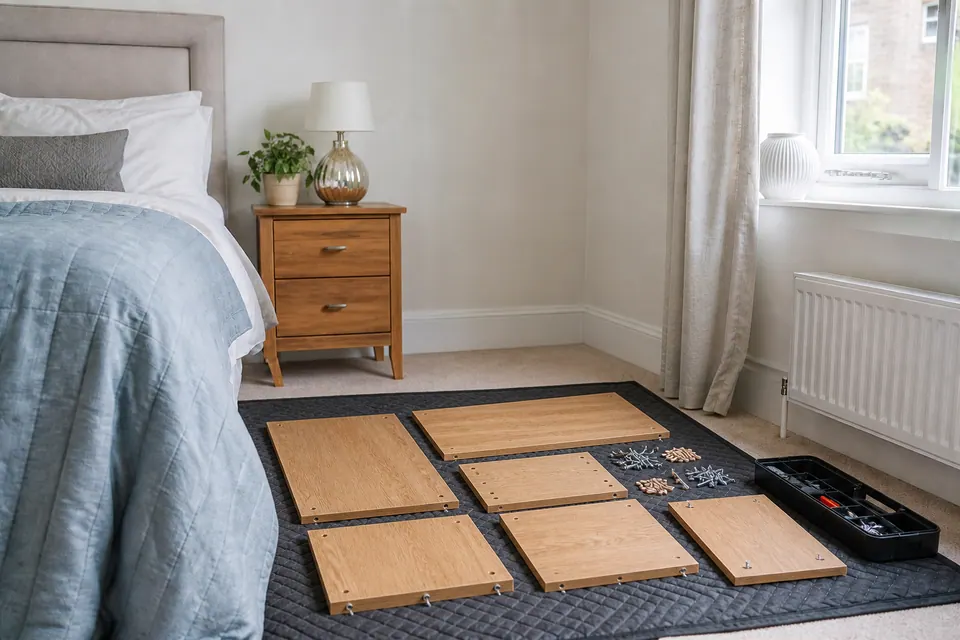
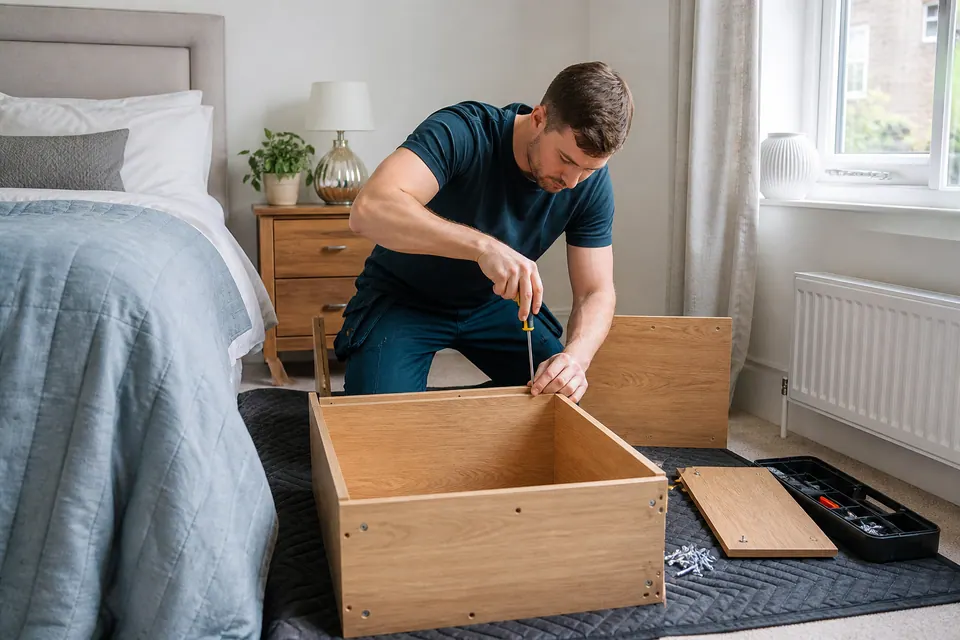
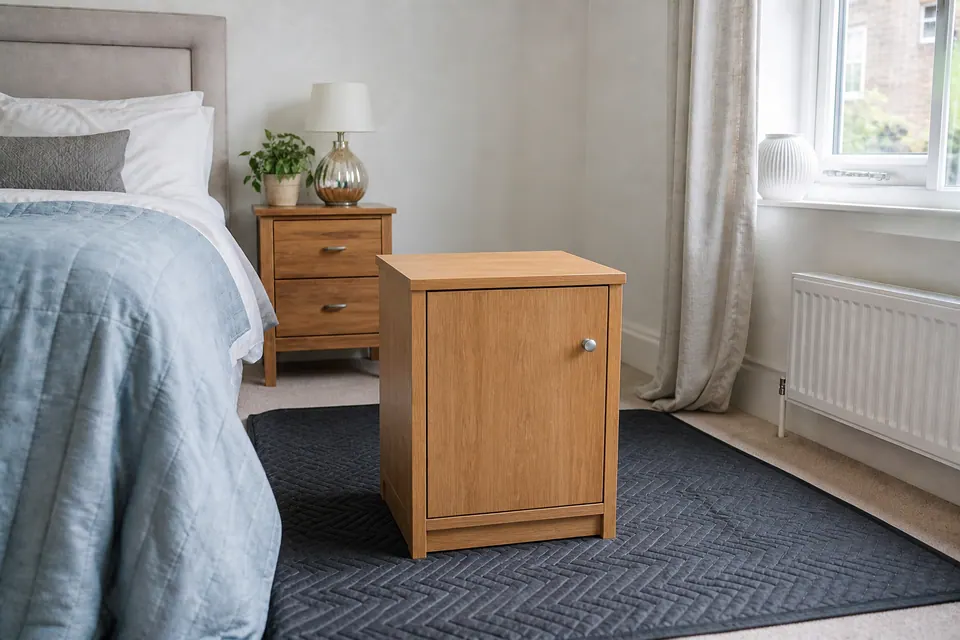
Illustration only; not customer evidence.
QUICK ANSWERS
The extent of timber damage can alter the scope.
Minor assessed adjustments differ from replacement carpentry.
Give each joint a separate photograph and location.
Agree who supplies materials. Confirm dimensions before buying replacement timber or hardware.
Assessment may reveal work beyond a simple tightening.
Furniture assembly is available. Complete new products are distinct from damaged existing pieces.
Existing timber damage must not be ignored when assessing support.
Agree whether repair or replacement is authorised.
PLAN THE ARRIVAL
For the Highgate address, explain where the damaged item stands and whether access is restricted by heavy furniture. Confirm appointment options before moving anything substantial.
Interactive area map
THE DETAILS OF YOUR VISIT
That should not be assumed. The damaged material needs assessment before a repair method is chosen.
No. Use accessible views and avoid destabilising or forcing the item.
Not necessarily. Describe movement and show the wider component so the condition can be reviewed.
Repairability depends on its condition; replacement or a different carpentry scope may be necessary.
Agree dimensions and requirements first rather than relying on appearance alone.
Not by itself if the supporting material has failed; show the area around the fixing.
Only expressly agreed finish work is included, not automatic complete restoration.
Avoid loading an unstable fitting while arranging assessment and safe preparation.
Review the proposed work and quotation before authorising replacement components or wider repairs.
TURN THE LIST INTO A PLAN
Send a whole-item photograph, an accessible joint view and a note about whether the timber moves.
Images illustrate typical handyman tasks.
