
A selected room clearance
A selected clearance can make a room usable while other household belongings remain in place.
Camden / Storage for a Home Reorganisation
Choose what leaves before deciding how much room it needs.
Organise Camden household storage around selected belongings, with sensitive contents and fixed furniture identified before collection.

Direct answers before you book
Provide an explicit list so unselected room contents remain outside the collection.
Declare the contents and sensitivities and obtain confirmation of appropriate conditions.
Explain its construction; removal or dismantling is not automatically part of storage.
Yes, dimensions and the exit route inform handling.
Settle the selected list earlier to avoid changing an agreed scope on the day.
No. Fragility, suitability and environmental requirements can differ.
Ask about retrieval terms and charges rather than assuming routine access.
It produces a draft enquiry only, subject to review.
Update the return request and confirm the agreed notice and transport.
Describe them accurately before assuming they can be removed.
Discuss the proposed location, suitability for the declared goods and the retrieval arrangements before booking.
A useful first conversation
Record only the chosen items. Use notes to explain attached shelving, delicate contents and any acceptance questions.
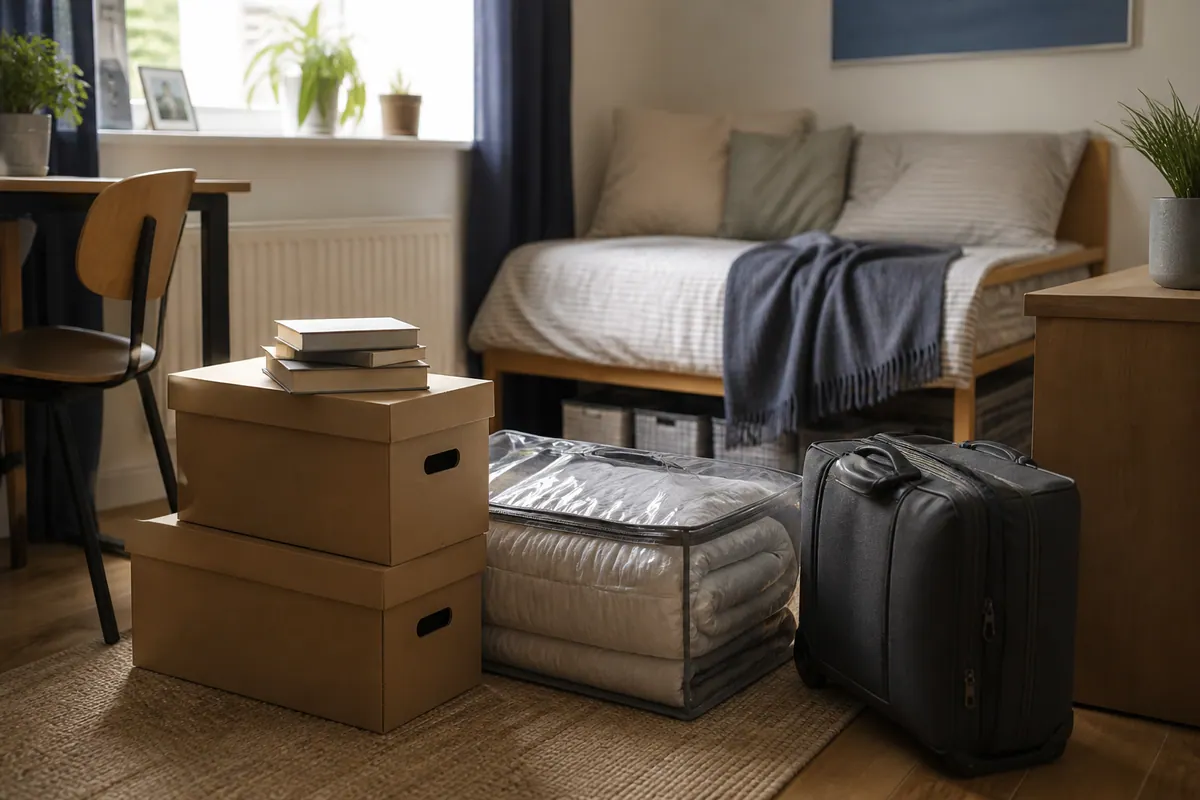
Camden, before collection day
Reorganising a Camden home does not require an undefined room clearance. Decide which objects should leave and list them, even when several remain in the same space.
Shelving can be freestanding, attached or assembled around other fittings. Explain its construction before calling it ready to collect. A spare armchair needs dimensions while record boxes need a clear description of their contents and any sensitivity.
Discuss suitability for the actual goods rather than assuming everything boxed can share any conditions. The enquiry is for household storage coordination, not a promise of specialist archival storage.
Plan the route out of your property ↓Choose your starting point
Select the category matching the objects. Sensitive collections require explanation beyond a general household-box prompt.
Inventory focus
Describe Camden record boxes and other sensitive contents rather than calling everything household cartons. Ask about suitable conditions and keep regular-use belongings outside the waiting inventory.
Add this to your inventory ↓
The timetable can change
| Planning point | A shorter gap | A longer arrangement |
|---|---|---|
| Typical purpose | A short reorganisation of selected living space | Retained belongings waiting for a future layout |
| Preparation | Prepare selected goods without disturbing excluded objects | Review sensitivities against the proposed holding term |
| Retrieval | Return what makes the revised room usable | Discuss occasional items needed at a later point |
| Duration | Confirm the interval beyond a general reorganisation plan | Check notice when layout decisions take longer |
| Quotation | Assess the selected load and preparation | Clarify extra access or revised release requirements |
A pending room decision still needs agreed duration, notice and insurance provisions. Specialist conditions are not assumed.
One connected arrangement
Select the Camden belongings leaving the reorganised room.
Identify attached shelving and the chair’s exit route.
Discuss sensitive contents before suitable preparation.
Release the reconciled list rather than unselected objects.
Confirm conditions appropriate to the declared goods.
Request references matching the revised room layout.

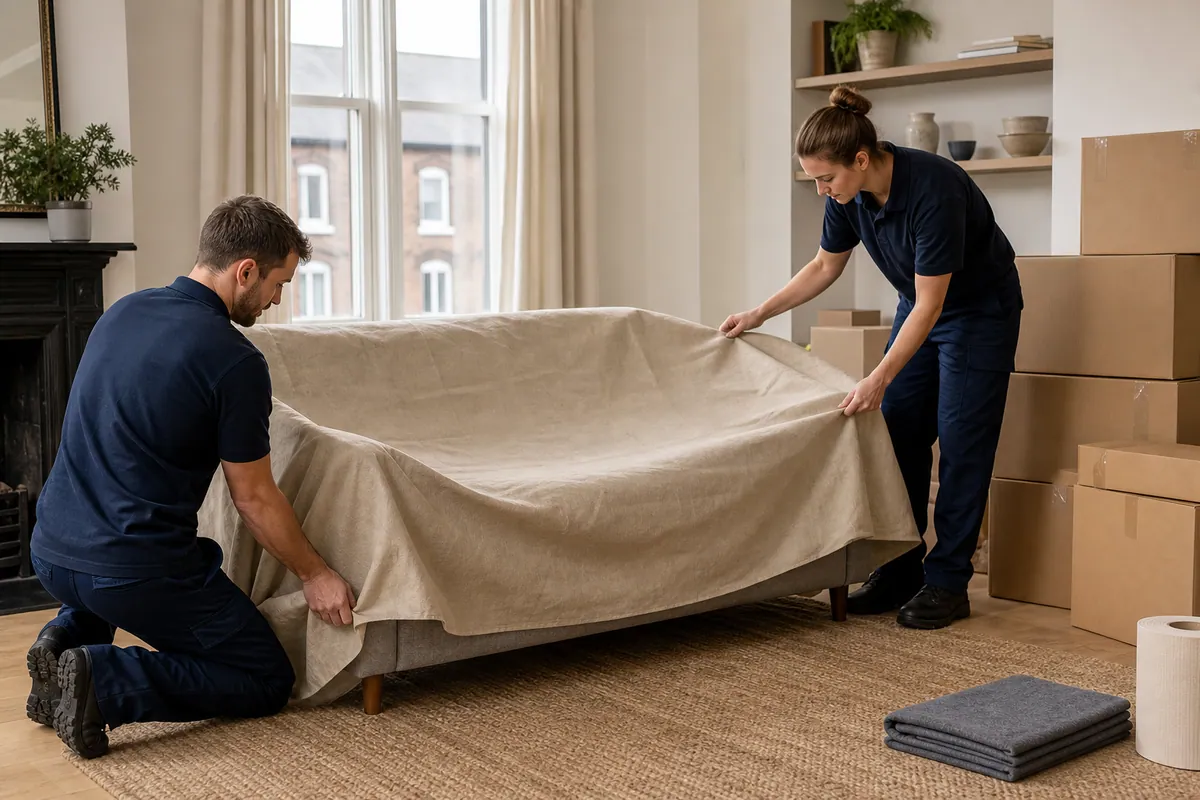

What changes at home?
A selected clearance can make a room usable while other household belongings remain in place.
If shelving is being replaced, clarify what belongs to the collection and what remains attached to the property.
Occasional belongings may wait longer than the furniture needed for a new layout.
Where plans change during sorting, update the inventory before adding another group.
Dimensions before estimates
A room reorganisation can produce an uneven load of cartons and awkward furniture. Assess those actual pieces rather than the floor area being freed.
A few chosen objects need individual descriptions.
Exclude the furniture staying in the room.
Reconcile selections without assuming whole-room clearance.
Explain unusual contents within the complete household list.
Specialist collections need an explicit suitability conversation. Household cartons do not establish archival conditions.
Plan the return before the departure
The revised room layout can guide the return order, but each request needs recognisable inventory references rather than a general room name.
Need earlier
Need later
Retain important records and valuables separately. Frequent or selective retrieval is not assumed; agree notice and charges for the actual request.
Keep regular-use objects with you if unconfirmed retrieval would disrupt daily life.
Link shelf components to the original unit where agreed preparation separates them.
Sensitive or occasional contents need appropriate conditions and a clearly discussed release process.
Collection is part of the storage plan
Identify whether shelving is fixed and describe any preparation that might be needed.
Measure the armchair along the real route rather than only where it currently stands.
Keep selected cartons distinguishable without blocking the remaining household’s access.
Describe the loading point and entry arrangements for the booking contact.
Identify shelving that is freestanding and any pieces fixed to the property.
Flats and apartments: identify only the belongings chosen to leave. Mansion blocks: check access for the selected shelving and chair. Houses: describe any furniture attached to the property. Rental or managed properties: confirm release of the agreed selection.
Scope first. Quote second.
Clarify preparation, transport and storage conditions for the selected goods. Additional sorting or specialist handling is not implied by a standard household enquiry.
| Service scope | Price approach | Main factors |
|---|---|---|
| Volume & access assessment | Quote the explicitly selected Camden objects | Shelving construction, chair dimensions and declared contents |
| Collection & placement | Assess the route for the accepted load | Preparation, attached-item questions and loading access |
| Ongoing storage | Price the intended retention period | Suitable conditions for the stated household goods |
| Final retrieval / delivery | Return against the revised room’s requirements | Named items, receiving route and any selected release |
Clarify whether preparation includes any shelving work. Sensitive-item requirements, term changes, return transport and coverage must be addressed explicitly.
Keep the move connected
Link the selected reorganisation load to a wider move only if required.
Discuss transport for the precise furniture and carton selection.
Agree preparation for shelving and sensitive household contents.
Arrange the chosen furniture’s return into the revised layout.
Alesta customer feedback / Furniture removal & packing
“I used Alesta Services for furniture removal and packing when I moved houses. The team was incredibly careful with my belongings and made the whole process seamless.”
James W. · Existing Alesta review, not a storage testimonial for Camden.
Camden / Service area
Send the Camden collection postcode and describe the selected objects rather than an undefined clearance when discussing Storage Services.
Ask about the location and conditions suitable for any sensitive contents, then confirm the return address for the revised household layout.
A little space. A clear next step.
Organise Camden household storage around selected belongings, with sensitive contents and fixed furniture identified before collection.
