
Private home
Start with evidence inside your authority.
PEST CONTROL / BECKENHAM
Neighbouring properties and uncertainty.
Begin with what was found in your property.
It can be tempting to explain a pest concern through activity next door. For a Beckenham enquiry, provide your own evidence first and label any neighbour information separately. Shared structures may raise access questions, but they do not by themselves prove the source or authorise entry.
04 / AT A GLANCE
05 / PROPERTY BRIEF
Start with evidence inside your authority.
Identify consent and access arrangements.
Treat information as context, not an inspection area by default.
Clarify who can authorise work.
Check suitability independently rather than assuming a home programme extends there.
Check the premises requirements01 / START WITH THE EVIDENCE
Neighbouring activity is context, not a diagnosis of the home.
Damage or marks within your accommodation.
Mice controlA larger rodent observation at a known point.
Rats controlPhysical evidence around your sleeping furniture.
Bed bug treatmentRecurring insects at a household fitting.
Cockroaches controlDescribe the cupboard and sign before discussing adjacent property. Do not assign cause from proximity.
Attribute the account and state whether any direct evidence exists at your address.
Describe actual bed-area signs. A neighbour’s report or skin symptoms cannot confirm bed bugs in your bed.
Provide the fitting and product history. Shared walls can be described without declaring a route.
BECKENHAM / PROPERTY CONTEXT
A neighbour’s account may be useful, but it should not become a more definite story when repeated. Keep the original source and uncertainty visible.
Do not enter adjoining land or inspect another person’s building to gather proof. Describe what is known from your own property and ask about appropriate next steps.
If a shared wall, passage or structure matters to access, identify who controls it. Shared use does not automatically grant authority for treatment or alteration.
Avoid attributing responsibility from one sighting. Assessment should focus on findings, practical limits and a suitable residential scope.
07 / SCOPE BEFORE A QUOTE
Background information about next door does not add it to a residential programme. Confirm included areas and any shared-access decision separately.
from £120
See published service pricingfrom £150
See published service pricing| Service | Pricing basis | Price |
|---|---|---|
| Mice control | Mouse concern within your scope | Assessed quotation |
| Rat control | Rat evidence and authorised areas | Programme quote |
| Proofing / repairs | Shared or adjoining work | Separate permission and agreement |
Guides checked on 27 August 2026 give starting amounts. Confirm Beckenham availability and scope without assuming a cause or treatment obligation at another property.
03 / OBSERVATION CHECKLIST
Your direct account should remain distinguishable from another person’s information.
Avoid entering adjoining land or disturbing unknown animals and material.
Name the position and date.
Identify the source and stated uncertainty.
Explain where you were and what was visible.
Describe access control rather than assuming a route.
Keep physical signs independent of neighbour concerns.
Record it separately instead of using it to rewrite earlier uncertainty.
06 / SIGNS → LOCATION → NEXT STEP
| Pest problem | Signs to describe | Areas to mention | Next step |
|---|---|---|---|
| Mice | Mouse-like household marks | Your room and discovery date | Request assessment of direct findings. |
| Rats | Larger rodent report | Actual witness and position | Keep second-hand uncertainty intact. |
| Bed bugs | Physical bed-area signs | Your resting position | Seek identification from evidence. |
| Cockroaches | Recurring insects | Home fitting and events | Describe shared context without assigning origin. |
MAKE THE ENQUIRY SPECIFIC
Say so instead of saying you witnessed it.
Identify consent before adding it to scope.
Present it as an unconfirmed theory, not the factual cause.
Give it a new direct record rather than retroactively confirming every earlier assumption.
08 / THE CONTROL PLAN
A neighbouring theory should not become the starting diagnosis.
Accessible home evidence can be considered with context while uncertain origins remain unresolved.
The method and instructions should apply to authorised areas, not an assumed extension to be treated next door.
Later direct or relayed observations should retain their sources when further action is discussed.
09 / FROM FIRST CONTACT
Expand the stages before investigating beyond your property.

Give room, position and date.
Name the source of another report.
Identify permission questions without entering adjoining areas.
Keep the household areas explicit.
Do not alter shared structures on assumption.
Keep new observations and sources distinct.
10 / PROBLEM → TREATMENT → CONTROL
Another property’s treatment or maintenance does not establish the outcome in your home. Use your findings and the agreed review.
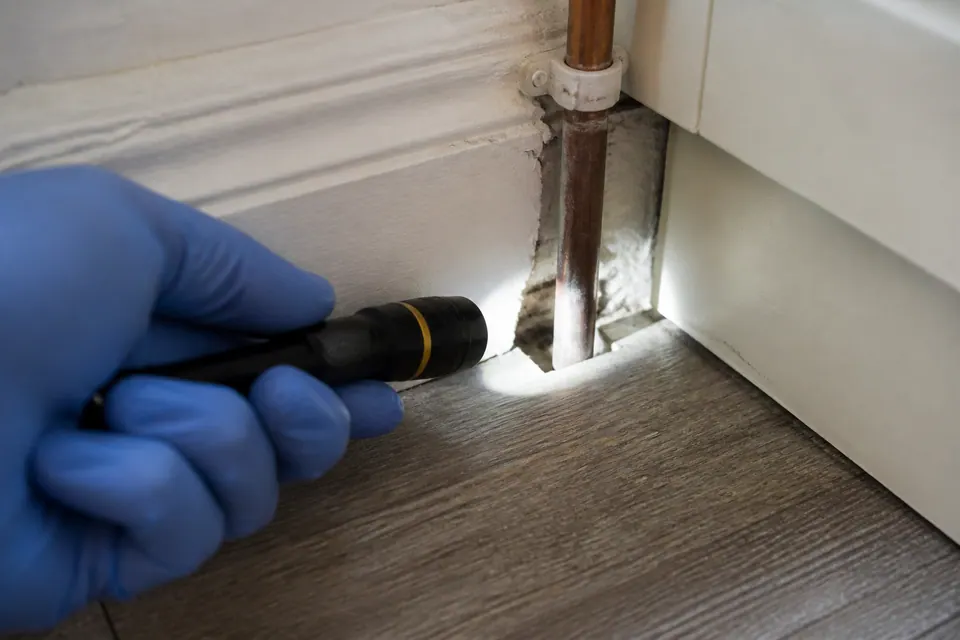
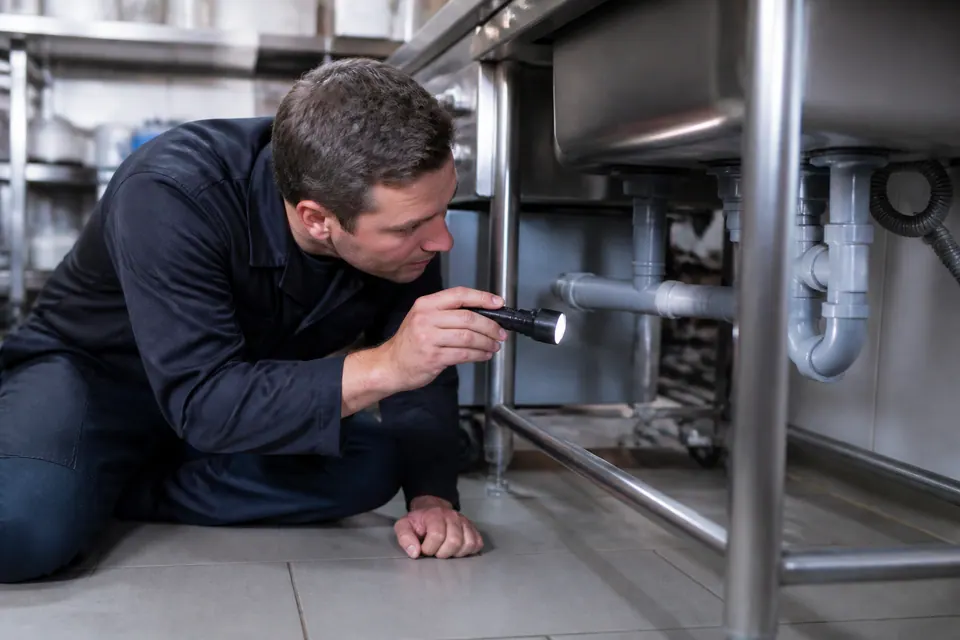
Generated scenes are not a Beckenham boundary investigation or evidence assigning responsibility.
13 / CLEAR EXPECTATIONS
What you observed in your property.
What another person reported.
What areas can be assessed with appropriate consent.
ADDRESS AND AVAILABILITY
Provide the postcode and the boundary of your authorised access.
Check availability and scope before coordinating shared-area permission. The map is an area reference, not an Alesta site or neighbour-source finding.
Open Beckenham in Google Maps ↗BECKENHAM / QUESTIONS
Label it as the other person’s report and preserve its uncertainty.
No. Proximity and a report elsewhere do not establish origin.
Do not enter without appropriate authority; describe your own observations and known context.
Clarify who controls it and what consent is needed before including it.
No. Physical findings in your sleeping area still need assessment.
Not automatically. A separate property needs an appropriate scope and permission.
Keep its source and date separate from your own new observations.
Follow instructions for the method selected for your household, not another customer’s experience.
It is relevant context but does not by itself establish your outcome.
Ask what proposed action would be within your authority and what requires another party’s consent.
15 / TAKE THE NEXT STEP
Call with your direct evidence and clearly attributed context. Confirm the household scope before drawing conclusions about adjoining property.
