
Cupboard traces
State which dwelling and storage unit contains the marks. Mention any earlier cleaning or products.
PEST CONTROL / HARROW
Two households within one building.
One building does not mean one permission boundary.
A property divided between households can have shared routes but separate permissions. Explain who occupies each area and avoid treating an appointment for one home as authorisation for the other.
HARROW / PROPERTY CONTEXT
Where accommodation is divided, identify the part you occupy and the entrance used to reach it. A floor number alone may not explain the household boundary.
List shared spaces separately from private rooms. If another occupier has observations, preserve their dates and locations rather than merging everything into a whole-building account.
Clarify who approves the proposed work and who can provide access. A person arranging one household’s visit should not be presumed to speak for every resident.
Confirm coverage and the appropriate residential scope. Any wider proposal should identify additional areas and relevant permissions before being treated as agreed.
03 / OBSERVATION CHECKLIST
A precise reference helps distinguish several genuine observations from several retellings of the same event.
Do not enter another household’s rooms or disturb suspect contamination to gather evidence.
State which dwelling and storage unit contains the marks. Mention any earlier cleaning or products.
Record the side and timing of the sound without claiming it establishes the source in another home.
Identify the item and known position rather than assigning responsibility based on ownership.
Describe physical spotting or an insect separately from skin irritation and other residents’ concerns.
Name the kitchen or fitting in the report so distinct accommodation is not confused.
Keep the common location and witness visible; it is not automatically evidence inside every dwelling.
06 / SIGNS → LOCATION → NEXT STEP
| Pest problem | Signs to describe | Areas to mention | Next step |
|---|---|---|---|
| Mice | Possible traces in one kitchen | The dwelling and cupboard actually reported | Do not extend the finding to other kitchens without evidence |
| Rats | Animal sighting or concealed sound | Precise private, common or outside position | Retain uncertainty about any route between homes |
| Bed bugs | Physical signs around one bed | The particular sleeping room and furniture | Request assessment without assuming whole-building spread |
| Cockroaches | Recurring insects beside fittings | The reporting household’s appliance or unit | Record other households’ accounts separately |
08 / THE CONTROL PLAN
Coordination can improve a programme without turning several homes into one undifferentiated report.
Accessible evidence is assessed with private and common spaces distinguished. A shared wall does not prove a shared source.
The proposed method and preparation should match the identified concern and approved area. Additional accommodation is a separate decision.
Fresh observations should say where they occurred relative to the original scope. Wider recommendations need appropriate discussion and permission.
09 / FROM FIRST CONTACT
One coordinator can help communication without replacing the involvement of other affected households.

Give the entrance and private-room boundary alongside the street address.
Keep dates and witnesses attached to reports from different occupiers.
Clarify who can authorise work and open each relevant area.
Make sure occupants receive the requirements for the actual method and scope.
Specify whether a later finding is in the original dwelling or elsewhere.
Ask for additional areas and costs to be explained before assuming a wider programme.
01 / START WITH THE EVIDENCE
Keep a report attached to the home and room it describes, even where several households share a street address.
Possible traces in a named household’s storage.
Mice controlA sighting or larger traces at a specified position.
Rats controlSpotting or insects associated with sleeping furniture.
Bed bug treatmentRepeated insects at identifiable kitchen fittings.
Cockroaches controlExplain which kitchen contains the finding. Another household’s cupboard should not be silently included because the building address matches.
State who witnessed the event and whether it was inside a dwelling, in a common part or outside.
Name the room and physical signs without inferring bed bug activity in other bedrooms from one report.
Separate observations from different kitchens. Similar descriptions do not prove the same source or authorise the same treatment.
07 / SCOPE BEFORE A QUOTE
A building address is not an adequate description of multi-household work. The proposal should explain the areas, approval and visits included.
from £120
See published service pricingfrom £150
See published service pricing| Service | Pricing basis | Price |
|---|---|---|
| Mice control | Activity, access and programme | Quote after assessment |
| Rat control | Internal / external routes and visits | Quote after assessment |
| Proofing / repairs | Surveyed openings and separate work | Quoted separately |
Published guides checked 27 August 2026. Confirm current coverage and pricing. Additional dwellings, communal areas and repairs require explicit scope rather than assumed inclusion.
05 / PROPERTY BRIEF
Name each dwelling in any wider enquiry and distinguish its independent findings.
Clarify access to private bedrooms as well as any communal kitchen or hallway.
Identify who controls service cupboards without treating them as part of every tenancy.
Explain the exact rooms and decisions the owner is authorising.
Keep household restrictions visible so preparation is suitable for the people affected.
Discuss your homeCheck commercial suitability separately; a residential scope does not establish provision for adjoining business premises.
Check the premises requirements04 / AT A GLANCE
MAKE THE ENQUIRY SPECIFIC
Add the dwelling reference so the observations can be assigned correctly.
Confirm approval as well as physical access. Possessing keys does not define the agreed scope.
Recover the original location and date where possible rather than treating the message as a fresh finding everywhere.
Discuss its evidence, permissions and proposed inclusion separately from the original appointment.
10 / PROBLEM → TREATMENT → CONTROL
An apparently normal room in one dwelling does not establish the condition of another home or a concealed shared space.
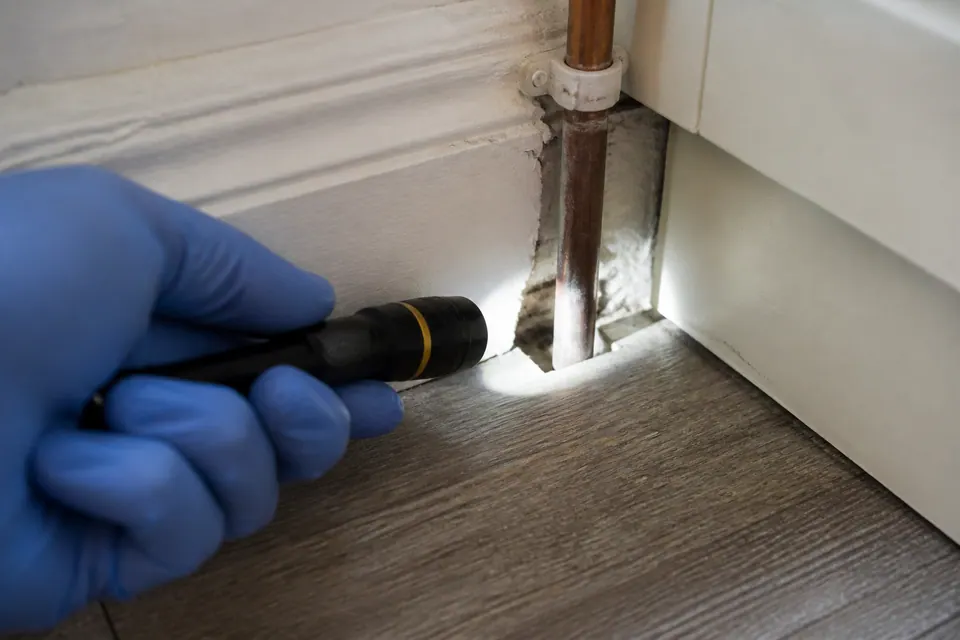

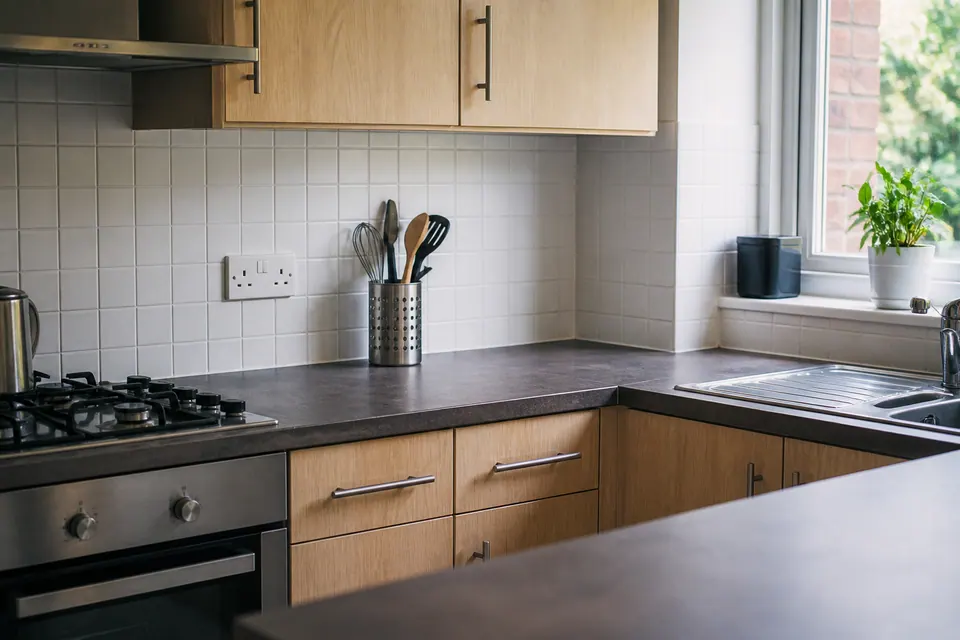
The images illustrate a process, not a Harrow building-wide result or a guarantee for several households.
ADDRESS AND AVAILABILITY
Use the postcode together with the internal dwelling reference and entrance.
Confirm coverage and access for the areas actually being considered. The map does not describe private household boundaries.
Open Harrow in Google Maps ↗13 / CLEAR EXPECTATIONS
Different households’ reports should remain traceable to their rooms and dates.
The proposal should identify whose accommodation is included.
Relevant occupants need the confirmed instructions, not an assumption passed through several people.
HARROW / QUESTIONS
Explain the area and relevant approval arrangements. A private enquiry should not silently cover other accommodation.
No. Describe the observed position and keep any route or source uncertain until supported by assessment.
Coordination can help, but retain each observation’s dwelling, date and witness.
Clarify authorisation and scope. Access to a door is not the whole agreement for treatment.
Do not assume it. Ask for the proposed areas and price to be defined.
The occupants and access contacts affected by the actual method need the confirmed guidance.
Describe that accurately. A nearby concern does not itself establish the condition inside their rooms.
Yes, including who controls them and whether they are being considered for assessment.
Provide the new information and ask whether the scope, permissions or preparation need revision.
Keep it distinct and discuss the appropriate next step rather than automatically calling it part of the original programme.
15 / TAKE THE NEXT STEP
Call with the reporting dwelling and its evidence. Explain shared areas and other contacts, then agree the appropriate scope before wider work is assumed.
