
Food storage damage upstairs
Name the household cupboard rather than describing all storage at the address as affected.
PEST CONTROL / HAMMERSMITH
Homes above business premises.
Agree which premises the enquiry covers.
If your home sits above or beside a business, an address can describe several separately controlled spaces. Begin a Hammersmith enquiry with the living accommodation and the evidence found there. Shared services may need discussion, but business access and commercial suitability require their own confirmation.
03 / OBSERVATION CHECKLIST
Use the residential unit, room and date for each entry.
Do not enter another occupier’s premises to collect evidence.
Name the household cupboard rather than describing all storage at the address as affected.
Explain where you heard it from inside the home. The source remains uncertain without assessment.
State which door is involved; a delivery entrance and the home entrance may be different.
Record physical findings in the bedroom separately from concerns about the rest of the building.
Include the home’s appliance or fitting and whether anyone has already applied a product.
Label it as their account, with the reported date if known, instead of presenting it as your finding.
HAMMERSMITH / PROPERTY CONTEXT
A residential floor may have a separate entrance, shared staircase or service connection. Describe the arrangement that actually applies to your address.
Where a shop or office occupies another part of the building, give its role in the access question without promising entry. The person arranging the home visit may have no authority over that premises.
If a building owner must authorise a service-cupboard inspection, identify that decision-maker early. Access can be relevant even when the business itself is outside the proposed work.
Ask Alesta separately about suitability for any commercial request. Treatment arrangements or documentation for a business cannot be assumed from the residential service described here.
04 / AT A GLANCE
08 / THE CONTROL PLAN
The building’s other uses are context, not automatic additions.
Assessment should identify accessible household findings and record any relevant areas beyond the resident’s authority.
The method and preparation reflect the pest and occupants. Any non-residential request needs separate confirmation rather than an assumed extension.
Where a common service or fabric issue matters, involve its owner or manager. Do not assign a business obligations through a home booking.
10 / PROBLEM → TREATMENT → CONTROL
Neither another occupier’s treatment nor an apparently clear shared entrance proves the residential concern is resolved. Review the actual household evidence.
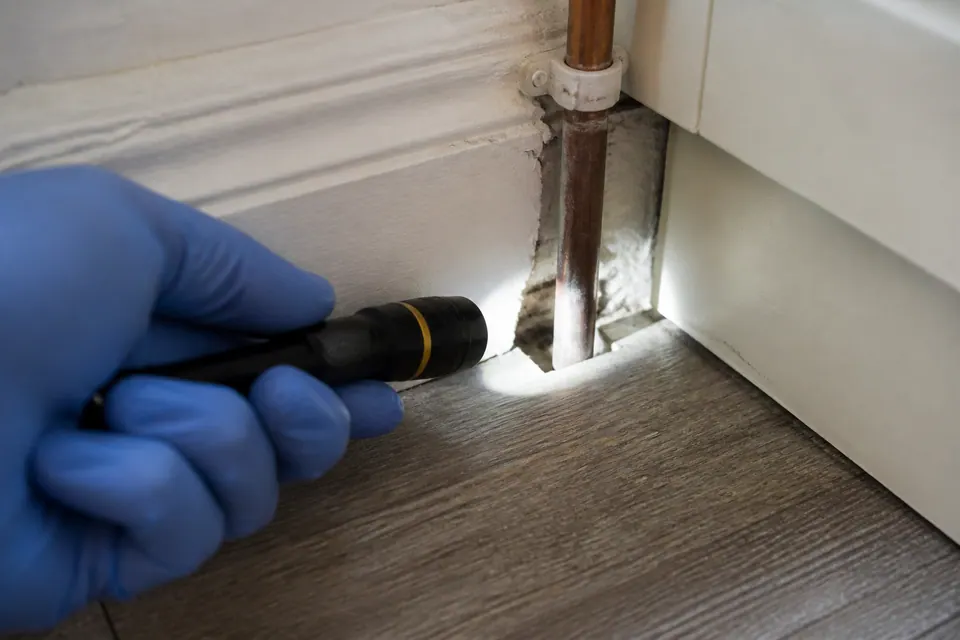
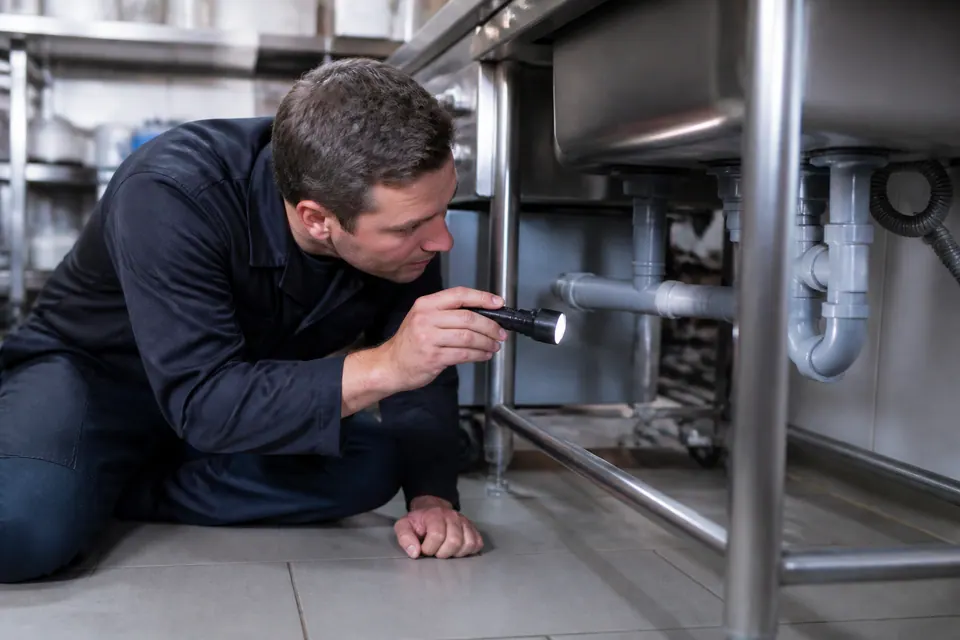
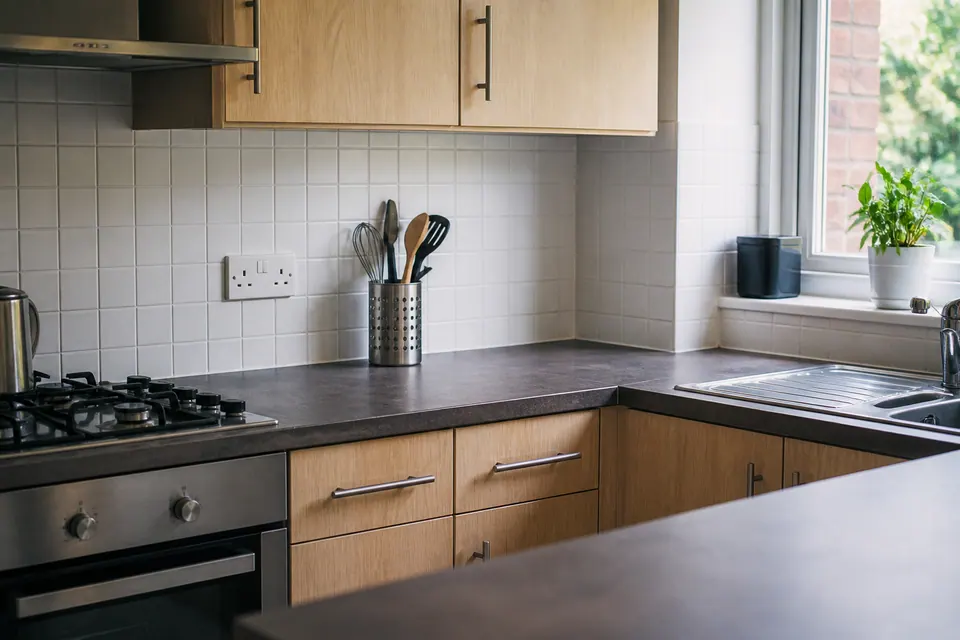
These generated scenes are not records from a Hammersmith business or residential customer.
07 / SCOPE BEFORE A QUOTE
A home quotation should not silently become a commercial programme. Ask for any proposed extension and its suitability to be clarified first.
from £120
See published service pricingfrom £150
See published service pricing| Service | Pricing basis | Price |
|---|---|---|
| Mice control | Mouse evidence in residential rooms | Assessed residential quotation |
| Rat control | Rat report with authorised areas | Quote once scope is established |
| Proofing / repairs | Service repairs or additional premises | Separate suitability and cost check |
The checked service guides dated 27 August 2026 provide starting prices, not a mixed-use building package. Confirm address coverage and the specific residential total.
01 / START WITH THE EVIDENCE
Select a service to prepare the residential account, not to diagnose the premises below.
Chewing in a household food cupboard.
Mice controlA larger rodent seen near an entrance or external area.
Rats controlMarks or insects around residential sleeping furniture.
Bed bug treatmentRecurring insects within the home’s kitchen.
Cockroaches controlProvide the room and cabinet. A report from a business elsewhere in the building should be attributed separately, not used as a diagnosis of the flat.
Describe the position without entering business storage or service areas. Explain who can authorise any relevant wider access.
Keep the sleeping-room findings specific. Neither the building’s use nor a skin reaction is sufficient to confirm bed bugs.
State the exact home location and earlier products. Do not infer that a nearby food business is the source.
05 / PROPERTY BRIEF
Provide the home entrance and any staircase arrangements that affect attendance.
Describe shared services only where known; neighbouring use alone does not identify the source.
Find the correct contact for common parts instead of relying on a resident’s consent for every area.
Confirm who can authorise costs and communicate with the owner where wider access is proposed.
The home enquiry should identify occupants, affected rooms and the intended assessment boundary.
Discuss your homeAsk whether the specific business can be supported. Do not assume a residential booking supplies food-premises or workplace documentation.
Check the premises requirements06 / SIGNS → LOCATION → NEXT STEP
| Pest problem | Signs to describe | Areas to mention | Next step |
|---|---|---|---|
| Mice | Chewing in the flat’s food store | Residential kitchen, not the business stockroom | Request assessment of the household evidence. |
| Rats | An exterior rodent sighting | Named entrance or visible common edge | Identify the witness and access owner. |
| Bed bugs | Physical marks near the bed | Residential sleeping room | Ask for identification based on those findings. |
| Cockroaches | Kitchen insects upstairs | Home fittings and accessible recesses | Explain timing and previous household treatment. |
MAKE THE ENQUIRY SPECIFIC
Give the entrance route before attendance so the address is not mistaken for the business front door.
Name the responsible contact and describe the access limitation rather than assuming entry can be arranged on arrival.
Pass it on with attribution. It may help the context without establishing a shared source.
Raise the requirement separately and ask whether Alesta can meet it; it is not a standard addition to a home enquiry.
09 / FROM FIRST CONTACT
Open each stage to see how a multi-occupier address can be described clearly.

Give the residential floor and door as well as the street number.
Separate what the household observed from information supplied by another occupier.
Explain who authorises home treatment and who controls relevant common spaces.
Arrange occupant access and preparation for the selected method, not a neighbouring business’s routine.
Keep later household reports tied to their rooms and dates so another premises’ activity is not merged in.
If the findings raise a business-related question, check suitability and consent before broadening the work.
13 / CLEAR EXPECTATIONS
The home and a separately occupied business should not be treated as one booking by default.
Each relevant controlled space needs the right person’s consent.
Suitability and documentation requests for business use must be confirmed separately.
ADDRESS AND AVAILABILITY
Include the floor or unit and distinguish it from any shopfront or workplace at the same number.
Check availability and relevant access permissions before coordinating occupants. The area view is not a marker for a local Alesta office.
Open Hammersmith in Google Maps ↗HAMMERSMITH / QUESTIONS
Give the full address with the residential floor, unit and entrance. Mention a different business door if it could cause confusion.
No. Request confirmation for the specific non-residential premises rather than treating it as covered by home treatment.
Explain who made the observation and where. That account can be considered without treating it as direct household evidence.
Ask the owner or manager who controls the cupboard about authorised access. Do not use a residential key as presumed permission.
It can be relevant context, but assessment needs evidence of the problem in your accommodation. Do not assign responsibility from building use.
Identify the person who can approve the home scope. If another occupier needs to be involved, clarify their role separately.
Explain the timetable when checking availability, but remember that permission and keys are still needed for controlled areas.
Ask before booking whether the requested service and documents can be provided. This residential guide makes no commercial documentation promise.
Keep the records separate. A method selected for another premises is not automatically appropriate for your household.
Give the residential finding and its date. If you also have another occupier’s report, label it separately for any review discussion.
15 / TAKE THE NEXT STEP
Call with the residential entrance, observed signs and the contacts responsible for access. Agree the home scope before considering another part of the building.
