
A kitchen rear door
Specify the room-side finding separately from activity outside the kitchen.
PEST CONTROL / DAGENHAM
A mark beside the door
does not prove how it arrived.
Record which side of the threshold contains the sign and whether it has been noticed again. Door defects can be useful maintenance information, but treatment and sealing should follow assessment rather than a guess about entry.
04 / AT A GLANCE
05 / PROPERTY BRIEF
Specify the room-side finding separately from activity outside the kitchen.
A private booking does not automatically authorise work on shared exits or surrounding spaces.
The owner or agent may need to authorise any separately proposed repair.
An enclosed courtyard still needs its own observation reference and agreed inspection scope.
The home enquiry should connect precise signs with the areas that can be reached and assessed.
Discuss your homeCommercial entrances, premises and documentation require suitability confirmed rather than inclusion under a residential service.
Check the premises requirements01 / START WITH THE EVIDENCE
These services address particular pests. A doorway location does not identify which is involved.
Droppings or packet damage within the home.
Mice controlPossible larger-animal signs near an accessible edge.
Rats controlPhysical evidence around sleeping furniture.
Bed bug treatmentRecurring insects around kitchen equipment.
Cockroaches controlFor mice, identify whether evidence was actually inside the room or only beyond the door. Keep storage findings separately located.
For suspected rats, report visible exterior observations without opening covers or disturbing concealed areas to follow a route.
A doorway concern does not establish bed bugs. Physical bedroom evidence should be described independently of threshold marks.
Recurring insects need their appliance or cupboard reference, not an automatic assumption they entered through the rear door.
DAGENHAM / PROPERTY CONTEXT
Check coverage with the postcode, then give the room and door position. “By the back door” can otherwise refer to several different surfaces.
Say whether the finding was on the inside floor, the threshold itself or the outside step. Those references remain useful even when the cause is unclear.
If the area was cleaned or checked between discoveries, record the dates honestly. Do not assign an age to a mark that was simply noticed later.
A worn seal or damaged frame should be identified as a defect. Whether it is relevant to pest activity and what repair is appropriate are further questions.
07 / SCOPE BEFORE A QUOTE
A targeted treatment guide is not an all-in price for repairing an entrance. Ask what the pest programme includes and how any separate proofing recommendation would be agreed.
from £120
See published service pricingfrom £150
See published service pricing| Service | Pricing basis | Price |
|---|---|---|
| Mice control | Activity, access and programme | Quote after assessment |
| Rat control | Internal / external routes and visits | Quote after assessment |
| Proofing / repairs | Surveyed openings and separate work | Quoted separately |
Starting guides checked 27 August 2026. Confirm postcode coverage, the assessment boundary and the total before booking.
03 / OBSERVATION CHECKLIST
Keep the report descriptive enough to support assessment without claiming a route.
Do not handle suspect material or disturb nesting activity to inspect the threshold.
Droppings or tracks should be located on the precise side of the doorway where found.
Scratching nearby needs a time and position; it does not confirm a species.
Gnawed material or food packaging needs its original storage reference.
Spotting or shed material around a bed is a distinct finding; irritation alone does not identify bed bugs.
Repeated kitchen insects need a sighting history and details of products already used.
Outside movement or nesting material should be described from a safe position, with unknown animals checked for suitability.
06 / SIGNS → LOCATION → NEXT STEP
| Pest problem | Signs to describe | Areas to mention | Next step |
|---|---|---|---|
| Mice | Droppings inside the door | Exact indoor edge | Request assessment of the finding |
| Rats | Possible signs beyond the step | Accessible exterior location | Keep them separate from indoor evidence |
| Bed bugs | Spotting at a bed frame | The relevant sleeping room | Discuss physical identification separately |
| Cockroaches | Repeated insects beside equipment | Named kitchen appliance | Include dates and prior interventions |
MAKE THE ENQUIRY SPECIFIC
Clarify whether this is a fresh discovery or another observation of an unchanged mark.
Report the defect without claiming it is an active entry route.
Do not convert an outside observation into a confirmed indoor infestation.
Disclose that use when preparation and any treatment restrictions are discussed.
08 / THE CONTROL PLAN
The visible defect is one detail, not the whole control plan.
Accessible signs on either side are assessed and any uncertain connection remains acknowledged.
The intervention follows the supported pest and scope rather than treating sealing as an automatic solution.
Monitoring and prevention recommendations inform next actions, with repairs separately authorised and sequenced.
09 / FROM FIRST CONTACT
The sequence should preserve the difference between evidence and a suspected entrance.

Provide the postcode, room and exact side of the threshold involved.
Add repeat-discovery dates and any relevant cleaning or product use.
Discuss accessible zones, method and separate repair questions before agreeing work.
Follow the preparation given for the selected treatment rather than altering the doorway independently.
Report later findings with the same side and surface references.
Arrange any agreed proofing or repair through the responsible person.
10 / PROBLEM → TREATMENT → CONTROL
Repairing a defect and establishing that activity has changed are different questions. The agreed review should rely on relevant findings, not just the appearance of the door.
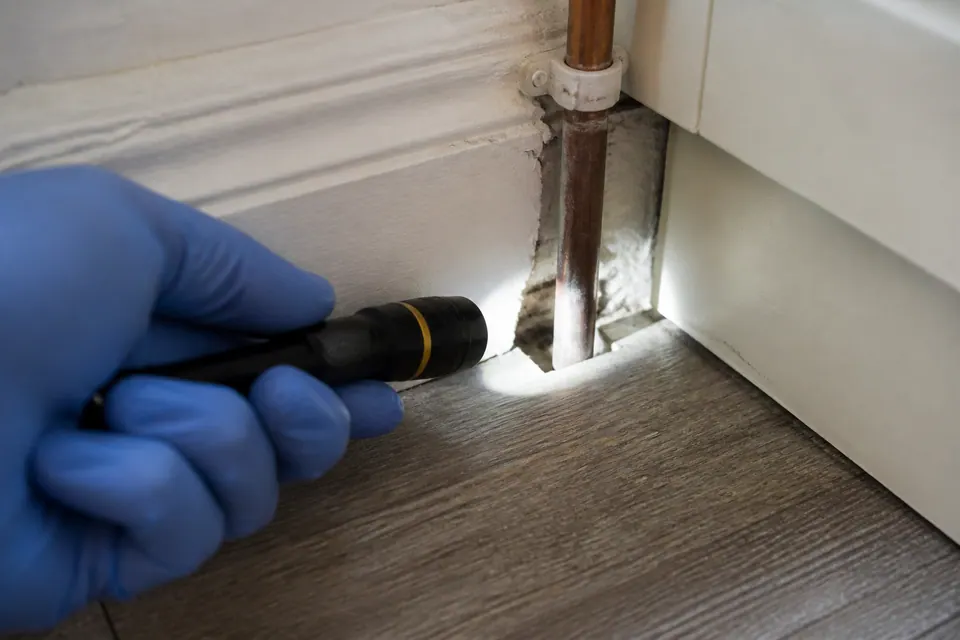

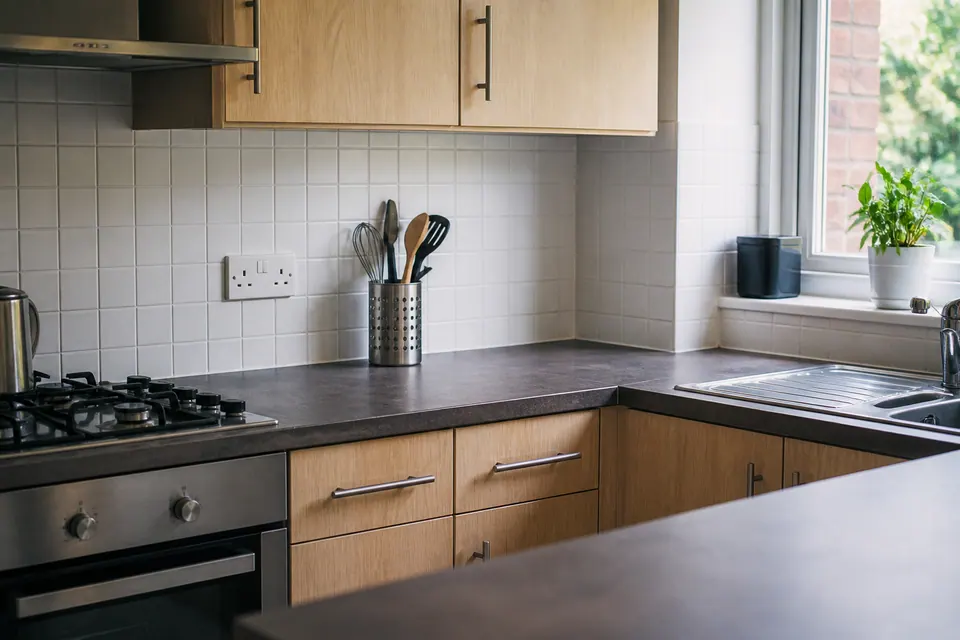
Illustrative scenes explain the process, not a Dagenham repair or customer result.
13 / CLEAR EXPECTATIONS
A precise surface reference helps avoid assumptions about direction of travel.
A maintenance observation is useful without being treated as identification.
Treatment and separately proposed repairs should be distinguishable in the scope.
ADDRESS AND AVAILABILITY
Give the complete address and explain which door is involved in the report.
Confirm coverage and any rear-access arrangement before attendance. The area map does not establish a booking or a proven pest route.
Open Dagenham in Google Maps ↗DAGENHAM / QUESTIONS
Not necessarily. Describe its position and let the assessment consider the supported explanation.
Discuss the finding and defect first rather than assuming a particular repair is the solution or appropriate sequence.
Give each side its own location and discovery date without claiming they are connected.
Do not disturb suspect material merely to improve an image. A safe description is preferable to unnecessary handling.
Only if it documents a distinct event or change. Keep the account honest about what is actually new.
No replacement work should be assumed included. Ask how any separate repair would be scoped and authorised.
Identify the responsible contact and permission needed before expecting examination or work there.
No. A noise report needs supporting assessment and cannot establish a species on its own.
Relevant known repairs can be included as background, without claiming they caused the activity.
Report the date, exact side and surface, and type of finding using the review guidance supplied.
15 / TAKE THE NEXT STEP
Check coverage and supply the inside/outside details with discovery dates. Keep the defect and any repair question separate until the appropriate work is assessed.
